How important is nonprofit journalism?

Donate by May 7 and your gift to The Center for Public Integrity will be matched dollar-for-dollar up to $15,000.

Secrecy for Sale

Cook Island provider a 'one-stop shop' for the mega-rich

By Nicky Hager

The story of Portcullis TrustNet and its birthplace — the Cook Islands — is in many ways the story of the offshore system itself.

It’s a largely invisible world, a curious blend of the parochial and the global that’s made up of the minor personalities and politics inside each offshore jurisdiction — many with populations no larger than a small town.

But by establishing special zones, these tiny provinces have changed the face of international finance and business and impacted law enforcement, tax policies and political and economic transparency across the planet.

The Tax Justice Network, an international advocacy group opposed to tax havens, estimates that about one third of all world wealth is held offshore, and about half of all world trade flows through there.

TrustNet, now headquartered in Singapore and with branch offices in 16 other locations, describes itself as a “one-stop shop,” employing lawyers and accountants who help “high net worth” clients manage their money and business activities.

In this they are not alone: there are dozens of other so-called offshore service providers.

Click through to ICIJ.org to continue reading.

Secrecy for Sale

ICIJ

Highlights of offshore leaks so far

By Emily Menkes and Kimberley Porteous

This month marks the beginning of one of the biggest financial leaks in history.

The International Consortium of Investigative Journalists has just released the first stories from a global collaborative project into the world of offshore money. The Tax Justice Network, an advocacy group claims that a third of the world’s wealth is tied up in the secret area of offshore.

For the past 15 months, journalists from over 40 countries have worked together to shed light on this issue.

And here’s some of what they found:

Secrecy for Sale

AP

Faux corporate directors stand in for fraudsters, despots and spies

By Gerard Ryle and Stefan Candea

On November 14, 2006, a man going by the name Paul William Hampel was arrested at a Canadian airport on charges of being a Russian spy.

Hampel’s carefully constructed identity portrayed him as a successful businessman, yet for a decade his company did no business.

Only months before his capture, the same apparatus used to create his alias was also employed by a very different spy agency - the U.S. Central Intelligence Agency —to build a secret prison in Lithuania, where U.S. agents interrogated suspected al-Qaeda terrorists.

Earlier again, it was used by the regime of former Iraqi dictator Saddam Hussein to cheat the Oil for Food program.

All three deceptions employed a common subterfuge: far-flung corporate entities used as anonymous fronts, with “executives” who lacked knowledge of what the firms were up to.

The activities of these so-called nominee directors are a little noticed part of the world of secretive offshore finance that’s grown so vast that it touches more than 170 of the globe’s 206 countries, but it’s one that’s often drenched in intrigue.

For a fee as low as $90, men and women who often appear to have little or no formal business qualifications lend their names as directors to enterprises they later can claim to know nothing about - even after those enterprises are linked to everything from stock fraud to money laundering.

Click through to ICIJ.org to continue reading.

Secrecy for Sale

Alex Shprintsen/CBC News

Caribbean go-between provided shelter for far-away frauds

The tangled trail of the Magnitsky Affair, a case that’s strained U.S.-Russian relations and blocked American adoptions of Russian orphans, snakes through an offshore haven in the Caribbean. 

The death of Moscow tax attorney Sergei Magnitsky sparked international outrage. It also fueled a push to unravel secret deals that had prompted him to claim that gangsters and government insiders had stolen $230 million from Russia’s treasury.

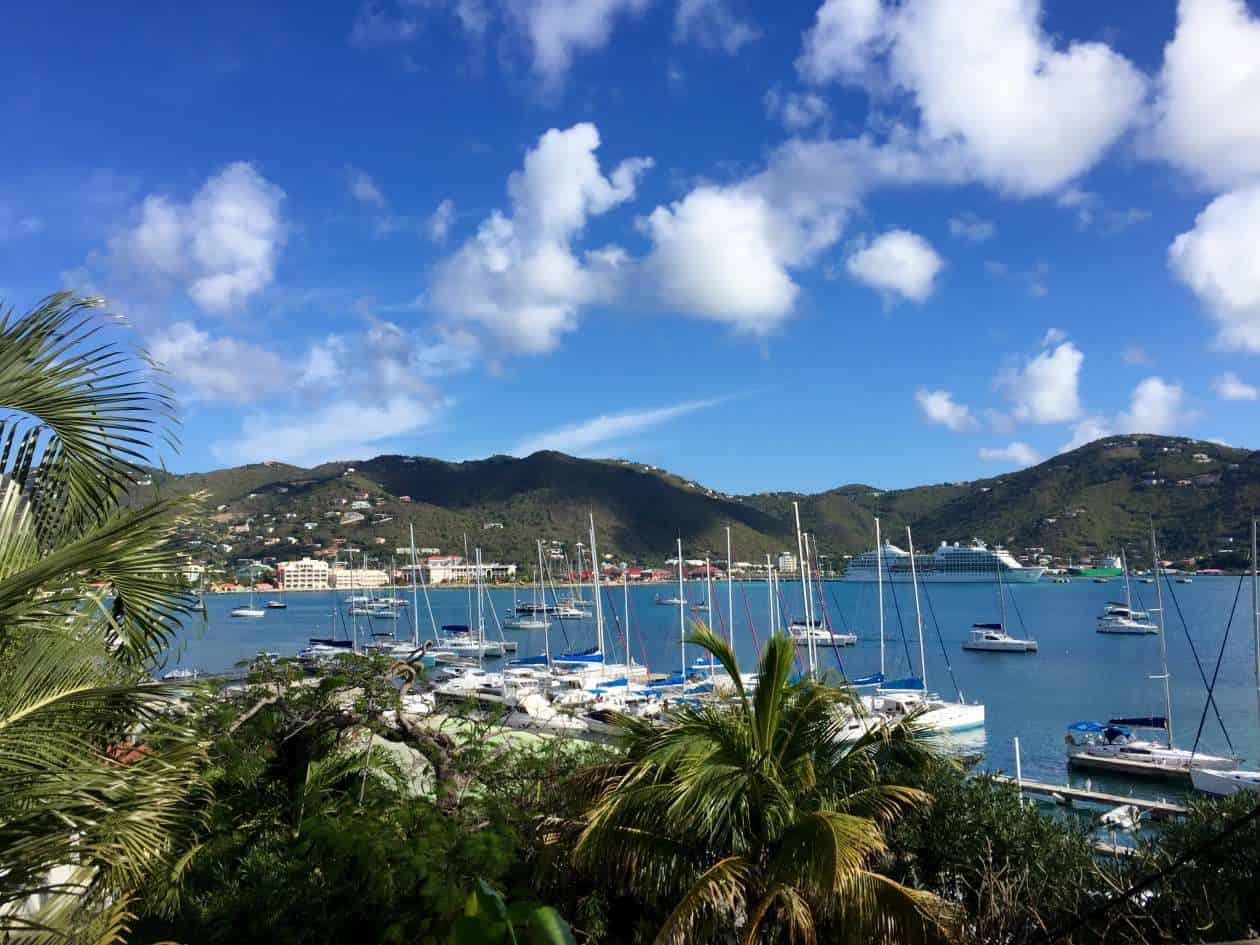
Magnitsky and other private attorneys investigating the affair on behalf of a major hedge fund followed a path from Russia to bank accounts in Switzerland and luxury properties in Dubai — ending up at a small firm based in the British Virgin Islands that specializes in setting up offshore companies for clients who want to remain in the shadows.

This is the story of behind-the-scenes players in the Magnitsky affair — and the tale of how an offshore go-between provided shelter to fraudsters, money launderers and other shady characters from Russia, Eastern Europe and the United States.

Click through to ICIJ.org to continue reading.

Secrecy for Sale

Inside the global offshore money maze

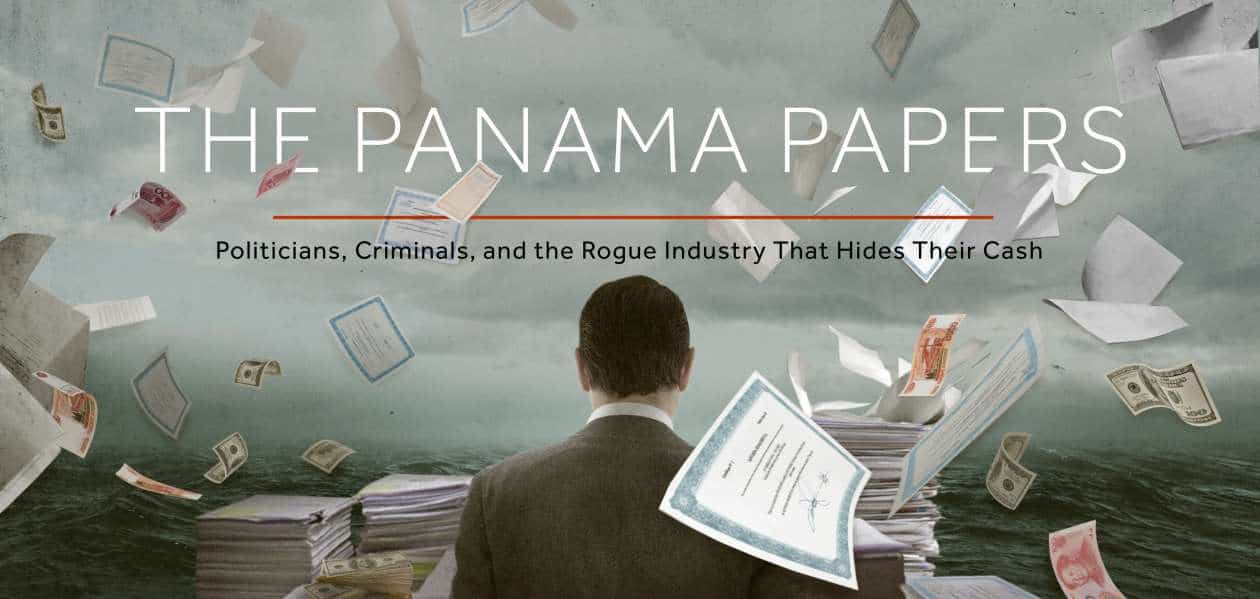
A cache of 2.5 million files has cracked open the secrets of more than 120,000 offshore companies and trusts, exposing hidden dealings of politicians, con men and the mega-rich the world over.

The secret records obtained by the International Consortium of Investigative Journalists lay bare the names behind covert companies and private trusts in the British Virgin Islands, the Cook Islands and other offshore hideaways.

They include American doctors and dentists and middle-class Greek villagers as well as families and associates of long-time despots, Wall Street swindlers, Eastern European and Indonesian billionaires, Russian corporate executives, international arms dealers and a sham-director-fronted company that the European Union has labeled as a cog in Iran’s nuclear-development program.

The leaked files provide facts and figures — cash transfers, incorporation dates, links between companies and individuals — that illustrate how offshore financial secrecy has spread aggressively around the globe, allowing the wealthy and the well-connected to dodge taxes and fueling corruption and economic woes in rich and poor nations alike. The records detail the offshore holdings of people and companies in more than 170 countries and territories.

The hoard of documents represents the biggest stockpile of inside information about the offshore system ever obtained by a media organization. The total size of the files, measured in gigabytes, is more than 160 times larger than the leak of U.S. State Department documents by Wikileaks in 2010.

To analyze the documents, ICIJ collaborated with reporters from The Guardian and the BBC in the U.K., Le Monde in France, Süddeutsche Zeitung and Norddeutscher Rundfunk in Germany, The Washington Post, the Canadian Broadcasting Corporation (CBC) and 31 other media partners around the world.

State Integrity Investigation

Sen. Malcolm Smith, D-Queens, leaves federal court Tuesday in White Plains, N.Y. The Democratic state lawmaker was arrested along with five other politicians Tuesday in an alleged plot to pay tens of thousands of dollars in bribes to GOP bosses to let him run for mayor of New York City as a Republican. AP

Corruption case further sullies Albany's reputation

By Nicholas Kusnetz

A New York state senator and five other political officials have been named in a sweeping federal corruption case — the latest in a series of scandals that helped earn the Empire State a D grade from the State Integrity Investigation.

At the heart of the complaint unsealed Tuesday: federal prosecutors say Sen. Malcolm Smith, a Democrat from Queens, used a series of contacts in an attempt to bribe New York City Republican Party officials to approve his bid for mayor on the GOP ticket.

The case, which allegedly involved tens of thousands of dollars in bribes and agreements to secure state and city funds for development projects, highlights some of the endemic  corruption problems that have plagued New York’s legislature in Albany, where politicians are frequently accused of exchanging cash for securing state funds and candidates exchange donations for political support. The image was reinforced by the State Integrity Investigation, a state-by-state ranking of accountability and transparency carried out last year by the Center for Public Integrity, Global Integrity and Public Radio International.

According to the complaint, Smith had ambitions to run for mayor of New York City, but wanted to run as a Republican. As a Democratic state senator, he needed support from the party to get on the ticket. The solution presented itself in the form of a New York real estate developer, who was cooperating with an undercover FBI agent in exchange for leniency on unspecified charges.

Accountability

Sen. Ted Cruz, R-Fla., addresses the 2013 Conservative Political Action Conference in Washington, D.C. Gage Skidmore/Flickr

FACT CHECK: Conservative Political Action Conference

By FactCheck.Org

In Sen. Ted Cruz’s twisted vision of economic history, Ronald Reagan cured double-digit unemployment by cutting spending and reducing the federal debt, and Jimmy Carter was guilty of “out-of-control regulation.”

In the real world:

  • Total federal spending soared during Reagan’s deficit-plagued first term, and the national debt nearly doubled. His budget director later resigned and wrote a book criticizing Reagan’s failure to cut spending.
  • And Carter signed landmark bills freeing airline, railroad and trucking rates from federal regulation, easing regulation of natural gas prices and eliminating federal regulation of interest rates paid by banks to small savers.

These are only a few of the disconnects between economic reality and Cruz’s oversimplified, often inaccurate attempt to paint President Obama’s record as the “exact opposite” of Reagan’s. The freshman Texas Republican said during his March 16 keynote address at the Conservative Political Action Conference (starting about 22 minutes and 20 seconds into the recording):

State Integrity Investigation

Maine state capitol building Derrick White/The Associated Press

'State Integrity Investigation' has blockbuster first year

By Nicholas Kusnetz

It’s been exactly one year since publication of the State Integrity Investigation, an unprecedented, data-driven analysis of transparency and accountability in all 50 states — and a lot has happened since. The project — a collaboration of the Center for Public Integrity, Global Integrity and Public Radio International, with cooperation from the Investigative News Network — has been quoted, praised, assailed or otherwise cited by hundreds of news outlets, good-government groups and legislators. The project was also a finalist for the prestigious Goldsmith Prize for Investigative Reporting awarded by Harvard’s Kennedy School of Government. Clearly, the idea of measuring accountability and transparency in state government has touched a reformist nerve — and our package is continuing to resonate across the country.

Since the State Integrity Investigation was launched, reform efforts have been initiated in 16 states. Four of those states — Delaware, Iowa, Maine and Rhode Island — have passed laws or issued executive orders improving disclosure and access to public information. Lawmakers in seven other states have proposed a broad slate of measures that would strengthen ethics oversight, tighten campaign finance reporting and more.

State Integrity Investigation

While New Mexico legislators, left, are instructed not to use their office for private gain, lawmakers and government watchdogs say it is essentially up to individual  legislators to decide whether a conflict exist. Illinois House Speaker Michael Madigan, top right, is also a partner at a prominent property tax law firm. At the Florida Capitol, bottom right, a watchdog group found at least 11 legislators earned money from firms that lobby the legislature. Wikimedia, state of Illinois, AP

Conflicts of interest run rampant in state legislatures

By Nicholas Kusnetz

SANTA FE — On February 20, New Mexico’s House Energy and Natural Resources Committee gathered for one of its regular meetings in a drab room here at the capitol, a circular building known as the Roundhouse. On the agenda: a bill that would hike fees and penalties for energy companies drilling wells in the state.

The votes fell along party lines, with five Republicans lining up against the bill and the committee's Democratic majority voting to send the legislation to the House floor. The Republicans argued the bill would stifle business and cost jobs, and for one lawmaker, the issue hit particularly close to home. Rep. James Strickler spends most of the year running his own small oil and gas production company, JMJ Land & Minerals Co. The bill would directly affect his profits.

Strickler, a 58-year-old from the sparsely populated, gas-rich northwest corner of the state, speaks with a gentle western drawl. In an interview after the committee vote, he said the bill would put New Mexico’s regulations out of line with those in other states. Ultimately the bill was voted down on the House floor, and Strickler was among those voting ‘no.’ Over seven years in office, Strickler has been a staunch advocate for his own industry and has twice introduced legislation to reduce the amount of renewable energy that utilities must purchase. He has never recused himself from a vote on energy issues, he said, even when it directly affects his bottom line.

“I don’t think it’s a conflict of interest,” Strickler said. “I think it’s a blessing that a few of us have some understanding of that industry.”

State Integrity Investigation

The Florida Capitol building in Tallahassee Gregory Moine/Flickr CC

Florida Senate passes sweeping ethics reform package

By Nicholas Kusnetz

The Republican-controlled Florida Senate unanimously passed a landmark ethics reform package on Tuesday, the first day of the legislative session, setting the stage for what could be the first major changes to the state’s ethics laws in decades.

The bills would strengthen provisions that prevent lawmakers from immediately becoming lobbyists, expand the powers of the state’s ethics commission and require that financial disclosure reports be posted online.

"Public office is a public trust," Senate President Don Gaetz said in hailing the 40-0 vote. "This legislation means the Florida Senate is serious about ethics reform. Higher ethical standards is just one more difference between Florida senators and Washington senators."

But the measures also contain several changes that critics say would actually weaken existing laws.

“I think it would be a step forward in some ways but several steps backward in others,” said Philip Claypool, a lawyer who served as executive director of the Florida Commission on Ethics until retiring in 2011. “The net effect I don’t think would be progress.”

While the legislation allows lawmakers to place investments in a blind trust in an effort to prevent conflicts of interest, for example, it leaves out several safeguards contained in similar laws in other states and at the federal level, Claypool said.

The bills would also allow lawmakers who have filed erroneous or incomplete financial disclosure reports to correct the forms before the ethics commission can investigate, in essence preventing the body from fining officials for their transgressions.

“Basically, they can get away with paying even less attention to the accuracy of a report,” Claypool said.

Gaetz spokeswoman Katie Betta disputed the characterization that the bills loosen existing law. She said the legislation would strengthen the ethics commission by allowing it to receive referrals from other state agencies.

Pages