Poisoned Places

A biker rides through downtown Ponca City, Okla. David Gilkey/NPR

Community coated in black mist — until citizens fought back

By Ronnie Greene and Howard Berkes

The air pollution flowing from local industry was so palpable residents could touch it - on their hands, on their shoes, on their pets, their clothes, their cars, their windows, their grass, their doors, their children’s toys. While localized air pollution has tainted towns across the country few communities visited by reporters for the Center for Public Integrity and NPR have been smothered like the residents this Oklahoma town.

Poisoned Places

Evan Bush/ iWatch News

Few criminal cases target big air polluters

By Chris Hamby and Ronnie Greene

For a decade, hazardous emissions from a refinery regularly swept into a mostly poor, minority neighborhood in Corpus Christi known as Hillcrest, where residents complained of odors, dizziness, vomiting and a range of conditions from asthma to cancer.

Poisoned Places

The Grain Processing Corp. plant in Muscatine, Iowa. Chris Hamby/iWatch News

Despite lone inspector’s efforts, persistent haze envelops Iowa town

By Chris Hamby

MUSCATINE, Iowa — One spring day in 2010, the haze hanging over this Mississippi River town was worse than usual. It billowed from the smokestacks of a corn processing plant and blanketed the neighborhood across the street. It enshrouded homes and, seen from a certain angle, looked almost blue.

Kurt Levetzow watched from his car. An inspector with the state agency that enforces air pollution laws, he’d been fielding more and more citizen complaints lately about Grain Processing Corp., known as GPC.

The company’s plant sits on the edge of the town’s South End neighborhood, where black soot and bits of corn collect on cars and homes and many residents worry about what they’re breathing. Even on an ordinary day, a pungent burnt-corn odor hangs in the air, and the haze can be seen from miles away.

But Levetzow hadn’t seen anything like this. Driving through the neighborhood near the plant, he snapped pictures and took notes for the memo he would write. “I went through Muscatine on 3-26-10,” he wrote. “I was amazed at what I saw.”

A pickup truck came to a stop next to Levetzow’s car. It was a company security guard.

“Is there a problem?” the guard asked.

“Yes, there is,” Levetzow answered. “GPC is fogging that residential area with a blue haze.” Levetzow pointed. “You see what I mean?”

The guard looked over. “Ah, they’re getting used to that,” he said, chuckling.

Poisoned Places

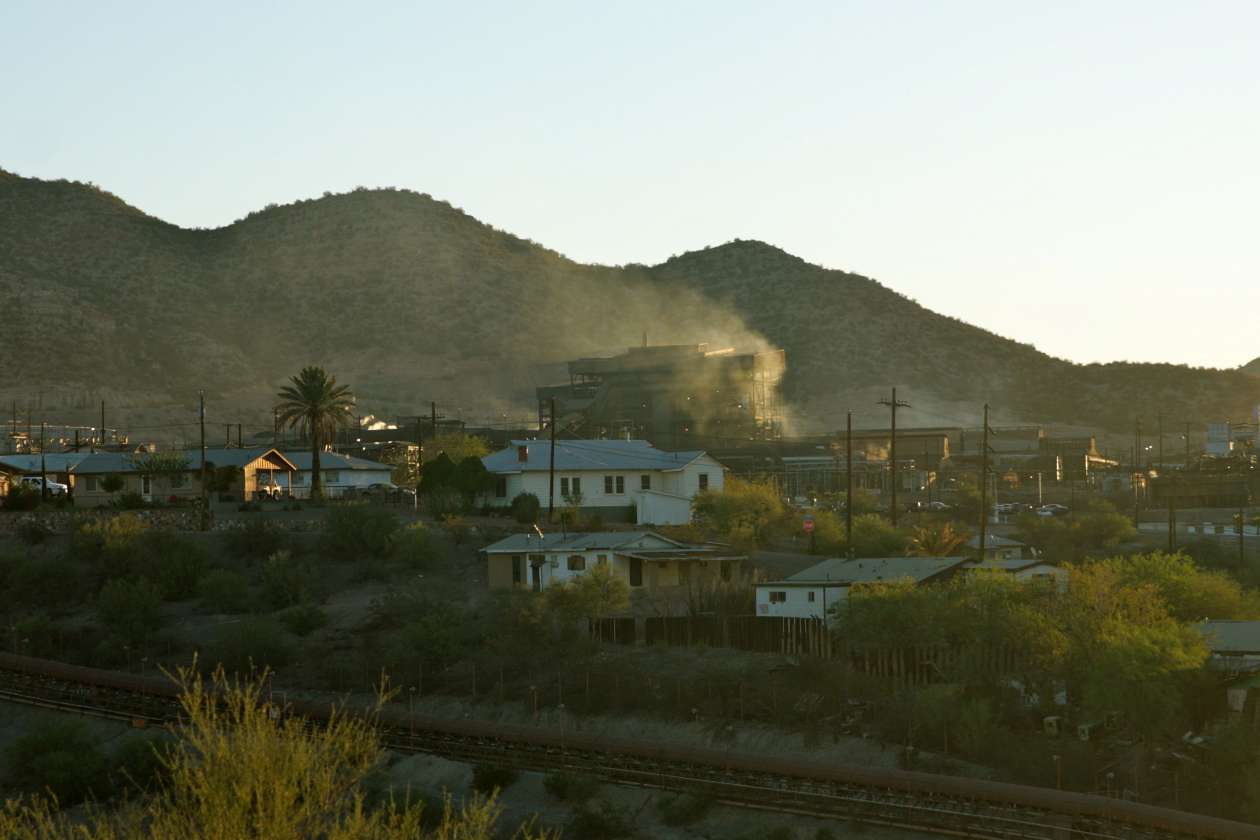
The Asarco copper smelter looms over Hayden, Arizona. Emma Schwartz/iWatch News

In smelter town, decades of dirty air, disease — and bureaucratic dawdling

By Jim Morris and Emma Schwartz

In an Arizona smelter town, people have endured decades of dirty air, disease — and bureaucratic dawdling. While the EPA and state regulators clash, citizens await relief. When it comes to toxic air pollution, help often arrives late.

Poisoned Places

A view of the Tonawanda Coke plant in Tonawanda, NY. The New York Department of Environmental Conservation has confirmed that the factory was emitting benzene and other carcinogens at many times the state's limit.

Where regulators failed, citizens took action — testing their own air

Citizens concerned about toxic emissions in a working class town in upstate New York tested the air themselves — forcing complacent regulators to act. Their story doesn't just highlight possible corporate wrongdoing and the failure of an environmental regulatory system that largely entrusts companies to disclose how much toxic pollution they emit. It's also about the clout citizens can wield when they dig in their heels and demand healthy air.

Poisoned Places

A chemical plant looms behind a swing set in Houston. Pat Sullivan/AP

Industry wields sway over air pollution rules, enforcement

By Ronnie Greene, Chris Hamby and Jim Morris

When the top environmental regulator in Kansas rejected its bid to build two new power units in 2007, citing health concerns, Sunflower Electric Power Corp. refused to take no for an answer. When the governor vetoed bills that would have paved the way for construction in 2008 and 2009, Sunflower again refused to relent.

The company’s persistence paid off. In 2009, the new governor approved construction of a new coal plant in the tiny city of Holcomb, so long as Kansas legislators backed renewable energy policies at the same time. The state regulator who initially denied Sunflower’s permit? He was let go.

Sunflower said it won the permit on merit, and that political influence was not a factor.

Yet the company’s success is a telling snapshot of how, when industry flexes its muscles over Clean Air Act issues, it often wins. From Kansas to Louisiana to Texas, Wisconsin and Ohio, community groups have fought new plants, expansions and chronic emissions – only to see industry score victories with regulators and politicians.

“We’re not protecting public health today,” said Jim Tarr, an air pollution consultant in California who worked as an engineer for the Texas Air Control Board in the 1970s. “One of the primary reasons we’re not is that the environmental agencies have been co-opted by the people doing the polluting.”

Industry’s influence plays out at every step of the process: From the campaign contributions it spreads to sway policy to its role shaping clean air rules to its resistance to enforcement actions brought by regulators.

Its reach is deeper than most realize.

Two just-published reports – one from academic researchers, the other from the Environmental Protection Agency’s own inspector general – detail industry’s role in shaping Clean Air Act regulations meant to protect communities from dirty air.

Poisoned Places

VIDEO: Toxics in the air, worry on the ground

By Emma Schwartz

Two decades ago Congress strengthened the Clean Air Act in an attempt to limit emissions of some of the most hazardous chemicals. But an investigation by the Center for Public Integrity's iWatch News and NPR has found that the toxic pollution persists in hundreds of communities, including two cities in Pennsylvania. This video profiles those cities.

Poisoned Places

Interactive: What’s your potential risk from air pollution?

To begin exploring how air pollution may affect your community, use this interactive map of more than 17,000 facilities that have emitted hazardous chemicals into the air. Color-coded dots and scores of one to five smoke stacks are based on an EPA method of assessing potential health risk in airborne toxins from a given facility. Click to view this map full-screen.

Poisoned Places

Ajani Winston/iWatch News

IMPACT: EPA posts secret 'watch list' that includes chronic polluters

By Corbin Hiar

Just days after the Center for Public Integrity's iWatch News and NPR reported that the U.S. Environmental Protection Agency maintains an internal list that includes serious or chronic violators of air pollution laws that have not been subject to timely enforcement, the EPA has posted the September and October watch list on its website. Some companies, their lawyers, potential plaintiffs and environmental groups are watching closely.

Pages

Writers and editors

Jim Morris

Senior Reporter The Center for Public Integrity

Jim Morris has been a journalist since 1978, specializing in coverage of the environment and public health.... More about Jim Morris

Chris Hamby

Staff Writer The Center for Public Integrity

Chris Hamby’s reporting on the environment and workplace safety has been recognized with the James Aronson Award for Social Justice Journ... More about Chris Hamby

Elizabeth Lucas

Computer-Assisted Reporter The Center for Public Integrity

Elizabeth Lucas joined the Center in June 2010 as a computer-assisted reporting intern.... More about Elizabeth Lucas

Emma Schwartz

Staff Reporter The Center for Public Integrity

Schwartz is a multimedia reporter who joined the Center from the Huffington Post Investigative Fund.... More about Emma Schwartz

Ronnie Greene

Senior Reporter The Center for Public Integrity

Greene joined the Center in 2011 after serving as The Miami Herald’s investigations and government editor.... More about Ronnie Greene

Corbin Hiar

Reporter The Center for Public Integrity

Before joining the Center for Public Integrity, Corbin worked as the D.C.... More about Corbin Hiar