Hard Labor

Breast cancer victim Carol Bristow, 54, has worked as a machine operator in a plastic auto parts factory in Windsor, Ontario, for 23 years. A recent study that found a high breast cancer risk for plastics workers supports her belief that on-the-job exposures to toxic fumes and dust played a role in her illness.

Study spotlights high breast cancer risk for plastics workers

By Jim Morris

WINDSOR, Ontario — For more than three decades, workers, most of them women, have complained of dreadful conditions in many of this city’s plastic automotive parts factories: Pungent fumes and dust that caused nosebleeds, headaches, nausea and dizziness. Blobs of smelly, smoldering plastic dumped directly onto the floor. “It was like hell,” says one woman who still works in the industry.

The women fretted, usually in private, about what seemed to be an excess of cancer and other diseases in the factories across the river from Detroit. “People were getting sick, but you never really thought about the plastic itself,” said Gina DeSantis, who has worked at a plant near Windsor for 25 years.

Now, workers like DeSantis are the focal point of a new study that appears to strengthen the tie between breast cancer and toxic exposures.

The six-year study, conducted by a team of researchers from Canada, the United States and the United Kingdom, examined the occupational histories of 1,006 women from Ontario’s Essex and Kent counties who had the disease and 1,146 who didn’t. Adjustments were made for smoking, weight, alcohol use and other lifestyle and reproductive factors.

The results, published online today in the journal Environmental Health, are striking: Women employed in the automotive plastics industry were almost five times as likely to develop breast cancer, prior to menopause, as women in the control group.

These workers may handle an array of carcinogenic and endocrine-disrupting chemicals. They include the hardening agent bisphenol A (BPA) — whose presence in polycarbonate water bottles and other products has unnerved some consumers — plus solvents, heavy metals and flame retardants.

Poisoned Places

A chemical plant looms behind a swing set in Houston. Pat Sullivan/AP

Inspector General to review EPA's 'Watch Lists'

By Jim Morris

The Environmental Protection Agency’s inspector general has begun a review of the EPA’s use of internal watch lists to target enforcement of federal pollution laws. The watch lists first came to light as part of a 2011 investigation by The Center for Public Integrity and NPR.

The inspector general is exploring “potential improvements in the protection of human health and the environment by ensuring the EPA is enforcing environmental laws and cleaning up communities,” the IG’s office wrote last month to Cynthia Giles, the EPA’s assistant administrator for the Office of Enforcement and Compliance Assurance.

The watch lists include allegedly chronic violators of the Clean Air Act, the Clean Water Act and the Resource Conservation and Recovery Act, which governs the handling of hazardous waste.

The EPA began to post the previously secret lists online in the fall of 2011 in response to a Freedom of Information Act request filed by the Center as part of the “Poisoned Places” investigation.

The project revealed that – two decades after Congress sought to crack down on chemicals that can cause cancer, brain damage and other ailments – toxic air pollutants continued to plague parts of the United States. The reports found that there were some 1,600 “high priority violators” of the Clean Air Act – nearly 400 of which were on the EPA’s watch list – and that federal and state regulators sometimes had trouble keeping tabs on oil refineries, power plants, steel mills and other industrial facilities that showered communities with contaminants.

Poisoned Places

The Marathon refinery in Detroit has nearly finished a $2.2 billion expansion that will allow it to process more high-sulfur “tar sands” crude from Canada. Kirk Allen

Detroit refinery expansion adds more Canadian crude, brings more worries

By Jim Morris and Chris Hamby

DETROIT — In an economically distressed pocket of southwest Detroit known by its ZIP code — 48217 — the weekend of September 7-9 was one of the worst, pollution-wise, residents like Theresa Shaw could remember.

“I started smelling it on Thursday,” said Shaw, who immediately suspected the Marathon Petroleum Co. refinery a half-mile from her house. “I kept the windows closed because I couldn’t breathe. On Friday, I thought, ‘What the heck are they doing?’ My eyes were just burning, my throat was hurting, my stomach was hurting. I was having migraine headaches.

“The smell, it was like this burning tar, with that benzene and that sulfur. I wanted to scream.”

Shaw retreated to her sister’s house on the north side of town. Responding to citizen complaints, the Michigan Department of Environmental Quality traced the powerful odor to Marathon, which had been cleaning several large vessels, and wrote up the company for a nuisance violation.

Marathon says it is “committed to environmental responsibility” and acted quickly to correct the odor problem, a byproduct of plant maintenance.

Yet the episode further eroded residents’ trust in the company and underscored their fears about a $2.2 billion refinery expansion that will allow Marathon to process more high-sulfur Canadian crude oil.

The build-out, nearly complete, won’t add to the air pollution burden, Marathon promises. In fact, the Ohio-based company vows, emissions of some pollutants will go down and job numbers will go up.

Shaw doesn’t buy it. “They’ve disrespected us in this neighborhood over and over and over again,” she said.

Poisoned Places

Marathon impact

The Marathon refinery in Detroit has nearly finished a $2.2 billion expansion that will allow it to process more high-sulfur “tar sands” crude from Canada.

Kirk Allen

An abandoned house in the Oakwood Heights section of southwest Detroit, near the Marathon refinery. The company has been buying homes in the decaying neighborhood.

Kirk Allen

Advertisement

Marathon Petroleum Co. says it has been, and will continue to be, a good neighbor, but some who live near the refinery are skeptical. “They’ve disrespected us in this neighborhood over and over and over again,” says one resident.

Kirk Allen

A Detroit neighborhood known by its ZIP code – 48217 – has seen better days. Some residents fear the area will deteriorate further after the expanded Marathon refinery begins operating.

Kirk Allen

“It’s like a Frankenstein lab experiment,” 48217 resident Theresa Landrum says of living with air pollution from the Marathon refinery.

Kirk Allen

Poisoned Places

The Citgo refinery in Corpus Christi, Texas. U.S. Chemical Safety Board

Texas pollution victims seek millions from Citgo

By Jim Morris

Fifteen residents of Corpus Christi, Texas — so sickened by pollution they have been deemed crime victims — are asking a federal judge to force Citgo Petroleum Corp. to set up multimillion-dollar trust funds to cover medical and relocation costs, in a case with national ramifications.

A jury in 2007 convicted Citgo of criminal violations of the Clean Air Act, concluding that the company’s Corpus Christi refinery allowed toxic chemicals to drift from two large, uncovered storage tanks into a nearby neighborhood for a decade.

The company was to have been sentenced last month; the Department of Justice has proposed a fine of slightly more than $2 million. Lawyers for the 15 residents, however, asked U.S. District Judge John D. Rainey to grant the residents crime-victim status so they could testify at the sentencing hearing and, perhaps, win compensation from Citgo. Rainey granted that status on Sept. 14 and postponed the hearing.

In a court filing Wednesday, lawyers for the 15 residents are seeking $80,000 from Citgo for medical screening.

They also want Citgo to establish an $11 million trust fund for treatment of cancer or other illnesses suffered by the more than 300 people who have submitted victim impact statements to the court. A court-appointed special master would decide whose expenses should be covered.

Poisoned Places

The Citgo refinery in Corpus Christi, Texas. U.S. Chemical Safety Board

As Clean Air Act sentencing nears, Justice cites violations at Texas Citgo refinery

By Jim Morris

Days before Citgo Petroleum Corp. faces its long-awaited sentencing for criminal Clean Air Act violations at its refinery in Corpus Christi, Texas, a Justice Department court filing alleges that a “wide range” of environmental and worker safety violations continue to plague the plant.

Citgo was convicted in June 2007 of two criminal counts stemming from 10 years of toxic emissions from two massive, uncovered storage tanks. Such convictions are rare: The Center for Public Integrity reported last year that Clean Air Act cases have been prosecuted at a far lower rate than Clean Water Act or solid waste cases.

In its filing this week, the Justice Department asks a federal judge to fine Citgo $2,090,000, the maximum allowed under the statute, and put the company on five years’ probation — also the maximum — for illegal emissions of benzene and other hazardous chemicals from the tanks between 1994 and 2004.

The department says the refinery made almost $1.16 billion in profits during that period.

Citgo’s sentencing hearing is scheduled to begin Monday in U.S. District Court in Corpus Christi and could last several days. In an e-mailed statement Friday morning, the company said it “embraces a culture of safety that is reflected in everything we and our employees do. We are proud of our record and of the important role our refineries play in providing good jobs and much needed tax revenue for the communities they serve, including Corpus Christi.”

The Justice Department document alleges that Citgo “has violated a wide range of environmental and worker safety regulations” — as recently as this year in some cases.

Poisoned Places

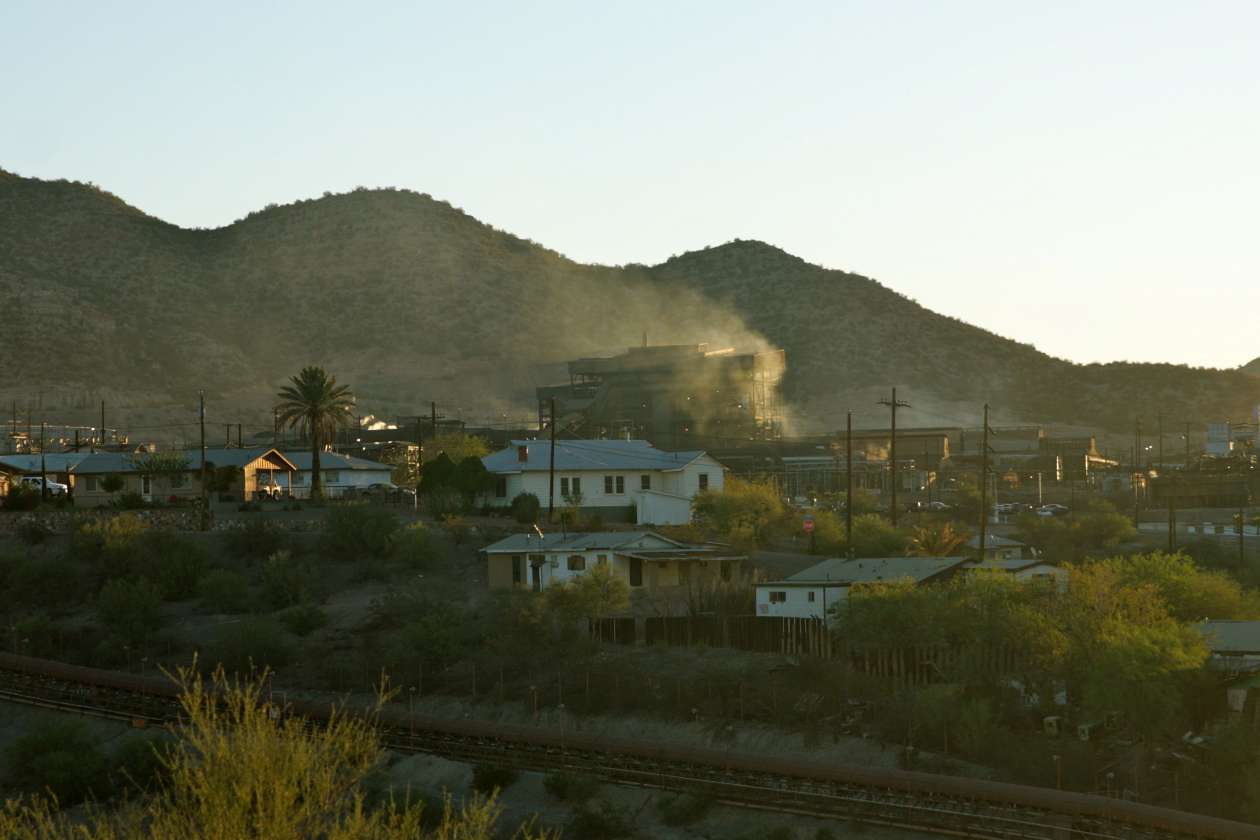
The Grain Processing Corp. plant in Muscatine, Iowa. Chris Hamby/iWatch News

IMPACT: Citizens sue Iowa plant over air pollution

By Chris Hamby

In the Mississippi River town of Muscatine, Iowa, concerns about a corn processing plant that belches smoke and ash over the South End neighborhood have festered for years.

On Monday, those living in the plant’s shadow took a step that, until recently, would have seemed unlikely at best: They sued the plant’s owner, Grain Processing Corp. — a vital piece of the town’s economy and a political force in Iowa.

For years, the lawsuit alleges, residents have put up with constant pollution that has damaged their property and affected their health. The Center for Public Integrity detailed the persistent haze hanging over the community and the company’s long history of run-ins with regulators as part of its “Poisoned Places” series with NPR last year.

“We’ve reached a tipping point in Muscatine,” said Tony Buzbee, a Houston lawyer with a history of winning high-profile environmental cases who has agreed to represent the residents. “I think that you’re going to see hundreds and hundreds of people who have the courage to stand up and say, ‘We’re in the right, and we’re not going to take it anymore.’ ”

Buzbee joins Jim Larew, who was general counsel to former Gov. Chet Culver, and Des Moines lawyer Andrew Hope in representing the residents, who are seeking to make the case a class action that anyone living within three miles of the plant could join.

The petition filed Monday, Buzbee said, is “just the tip of the iceberg.”  He plans to file hundreds more cases. “It’s going to cost a lot of money,” he said. “It’s going to be a big fight.”

Poisoned Places

Center wins 3 Sigma Delta Chi Awards

By iWatch News

Three separate Center for Public Integrity investigations examining toxic air, green energy contracts and hazards in oil refineries have won 1st place honors in the Society of Professional Journalists’ prestigious Sigma Delta Chi Awards.

The prizes, among the national winners in a contest attracting more than 1,700 entries, were awarded for:

  • Poisoned Places: Toxic Air, Neglected Communities: Produced in partnership with National Public Radio and the Investigative News Network — won top honors for Public Service in Online Journalism. The series explored how, more than two decades after enhancements to the Clean Air Act, many communities still suffer poisoned air and regulatory neglect. The Center’s main stories were written by Jim Morris, Chris Hamby, Ronnie Greene, Elizabeth Lucas and Emma Schwartz.
  • Green Energy: Contracts, Connections and the Collapse of Solyndra: Written by Ronnie Greene in partnership with ABC News, won the top honor for Online Investigative reporting. The series of reports documented breakdowns in the process by which the Department of Energy awarded lucrative green energy grants and loans.
  • Fueling Fears: Written by Jim Morris and Chris Hamby, won top honors in Online Non-deadline reporting. The reports examined worker and environmental hazards at America’s aging oil refineries.

The national prizes were announced this week, and will be presented at a July 20 ceremony at the National Press Club.

Poisoned Places

The Grain Processing Corp. plant in Muscatine, Iowa, sits on the edge of the town's South End neighborhood. Chris Hamby/iWatch News

IMPACT: After years of complaints, EPA steps in at Iowa plant

By Chris Hamby

For years, people living in the Mississippi River town of Muscatine, Iowa, have complained about the ash and smoke blowing into their neighborhood from a corn processing plant. State regulators have brought enforcement cases against the company, but the town’s South End neighborhood remains under a haze.

On Tuesday, the U.S. Environmental Protection Agency stepped in, alleging years of violations of air pollution rules at the plant owned by Grain Processing Corp. The letter issued to the company, known as GPC, doesn’t impose penalties, but puts it on notice that the EPA is considering an enforcement case.

GPC spokesman Janet Sichterman said company officials are reviewing the notice and “aren’t in a position to make a comment on it now.”

The action comes as the company is battling the Iowa attorney general, who has alleged separate violations of air and water pollution rules in a lawsuit. A group of citizens, calling themselves Clean Air Muscatine, has filed a petition to intervene in that case, saying the state’s previous actions against GPC have failed to protect people living near the facility.

Poisoned Places

Jill Callela has complained about air pollution from Old Town Fuel & Fiber, a paper mill across the Penobscot River from her home in Maine.  Dominic Callela

States slow to act against New England polluters

By Maggie Mulvihill, Alex Burris and James Robinson

For many in New England, fresh powdered snow is a welcome sign of the season. For Maine mother Jill Callela, the flakes showcase something much darker — the dirty air her family is breathing.

“OK, we have black snow again,” Callela, 39, said, remembering recent winters when the factory directly across the river from her home in Bradley, Maine, polluted the snow in her yard with what she says was lead-laden soot spewed from its smokestack.

Tests Callela had done have shown elevated levels of lead in the snow, she said. Icy winds sweeping over the Penobscot River behind her home amplified the problem.

“It was in everyone’s house and got into the blowers in our cars,” Callela said. “When we would turn on our heaters it would come through the vents.”

The factory, Old Town Fuel & Fiber, a paper mill, has over the past five years racked up $267,000 in federal air pollution fines for releasing illegal amounts of carbon monoxide, sulfur dioxide and methanol into the air above its facility.

Callela claims her complaints about the mill to state regulators have been ignored even though it is among a number of New England facilities labeled “high priority violators” by the U.S. Environmental Protection Agency. A facility can become a high priority violator, or HPV, by exceeding emission limits, violating a local state or federal order or meeting other criteria developed by the EPA to identify polluters in need of close scrutiny.

An investigation by the New England Center for Investigative Reporting shows that regulators in Maine and nearby states have taken months and even years to sanction facilities violating the Clean Air Act — even those the government itself has called HPVs, such as the Old Town paper mill.

Pages

Writers and editors

Jim Morris

Senior Reporter The Center for Public Integrity

Jim Morris has been a journalist since 1978, specializing in coverage of the environment and public health.... More about Jim Morris

Chris Hamby

Staff Writer The Center for Public Integrity

Chris Hamby’s reporting on the environment and workplace safety has been recognized with the James Aronson Award for Social Justice Journ... More about Chris Hamby

Elizabeth Lucas

Computer-Assisted Reporter The Center for Public Integrity

Elizabeth Lucas joined the Center in June 2010 as a computer-assisted reporting intern.... More about Elizabeth Lucas

Emma Schwartz

Staff Reporter The Center for Public Integrity

Schwartz is a multimedia reporter who joined the Center from the Huffington Post Investigative Fund.... More about Emma Schwartz

Ronnie Greene

Senior Reporter The Center for Public Integrity

Greene joined the Center in 2011 after serving as The Miami Herald’s investigations and government editor.... More about Ronnie Greene

Corbin Hiar

Reporter The Center for Public Integrity

Before joining the Center for Public Integrity, Corbin worked as the D.C.... More about Corbin Hiar