Poisoned Places

Q&A: Former Bush official touts ‘market-based’ air toxics regulation

By Corbin Hiar

Former George W. Bush environmental adviser James Connaughton — the man some insiders call "the next EPA administrator" if Mitt Romney wins the presidency — discusses regulation of toxic air pollutants.

Poisoned Places

SLIDESHOW: Proximity of pollutants

By iWatch News

The neighborhood in Corpus Christi, Texas, where Tammy Foster and her husband and some three hundred predominantly Hispanic families live.

The former zinc smelter turned hazardous waste processing facility sits 950 feet from the edge of Dona Park. It is being dismantled in spite of concerns from Texas environmental regulators.

Advertisement

The strand of trees separating Dona Park from the refinery included a mansion built in 1892. It was relocated in 1998.

Refinery workers live in these mobile homes. The grassy area separating them from the plant is the old Dunn Lane neighborhood where Foster’s grandparents lived.

Foster and her neighbors are wary of the food grown across the freeway from the refinery.

The facility is due to open in 2013 across the Corpus Christi Ship Chanel from Dona Park. It will run on petroleum coke, a refining byproduct that the company has begun stockpiling there.

Advertisement

Geneva Energy’s tire-burning power plant in the poor, African-American town of Ford Heights, Ill.

Although the Head Start preschool program has moved across town, the F.U.T.U.R.E. Foundation’s after-school program is still in the shadow of the plant.

The Cottage Grove Upper Grade Center and dozens of homes are also nearby the facility. 

The Genesee Power Station in Flint, Mich., a poor, largely African-American city.

Many residents live downwind from the waste-wood fired power plant.

The 269 students of Carpenter Road Elementary School attend classes just down the road from the Genesee plant.

Poisoned Places

This former zinc smelter turned hazardous waste processing facility sits 950 feet from the edge of the Dona Park neighborhood in Corpus Christi, Texas. Tammy Foster

Environmental injustice: EPA neglects discrimination claims from polluted communities

By Corbin Hiar

Three years into Lisa Jackson’s tenure as head of the U.S. Environmental Protection Agency, more than a dozen formal complaints alleging air pollution is disproportionately harming low-income, minority communities remain unresolved.

Poisoned Places

The Grain Processing Corp. plant in Muscatine, Iowa, sits on the edge of the town's South End neighborhood. Chris Hamby/iWatch News

IMPACT: Day after story on weak enforcement, a state cracks down on polluter

By Chris Hamby

Iowa’s attorney general is suing a corn processing plant, alleging it has released more air pollution than allowed for at least the past 18 months. Filing of the lawsuit came a day after the Center for Public Integrity’s iWatch News highlighted the state environmental agency’s passivity in curbing emissions at the plant in the Mississippi River town of Muscatine.

“Quite frankly, this lawsuit was surprising,” said Janet Sichterman, a spokesperson for the plant’s owner, Grain Processing Corp. “Normally, we would just resolve the issues between the two of us.”

James Larew, the lawyer representing concerned Muscatine residents who formed a community group earlier this year, said he plans to file a petition asking the judge to give the plant’s neighbors a seat at the negotiating table alongside the state and the company. “We’d at least like to be heard in these negotiations,” he said.

The plant, which processes corn into beverage alcohol, ethanol, starches and syrups, sits on the edge of the town's working-class South End neighborhood, where haze and a pungent odor hang in the air.

At the heart of the case is an air pollution regulation the company, known as GPC, also was accused of violating in 2006. When plants undergo significant expansions or modifications, they must install the best available pollution control equipment and analyze the potential effects on the nearby community’s air.

Poisoned Places

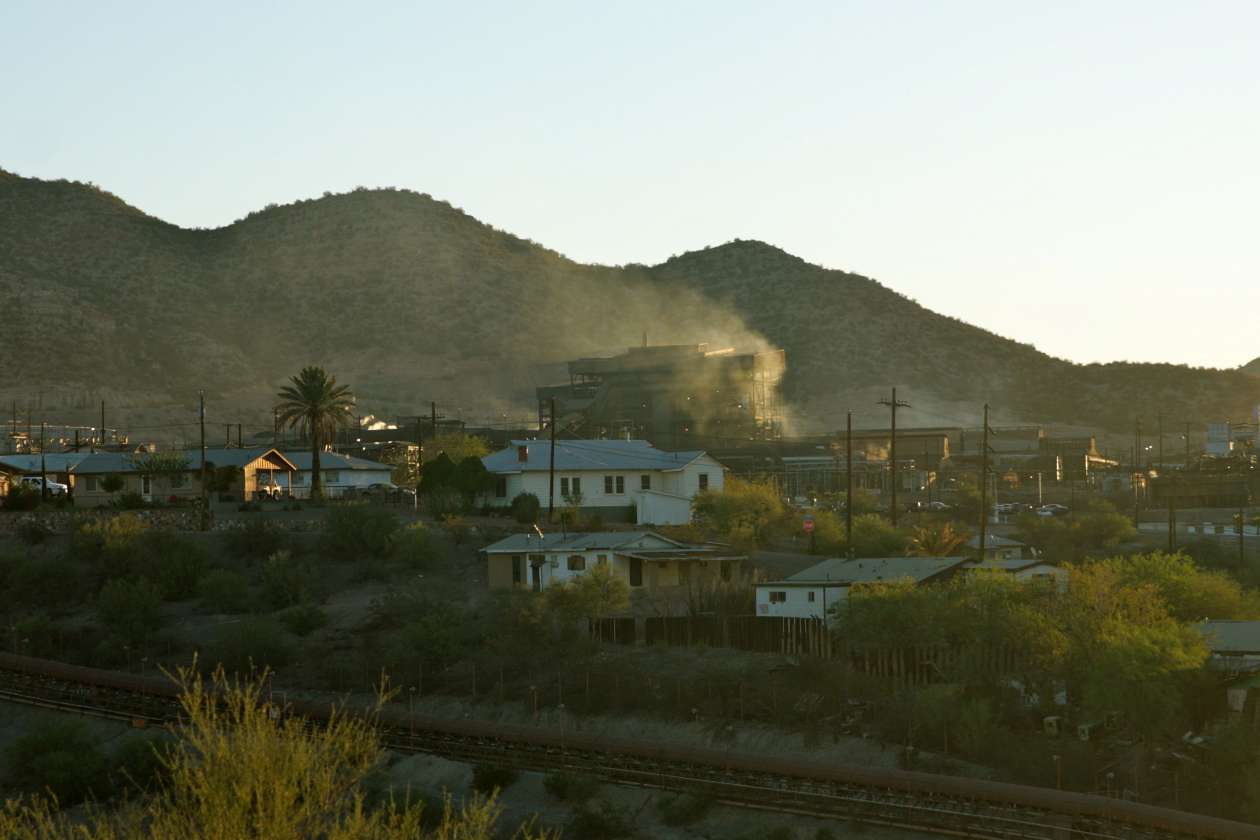
Some residents of Hayden, Ariz., believe that emissions of toxic metals from the Asarco copper smelter have caused cancer and other maladies. The EPA has accused Asarco of underreporting such emissions. Emma Schwartz/iWatch News

Poisoned Places: By the numbers

By Sarah Whitmire

From Tonawanda, N.Y. to Hayden, Ariz., hundreds of U.S. communities are still exposed to pollutants, which can cause cancer, birth defects and other health issues — more than 20 years after passage of the Clean Air Act.

Poisoned Places

SLIDESHOW: A haze in Hayden

By Sarah Whitmire

Betty Amparano and her husband, Ray, stand in front of their home in Hayden, Arizona, which is not far from Asarco’s copper smelter.

Emma Schwartz/iWatch News

Betty Amparano said her children had high levels of lead and other metals in their blood. More than 200 other residents also complained of health issues, sued, and obtained a settlement from Asarco.

Emma Schwartz/iWatch News

Advertisement

Asarco’s smelter turns ore into nearly pure copper bars. The EPA alleges the company has been in “continuous violation” of the Clean Air Act for excessive emissions of arsenic, lead and other metals since 2005.

Emma Schwartz/iWatch News

Della Soliz-Bustamante and Andy Bustamante live across from the smelter. They said they fear that a cleanup of soil tainted by airborne chemicals hasn’t gone far enough.

Emma Schwartz/iWatch News

Some residents of Hayden, Ariz., believe that emissions of toxic metals from the Asarco copper smelter have caused cancer and other maladies. The EPA has accused Asarco of underreporting such emissions.

Emma Schwartz/iWatch News

Nellie Acton has lived across the ravine from the Asarco plant for all her life. She’s frustrated by the noise and smell of the plant, which she believes has hurt her health.

Emma Schwartz/iWatch News

Advertisement

Asarco’s smelter turns ore into nearly pure copper bars. The EPA alleges the company has been in “continuous violation” of the Clean Air Act for excessive emissions of arsenic, lead and other metals since 2005.

Emma Schwartz/iWatch News

Poisoned Places

William Ruckelshaus, former adminstrator for the EPA Rick Dahms

5 questions for William Ruckelshaus

By Corbin Hiar

We asked Republican William D. Ruckelshaus, the Environmental Protection Agency’s first and fifth administrator, why administration after administration has failed to curb dangerous forms of air pollution.

Poisoned Places

Recent legislation would leave many communities vulnerable to airborne chemicals, among them Chester, Pa. “They told me a long time ago that I should move,” said Elwood Patrick, pictured above, “and I wish I had.” Emma Schwartz/iWatch News

Why Americans still breathe known hazards decades after ‘clean air’ law

By Jim Morris and Corbin Hiar

The stumbling, two-decade-old war on hazardous air pollutants has stalled on bureaucratic dawdling, industry resistance, legal maneuvering, limited resources and politics.

Pages

Writers and editors

Jim Morris

Senior Reporter The Center for Public Integrity

Jim Morris has been a journalist since 1978, specializing in coverage of the environment and public health.... More about Jim Morris

Chris Hamby

Staff Writer The Center for Public Integrity

Chris Hamby’s reporting on the environment and workplace safety has been recognized with the James Aronson Award for Social Justice Journ... More about Chris Hamby

Elizabeth Lucas

Computer-Assisted Reporter The Center for Public Integrity

Elizabeth Lucas joined the Center in June 2010 as a computer-assisted reporting intern.... More about Elizabeth Lucas

Emma Schwartz

Staff Reporter The Center for Public Integrity

Schwartz is a multimedia reporter who joined the Center from the Huffington Post Investigative Fund.... More about Emma Schwartz

Ronnie Greene

Senior Reporter The Center for Public Integrity

Greene joined the Center in 2011 after serving as The Miami Herald’s investigations and government editor.... More about Ronnie Greene

Corbin Hiar

Reporter The Center for Public Integrity

Before joining the Center for Public Integrity, Corbin worked as the D.C.... More about Corbin Hiar