
Toxic Clout

Deborah Rice

Ouster of scientist from EPA panel shows industry clout

By Ronnie Greene and David Heath

In 2007, when Deborah Rice was appointed chair of an Environmental Protection Agency panel assessing the safety levels of flame retardants, she arrived as a respected Maine toxicologist with no ties to industry.

Yet the EPA removed Rice from the panel after an intense push by the American Chemistry Council (ACC), an industry lobbying group that accused her of bias. Her supposed conflict of interest? She had publicly raised questions about the safety of a flame retardant under EPA review.

Rice’s travails through the EPA’s Integrated Risk Information System, or IRIS, program reveal the flip side of industry’s sway. Not only does the ACC back many scientists named to IRIS panels, it also has the power to help remove ones it doesn’t favor.

The ruckus over the Maine scientist surfaced six years ago, but its lesson echoes today.

To Rice, her removal points up an irony borne out by a Center for Public Integrity investigation: Scientists with deep ties to industry are allowed to continue on IRIS panels. But she — with no financial link to industry — was booted.

“It wasn’t like I was a consultant, saying this stuff is really bad because someone is paying me to do it. I was the toxicologist working for the state of Maine asked by my department to do these reviews,” she said. “That was the basis on which they said I was in conflict.”

Another irony: Rice’s assessment was on target. Two years later, the EPA moved to cease production of decaBDE, a chemical it views as a possible carcinogen. In Maine, Rice’s research had supported a state ban on the chemical.

Hard Labor

Breast cancer kills 40,000 women in the United States each year. A new federal report urges that more funding go toward research into environmental causes of the disease. Kevin Wolf/AP
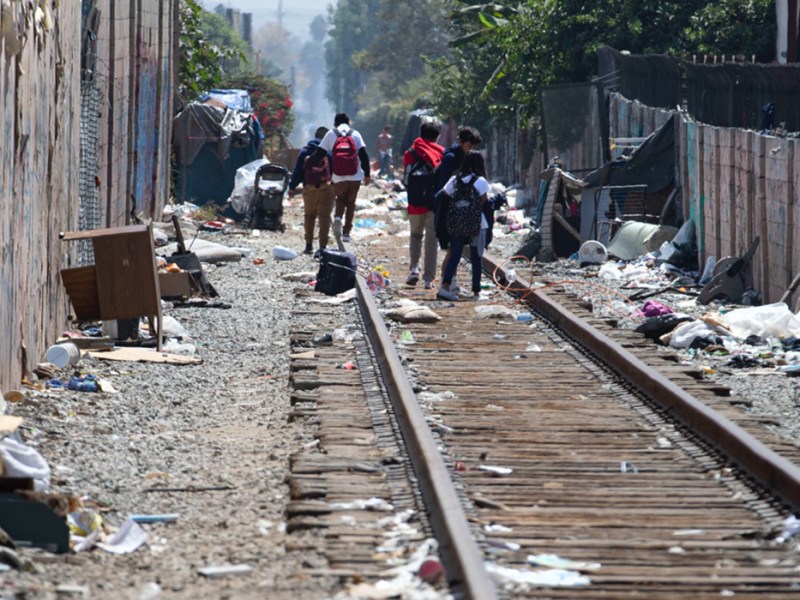
U.S. report urges deeper look into breast cancer's environmental links
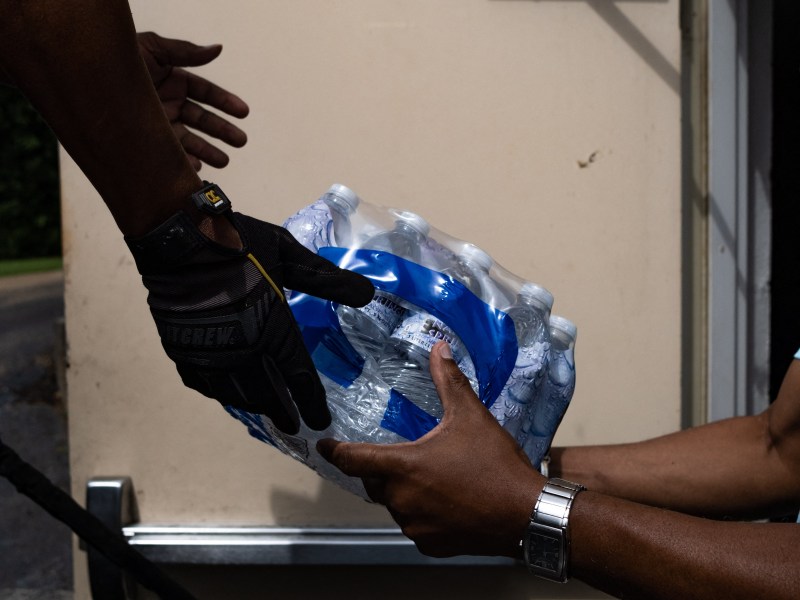
By Jim Morris

A new federal advisory panel report makes a forceful case for more research into environmental causes of breast cancer, which was diagnosed in 227,000 women, killed 40,000 and cost more than $17 billion to treat in the United States last year.

Compiled by the congressionally mandated Interagency Breast Cancer and Environmental Research Coordinating Committee, the report notes that most cases of breast cancer “occur in people with no family history,” suggesting that “environmental factors — broadly defined — must play a major role in the etiology of the disease.”

Yet only a fraction of federal research funding has gone toward examining links between breast cancer and ubiquitous chemicals such as the plastic hardening agent bisphenol A; the herbicide atrazine; and dioxin, a byproduct of plastics manufacturing and burning, says the report, prepared for Health and Human Services Secretary Kathleen Sebelius and released today.

“Prevention needs to be as important as other investments that are made in screening, treatment and access to care,” Jeanne Rizzo, co-chair of the committee and president of the San Francisco-based Breast Cancer Fund, said in an interview. “There really is a problem, and until we address it we’re going to continue to have a quarter of a million new cases every year.”

Poisoned Places

A chemical plant looms behind a swing set in Houston. Pat Sullivan/AP

Inspector General to review EPA's 'Watch Lists'

By Jim Morris

The Environmental Protection Agency’s inspector general has begun a review of the EPA’s use of internal watch lists to target enforcement of federal pollution laws. The watch lists first came to light as part of a 2011 investigation by The Center for Public Integrity and NPR.

The inspector general is exploring “potential improvements in the protection of human health and the environment by ensuring the EPA is enforcing environmental laws and cleaning up communities,” the IG’s office wrote last month to Cynthia Giles, the EPA’s assistant administrator for the Office of Enforcement and Compliance Assurance.

The watch lists include allegedly chronic violators of the Clean Air Act, the Clean Water Act and the Resource Conservation and Recovery Act, which governs the handling of hazardous waste.

The EPA began to post the previously secret lists online in the fall of 2011 in response to a Freedom of Information Act request filed by the Center as part of the “Poisoned Places” investigation.

The project revealed that – two decades after Congress sought to crack down on chemicals that can cause cancer, brain damage and other ailments – toxic air pollutants continued to plague parts of the United States. The reports found that there were some 1,600 “high priority violators” of the Clean Air Act – nearly 400 of which were on the EPA’s watch list – and that federal and state regulators sometimes had trouble keeping tabs on oil refineries, power plants, steel mills and other industrial facilities that showered communities with contaminants.

Hard Labor

Farmworkers pick tomatoes in Immokalee, Fla. during the 2006 spring season.  Luis M. Alvarez/AP

Report suggests OSHA safeguard contingent workers

By Chris Hamby

Workplace safety and health regulators should conduct an enforcement blitz and amend policies to give greater protection to the growing number of vulnerable temporary, or “contingent,” workers, a new report recommends.

The report from the Center for Progressive Reform, a nonprofit research and advocacy group, echoes many of the findings of a December Center for Public Integrity story detailing the increasing use of contingent workers to perform some of the most hazardous, undesirable jobs.

The number of contingent workers has more than doubled during the past two decades, with the current total estimated at more than 2.5 million, according to the U.S. Bureau of Labor Statistics. Recent studies have indicated that contingent workers suffer injuries at higher rates than other employees.

Use of such workers is particularly popular in industries such as farming, construction, warehousing and hotel services, the group’s report says. Unable to outsource these jobs, companies have turned to contingent workers to reduce labor costs, the report says. By using contingent workers, the employer can avoid paying for workers’ health insurance and workers’ compensation costs, eliminating incentives to provide safe workplaces, the CPR researchers say.

Steven Berchem, the chief operating officer of the American Staffing Association, said in a statement, "We have not had an opportunity to review the report, but worker safety is paramount to our members and the American Staffing Association is actively engaged in continual efforts to ensure safe working conditions for temporary and contract employees."

Yet these workers are often assigned to dangerous work and not given the proper training or safety equipment, the new report says.

Hard Labor

Walmart trailers parked outside the Schneider Logistics warehouse in Mira Loma, Calif. Lawyers alleging wage theft from mostly immigrant Latino contract workers at the Southern California warehouse complex took steps to add Walmart as a defendant in an ongoing federal lawsuit. Adithya Sambamurthy/Center For Investigative Reporting

Walmart added to lawsuit alleging wage theft at California warehouse

By Jim Morris

A federal judge ruled Thursday that Walmart can be added to a lawsuit alleging widespread wage theft at a Southern California warehouse.

Lawyers for contract workers at the Schneider Logistics warehouse in Mira Loma, Calif. – whose sole customer is Walmart – had moved to add the retailer to the case in November.

Thursday's ruling by U.S. District Judge Christina Snyder will force Walmart to defend itself against allegations that Schneider, at Walmart’s behest, cheated as many as 1,800 low-wage workers out of millions of dollars.

Walmart fought becoming a late addition to the case, but Snyder wrote that the plaintiffs had a “good faith explanation that they did not seek to name Walmart as a defendant until this stage of the litigation because they only recently uncovered evidence in discovery that justifies a lawsuit against Walmart.”

The lawsuit, filed in October 2011, claims that Schneider and two staffing agencies, Premier Warehousing Ventures LLC and Impact Logistics Inc., failed to keep proper payroll records, falsified time sheets and misled workers about the amount of money they had earned.

All three companies have denied the allegations. The staffing agencies, however, agreed to pay a collective $450,000 in fines and back wages to settle citations issued by California labor officials after a warehouse raid last year. Schneider was not cited by the state.

Walmart spokesman Dan Fogleman did not immediately respond to a request for comment Thursday. Last November, he said: “While we have a set of quality standards that must be met, the third party service providers we utilize are responsible for running their day-to-day business. They manage their people completely independent of us.”

Health and Safety

Hilda Solis announced her resignation as Labor Secretary on Jan. 9, 2013. AP

Labor secretary leaves legacy of worker protections and unfinished business

By Chris Hamby

With her resignation this week, Labor Secretary Hilda Solis leaves behind a department advocates say has adopted a renewed focus on enforcing worker safety laws but been unable to push through a number of long-sought regulations.

The first Hispanic woman to hold the top post at a Cabinet-level agency, Solis said in a letter to department employees that she planned to return to California, where she grew up.

Labor advocates credit her with restoring the department’s commitment to protecting workers, particularly vulnerable populations, and bringing stronger enforcement of worker safety laws. During her tenure, the Occupational Safety and Health Administration and the Mine Safety and Health Administration expanded initiatives to crack down on repeat violators of safety and health laws – sometimes drawing the ire of the business community.

Yet the department hasn’t finalized a host of rules to protect workers that many in the labor community view as long overdue.

As the Center for Public Integrity has reported, a surprising resurgence of black lung disease has affected coal miners in Appalachia. For more than 15 years, experts and the government’s own scientists have pushed to lower the standard for exposure to the dust that causes black lung. In 2010, MSHA proposed a rule that would lower the limit, among other things, but it remains unfinished.

Environment

How accountable is your state? Read the State Integrity Investigation, an unprecedented, data-driven analysis of transparency and accountability in all 50 state governments. David Zalubowski/AP

Best of 2012: Accountability

By The Center for Public Integrity

Hard Labor

 Sue Grobsmith looks at the files she’s gathered on the accident at a steel mill near Syracuse, N.Y., that killed her husband, Jack. Sam Maller

Even after workplace deaths, companies avoid OSHA penalties

By Chris Hamby

SYRACUSE, N.Y. — The temperature outside barely reached double digits on the morning of Jan. 15, 2009, and, inside the Crucible Specialty Metals steel mill here, it was bitterly cold. Ice coated the equipment, forcing employees to use torches to free the machines so they could start their work.

Danger was everywhere, federal records show. Equipment was old and in disrepair. Molten steel snaked through the building, and, at any moment, could snag and twist out of control, burning anything in its path. Shafts driving the machines that compress the steel spun at high speeds with no guards to shield employees working nearby. Sometimes, workers said, the torches backfired and burned them.

This was Jack Grobsmith’s domain. He’d worked at Crucible for more than 35 years and had ascended to the position of head roller. He adjusted the equipment and made sure the steel bars came out just the right size. Around the factory, he was known as a jokester with a purpose — showing up at events in character as Crucibella, donning a dress, lipstick and ‘60s-era Easter hat to preach about safety.

That frigid January morning, Grobsmith went to one of the stands that compresses steel to hook up a water hose. Next to him, two rotating shafts driven by a 900-horse-power motor spun at 240 revolutions per minute. Grobsmith struggled with the hose, which was covered in grease, then slipped on ice coating the area.

The shafts pulled him in, crushed his body and shot him out the other side.

Grobsmith’s assistant roller and longtime friend Rocky Saccone ran over. “It just happened so fast,” recalled Saccone, who retired a few months later. “We pulled him out, and that was it.”

Hard Labor

About the Methodology

The Center for Public Integrity’s analysis relies on data from multiple sources, including the Occupational Safety and Health Administration, the Treasury Department and the Justice Department. Using the Freedom of Information Act, the Center obtained an extract of OSHA’s master database of inspection records, known as the Integrated Management Information System, or IMIS. The portion received by the Center contains information about more than 1 million workplace safety and health inspections conducted from Jan. 1, 2001, to the date in early August 2012 when the data were provided.

In analyzing both penalties initially imposed by OSHA and penalties ultimately collected, the Center used only cases considered “closed” by the agency. This excluded some recent cases in which an employer may still be contesting violations or in which OSHA, the Treasury Department or another entity is still attempting to collect a fine. When calculating penalties initially imposed, the Center included violations and their accompanying fines that were later deleted as part of settlement negotiations or the litigation process.

The Treasury Department agreed to provide data on OSHA debts collected under its cross-servicing program for the fiscal years 2006 to 2012. Collection rates were calculated using the total amount collected and the total amount referred in a given year. Data that would trace individual debts across years was not available.

Hard Labor

Carlos Centeno with his partner, Velia Carbot. Centeno was employed as a temp worker at a Chicago-area factory in 2011 when a solution of hot water and citric acid erupted from a 500-gallon tank, burning him over 80 percent of his body. His bosses refused to call 911, and more than 98 minutes passed before he arrived at a burn unit. He died three weeks later.   Centeno family

'They were not thinking of him as a human being'

By Jim Morris and Chip Mitchell

CHICAGO — By the time Carlos Centeno arrived at the Loyola University Hospital Burn Centermore than 98 minutes had elapsed since his head, torso, arms and legs had been scalded by a 185-degree solution of water and citric acid inside a factory on this city’s southwestern edge.

The laborer, assigned to the plant that afternoon in November 2011 by a temporary staffing agency, was showered with the solution after it erupted from the open hatch of a 500-gallon chemical tank he was cleaning. Factory bosses, federal investigators would later contend, refused to call an ambulance as he awaited help, shirtless and screaming. He arrived at Loyola only after first being driven to a clinic by a co-worker.

At admission Centeno had burns over 80 percent of his body and suffered a pain level of 10 on a scale of 10, medical records show. Clad in a T-shirt, he wore no protective gear other than rubber boots and latex gloves in the factory, which makes household and personal-care products.

Centeno, 50, died three weeks later, on December 8, 2011.

A narrative account of the accident that killed him — and a description of conditions inside the Raani Corp. plant in Bedford Park, Ill. — are included in a U.S. Occupational Safety and Health Administration memorandum obtained by the Center for Public Integrity. The 11-page OSHA memo, dated May 10, 2012, argues that safety breakdowns in the plant warrant criminal prosecution — a rarity in worker death cases.

The story behind Centeno’s death underscores the burden faced by some of America’s 2.5 million temporary, or contingent, workers  a growing but mostly invisible group of laborers who often toil in the least desirable, most dangerous jobs. Such workers are hurt more frequently than permanent employees and their injuries often go unrecorded, new research shows.

Pages

Writers and editors

Jim Morris

Senior Reporter The Center for Public Integrity

Jim Morris has been a journalist since 1978, specializing in coverage of the environment and public health.... More about Jim Morris

Kristen Lombardi

Staff Writer The Center for Public Integrity

Kristen Lombardi is an award-winning journalist who has worked for the Center for Public Integrity since 2007.... More about Kristen Lombardi

Chris Hamby

Staff Writer The Center for Public Integrity

Chris Hamby’s reporting on the environment and workplace safety has been recognized with the James Aronson Award for Social Justice Journ... More about Chris Hamby

Ronnie Greene

Senior Reporter The Center for Public Integrity

Greene joined the Center in 2011 after serving as The Miami Herald’s investigations and government editor.... More about Ronnie Greene