
Wendell Potter

AP

OPINION: favors for special interests

By Wendell Potter

If you wonder why we spend more money on health care than any other country  but have some of the worst health outcomes, you need look no further than the halls of Congress to figure out why that is.

And you need look no further back than the recent “fiscal cliff” drama for compelling proof of how decisions are often made, not based on protecting the public’s interest and bringing costs down, but on protecting the profits of pharmaceutical companies, insurance firms and other special interests that grease the palms of our elected officials.

Drug makers have long had cozy relationships and outsized influence on lawmakers in Washington. That’s why ObamaCare  barely touches that industry. Big Pharma essentially blackmailed members of Congress and the White House by threatening to bankroll a huge PR and lobbying campaign to kill health care reform if serious consideration was given to allowing Medicare officials to negotiate for lower drug prices.

We hear constantly from lawmakers about how unsustainable the Medicare “entitlement” program is,  yet when they had a chance to make a difference in how much Medicare has to shell out to drug makers, they looked the other way. Taxpayers could save billions of dollars a year if Medicare didn’t have to pay so much for drugs, but drug companies have much more clout on Capitol Hill than taxpayers.

So much clout that one big drug company—Amgen—was able to get language quietly inserted in the fiscal cliff bill that will cost the Medicare program millions of dollars.

Buried deep in the legislation is language that delays long-proposed price restraints on a class of drugs used to treat kidney dialysis patients. That paragraph allows Amgen to sell one of its high-priced drugs, Sensipar, with no government controls for two more years—at a cost to the Medicare program of an estimated $500 million.

Wendell Potter

OPINION: distorted spin from health insurers and their friendly front groups

By Wendell Potter

In my book,  Deadly Spin, I described the PR playbook health insurers, tobacco companies and other special interests use to influence public policy, often by deceptive means.

One tried-and-true tactic is to recruit third parties to help deliver your talking points — hopefully, individuals and organizations that are held in higher regard by the public than your own company or industry.

This is a staple of the insurance industry’s playbook —my former colleagues know that they’re not especially popular.  In fact, internal polls I was privy to as an industry executive showed consistently that health insurers were beloved by the public just slightly more than tobacco companies.

True to form, America’s Health Insurance Plans (AHIP), the industry’s big PR and lobbying group, has rolled out a slick campaign aimed at getting Congress to gut some of ObamaCare’s most important consumer protections.

 “Time for Affordability” is the name of AHIP’s campaign. Since the official name of ObamaCare is the Patient Protection and Affordable Care Act, the idea here is to persuade folks that the word “affordable” does not really apply to the law and that the insurers, long-time champions of affordability that they are, have solutions to fix it.  

Among the patient protections insurers have set their sights on are the ones that prohibit them from selling what many consumer advocates call “junk insurance” and that prohibit them from charging older customers more than three times as much as they charge their younger ones. Insurers’ preference would be for Congress to just get rid of that prohibition entirely. The consolation prize would be for Congress to let them charge older folks 500% more instead of just 300% more. Charging the elderly exorbitant rates is part of a decades-long strategy to make coverage unaffordable for older folks.

Wendell Potter

America’s Health Insurance Plans has launched a new online campaign to persuade lawmakers that they need to take immediate action to prevent insurance premiums from going up more than usual.  Screengrab

OPINION: differing notions of 'affordability'

By Wendell Potter

For the first time in a long time, my former insurance colleagues and I agree on something: it’s time for affordability.

Health insurers’ big PR and lobbying group, America’s Health Insurance Plans, has launched a slick new campaign, complete with compelling graphics and pithy sound bites, to persuade lawmakers that they need to take immediate action to prevent insurance premiums from going up more than usual.

But while we agree that lawmakers do indeed need to focus on affordability, we disagree on what they should do. Insurance executives want Congress to get rid of some of the most important consumer protections in the Affordable Care Act, a.k.a. ObamaCare. I believe it’s time to focus on the value—or lack thereof—that private health insurance companies actually add to our health care system.

Several years ago, a coworker asked our CEO during a staff meeting what kept him up at night. He responded with a single word: disintermediation.

Merriam-Webster defines disintermediation as “the elimination of an intermediary in a transaction between two parties.” So what my boss was saying was that sooner or later, Americans might reach the conclusion that private insurers are no more essential than travel agents (remember them?), and that by dispatching health insurers to the history books, we could reduce spending on health care by billions if not trillions of dollars.   

Much of what I was paid to do in my former job was to create and perpetuate the impression that insurers are “part of the solution” and “add value” to the system. I put those words between quotation marks because they were used repeatedly by my CEO and other industry leaders and became our mantras, especially in conversations with policymakers and the media.

Wendell Potter

Erin Radford, of Washington, protests with other activists, nurses, and patients outside of the America's Health Insurance Plans conference in 2008. AHIP is citing a controversial study to warn that insurance rates for young adults will rise sharply under the Affordable Care Act. AP

OPINION: what insurers aren't telling you

By Wendell Potter

As Ronald Reagan once famously said, “There you go again.”

The culprits in this case are health insurance companies that want to change ObamaCare so they can keep selling highly profitable junk insurance to young people and keep charging older folks so much in premiums they have little money left over for anything else.

What’s happening now is a repeat of the tactics insurers employed during the final weeks of the health care reform debate. Back then, they papered Washington with a flawed “study” warning that premiums would soar if lawmakers ignored their recommendations. And now insurers are once again disseminating a new study with similar predictions. This time they’re trying to convince us that coverage for all young adults will become unaffordable next year if Congress doesn’t gut an important consumer protection in the reform law.

In 2009, shortly before the Senate voted on reform, America’s Health Insurance Plans —the main industry trade group —hired PricewaterhouseCoopers to estimate how much premiums would increase under the law. The study was quickly discredited, however, when it became clear that the accounting firm had ignored sections of the legislation that would keep coverage more affordable.

The current study, by the actuarial firm Oliver Wyman, also suffers from sins of omission —which raises concerns that this new effort may also have been influenced by the insurance industry. (Oliver Wyman has not responded to my request for comment.)

Even if it didn’t finance the study, which was published last week in the trade publication Contingencies, AHIP is using it as part of its campaign to persuade Congress to delay or repeal a provision of the reform law. That provision, which takes effect Jan. 1, 2014,  will prohibit insurers from charging older people more than three times as much as younger people.

Dollars and Dentists

Kool Smiles in the largest dental chain serving kids on Medicaid, with about 2 million patients. But the chain has been criticized by regulators in three states for allegedly doing unnecessary procedures on children. The company denies this, saying it provides quality care to children in need. Frontline

Texas tries to crack down on dental chains that put profits ahead of patients

By David Heath

A leading Republican in the Texas legislature, who says she’s outraged by allegations that corporate dental chains put profits ahead of patients, has introduced a bill that would allow the state to regulate chains and forbid them from forcing dentists to meet revenue quotas.

A joint investigation by the Center for Public Integrity and PBS Frontline last summer found that two of the largest dental chains owned by private-equity firms, Aspen Dental Management and Kool Smiles, put pressure on its dentists to meet production goals, prompting complaints of overbilling and unnecessary treatments.

Both companies deny this. And a coalition of dental chains in Texas contends that their dentists have total control over patient care. But the chief sponsor of the bill remains skeptical.

“Several reports, including the Frontline program, have uncovered outrageous activities involving the illegal enticement of patients, especially among our Medicaid providers and often involving dental service organizations,” said Republican Sen. Jane Nelson, who chairs the Senate’s Health & Human Services committee.

Nelson did not name a specific chain. Aspen Dental does not accept Medicaid and has no offices in Texas. But Kool Smiles has clinics throughout Texas, and public records show that the state Attorney General has been investigating Kool Smiles for Medicaid fraud.

Texas has been embroiled in a Medicaid fraud scandal for the past couple of years. The initial focus was on overbilling Medicaid for unnecessary braces on children. But the scandal has since widened. State authorities said last October that beyond braces, they’ve identified 89 dental providers they suspect of overbilling Medicaid by $154 million.

Wendell Potter

OPINION: finally, plain English from health insurance companies

By Wendell Potter

You probably missed it because of the media’s focus on the fiscal cliff, but a provision of ObamaCare took effect on January 1 that can help you avoid making costly mistakes when you sign up for health insurance. At the very least you’ll be able to understand what you’re actually signing up for.

From now on, health insurers will have to provide us with information in plain English, and in no more than four pages, about what their policies cover and how much we’ll have to pay out of our own pockets when we get sick. And they’ll have to provide it in a standard format that will enable us to make apples-to-apples comparisons among health plans. Click here to see an example of what the plan descriptions must now look like.  

As you can imagine, insurers fought hard to kill that part of the law. That’s because they’ve profited for years by using legalese and gobbledygook in describing their policies, and also by purposely withholding information we really need to make informed coverage decisions. 

Now, at long last, thanks to ObamaCare, you can say goodbye and good riddance to “explanations” like this one:

“Benefits are payable for Covered Medical Expenses (see ``Definitions'') less any Deductible incurred by or for a Covered Person for loss due to Injury or Sickness subject to: (a) the Maximum Benefit for all services; (b) the maximum amount for specific services; both as set forth in the Schedule of Benefits; and (c) any coinsurance amount set forth in the Schedule of Benefits or any endorsement hereto. The total payable for all Covered Medical Expenses shall never exceed the Maximum Benefit stated in the Schedule of Benefits. Read the ``Definitions'' section and the ``Exclusions and Limitations'' section carefully.”

Mystery in the Fields

Mihintale Dhammarakkita Thero, a monk in Sri Lanka, donated his kidney to a high school principal with kidney disease. Mystery in the Fields is a three-part series that explores in text, photos and video how a rare form of kidney disease is killing laborers and crippling communities in three different regions, from Central America to Sri Lanka to India. As the death tolls mount, researchers remain puzzled, unable to definitively uncover the disease’s causes. Anna Barry-Jester

In Sri Lanka, new steps target mysterious kidney disease

By Sasha Chavkin

The Sri Lankan government is vowing to impose tighter controls on pesticides and fertilizers amid growing concern the chemicals are helping fuel a mysterious epidemic of chronic kidney disease devastating its north central region.

In September, in Mystery in the Fields, the Center for Public Integrity explored how a rare form of chronic kidney disease is killing agricultural workers in Sri Lanka, India and Central America. Scientists in each region are struggling to identify the cause of these parallel epidemics, which have led to tens of thousands of deaths worldwide and are suspected to be linked to a toxic exposure.

In a November 2012 speech laying out a national budget proposal, Sri Lankan President Mahinda Rajapaksa pledged to take action to crack down on contaminated agrochemicals.

“There is a theory that pesticides and chemical fertilizer contribute to increase non-communicable diseases,” Rajapaksa said, referring in oblique terms to the politically controversial kidney epidemic. “Therefore, regulations will be formulated to require suppliers and distributors of all agrochemicals to comply with quality standards.”

A committee of government ministers is meeting with scientific experts and interest groups and will submit a report to the cabinet with recommendations for the regulations, said Sri Lanka’s Registrar of Pesticides, Dr. Anura Wijesekera. 

Wijesekara, whose office oversees imports and permitting of agrochemicals, said Sri Lanka had already taken a significant step earlier this year: establishing limits of detection for nine toxins including cadmium and arsenic. Pesticides and fertilizers containing more than the permitted amounts of these chemicals are prohibited from distribution.

Health

The year in medical investigations

By The Center for Public Integrity

The Center for Public Integrity's health reporting in 2012 included "Cracking the Codes," an investigation that exposed loopholes in Medicare billing costing billions of tax dollars. Since the series ran, Department of Health and Human Services Secretary Kathleen Sebelius and Attorney General Eric Holder have threatened possible criminal prosecutions of doctors and hospitals that use electronic health records to bill for more complex and costly services than they actually delivered.

Our 21-month 'Craking the Code' investigation documented for the first time how some medical professionals have billed Medicare at sharply higher rates than their peers and collected billions of dollars of questionable fees as a result. 

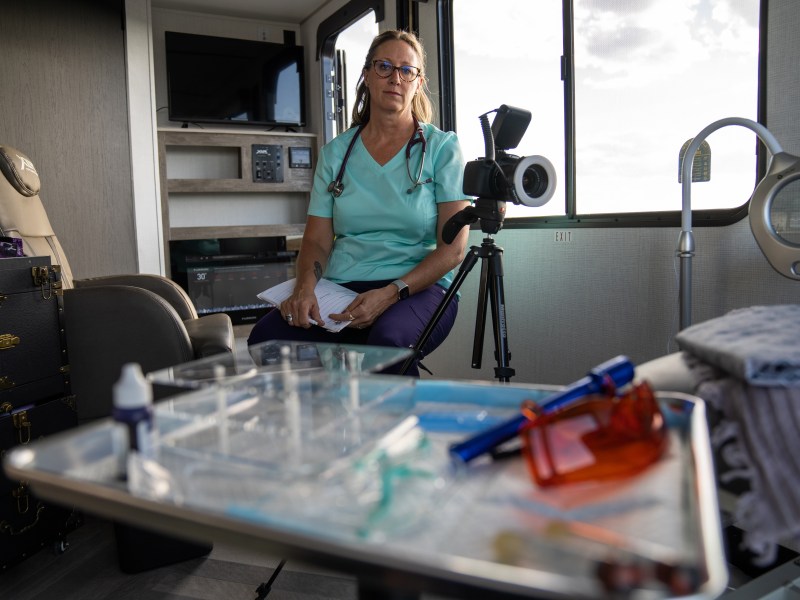
A coal miner performs a lung function test in a mobile clinic run by the National Institute for Occupational Safety and Health (NIOSH) in Norton, Va. After decades of decline, black lung is back. Its resurgence is concentrated in central Appalachia, and younger miners are increasingly getting the most severe, fastest-progressing form of the disease. Federal regulators are assembling a team of lawyers and other experts to consider how to bolster coal mine dust enforcement given systemic weaknesses revealed by the Center for Public Integrity and NPR.

David Deal/NPR

Advertisement

'Dollars and Dentists,' a joint investigation with PBS FRONTLINE, found pressure to meet production goals may have compromised treatment of poor young patients.

Frontline

Forty percent of Americans have a family member who can’t afford to go to the dentist. Private-equity firms have found a lucrative market in this statistic, investing in corporate dental chains to treat people who’ve neglected their teeth.  A Center for Public Integrity (CPI) and FRONTLINE investigation found that the same business model that makes dental chains accessible to people short on cash can also lock people into debt and has led to complaints of patients being overcharged or given unnecessary treatments.

Frontline

Breast cancer victim Carol Bristow, 54, has worked as a machine operator in a plastic auto parts factory in Windsor, Ontario, for 23 years. A recent study that found a high breast cancer risk for plastics workers supports her belief that on-the-job exposures to toxic fumes and dust played a role in her illness.

Mihintale Dhammarakkita Thero, a monk in Sri Lanka, donated his kidney to a high school principal with kidney disease. Mystery in the Fields is a three-part series that explores in text, photos and video how a rare form of kidney disease is killing laborers and crippling communities in three different regions, from Central America to Sri Lanka to India. As the death tolls mount, researchers remain puzzled, unable to definitively uncover the disease’s causes.

Anna Barry-Jester

Health

Our 21-month 'Craking the Code' investigation documented for the first time how some medical professionals have billed Medicare at sharply higher rates than their peers and collected billions of dollars of questionable fees as a result. 

Best of 2012: Health reporting

By The Center for Public Integrity

Wendell Potter

President Barack Obama signs the health care bill in the East Room of the White House in Washington, March 23, 2010. J. Scott Applewhite/AP

OPINION: insurance scare tactics

By Wendell Potter

One of the most ill-advised promises President Obama made during the health care reform debate was this: “If you like your health care plan, you can keep your health care plan.”

He should have known better. First, insurance companies and employers are far more in control of determining whether or not you can keep your health plan than the government. That was true before ObamaCare was passed, and it’s true today.

Second, ObamaCare will indeed mean that some health plans will no longer be available a year from now. That’s a good thing, despite what you’ll be hearing from companies that make huge profits selling inadequate coverage.

A few insurers have for years used slick brochures and sales pitches to persuade people to buy policies that will not come close to shielding them from financial ruin if they get sick or injured.  Many people who have bought these policies undoubtedly believe they have a health plan worth keeping, especially since premiums for inadequate coverage are usually lower than premiums for real insurance. You can be certain that many of those folks will complain loudly when junk health insurance is banned in 2014 and, in so doing, become unwitting soldiers in the insurance industry’s ongoing battle to gut the consumer protections in ObamaCare.

Back to that first point for a moment. I remember shaking my head when I first heard the President assure me back in 2009 that I could keep my plan if I liked it. To deliver on that promise, the law would have to require employers and insurers to keep offering plans they want to get rid of, and that was never going to happen. A few years before I left my job in the insurance industry I was forced out of a plan I liked—a PPO—because my employer decided to stop offering PPOs to its workers and to move all of us into a high-deductible plan.

Pages

Writers and editors

Joe Eaton

Reporter The Center for Public Integrity

Before he joined the Center’s staff in 2008, Joe Eaton was a staff writer at Washington City Paper and a reporter at&nbs... More about Joe Eaton