How important is nonprofit journalism?

Donate by May 7 and your gift to The Center for Public Integrity will be matched dollar-for-dollar up to $15,000.

Juvenile Justice

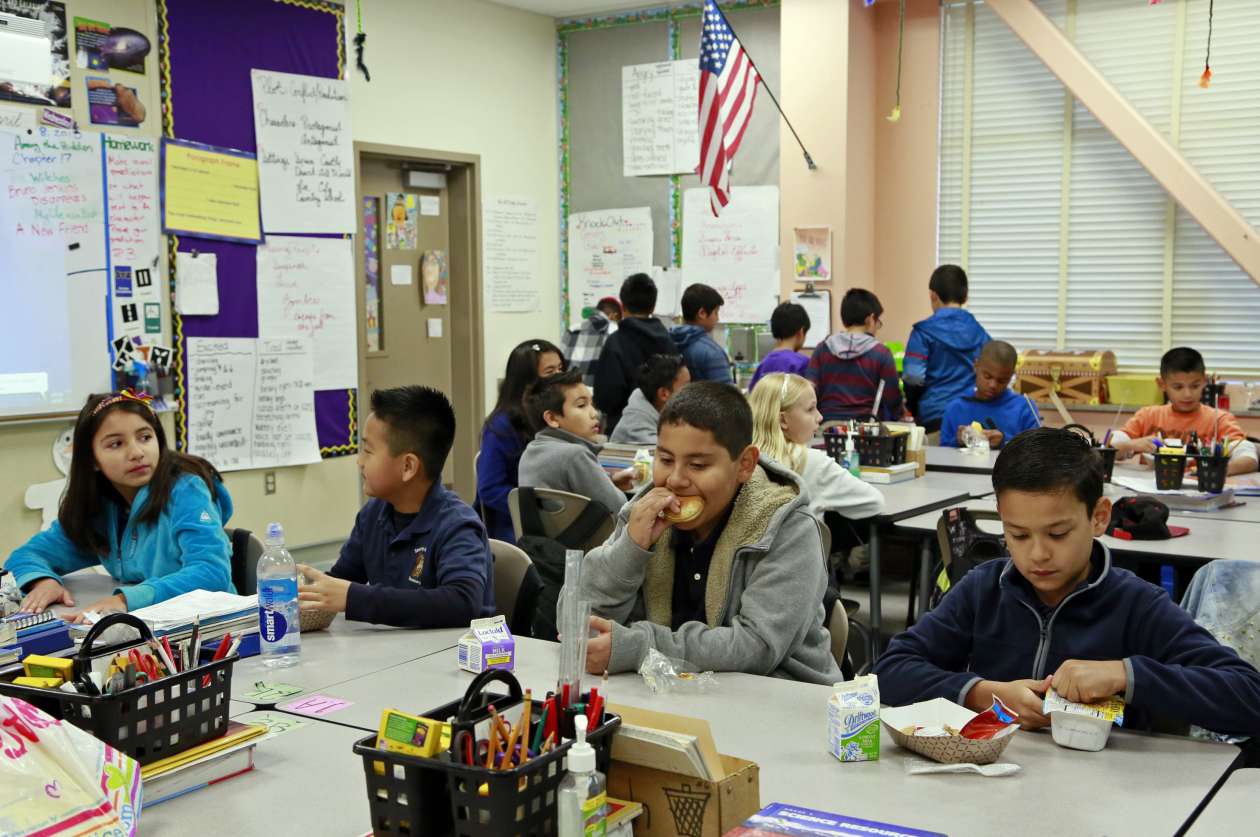
Teresa Arredondo stands with her son in front of his elementary school in Bakersfield, Calif. Tomas Ovalle Photography

Una epidemia de expulciones

By Susan Ferriss

Este otoño, mientras esperaba su turno para una audiencia de apelación disciplinaria, el estudiante de sexto grado comenzó a llorar.

Juvenile Justice

Georgia's 'bootstrapping' detention of kids for indiscretions

By Susan Ferriss

Criminal-justice experts in Georgia say that locking up kids for indiscretions like repeat truancy, running away, even underage smoking, could end up costing that state millions in federal aid if these policies aren’t halted.   

Read about this detention philosophy, called “bootstrapping,” in a story posted by the Juvenile Justice Information Exchange in Georgia.

The JJIE story cites an expert report commissioned by the Governor’s Office for Children and Families, which you can read here

As the JJIE’s story describes, some Georgia judges resort to ordering confinement for juveniles if kids fail to comply with a court order to stop a status offense, which is an offense only because a juvenile, not an adult, committed it. These infractions can range from drinking to violating curfews.  

Since 1974, Congress has blocked states from locking up kids for more than just a few hours before or after a court hearing on a status offense. An exception allows longer jail time for violating court orders. In Georgia, however, experts found that an increasing number of kids have been confined for failing to stop behaviors as minor as running away. Some judges have even confined kids to help them escape abusive homes or to give them shelter, the report found.

But federal law’s intent is to shield kids who haven’t committed real crimes from sharing detention space with serious young offenders, experts said. And Congress, they said, is poised to possibly tighten up allowances to allow confinement of status offenders. A number of states already forbid such confinements.    

Juvenile Justice

Los Angeles Police Chief Charlie Beck shows that a real Beretta handgun looks very similar to a BB gun manufactured to look like the real thing. Here, both guns sit on a Los Angeles Police Department gun box. Staff at California State Sen. Kevin de Leon’s office

Fatal Texas shooting highlights struggle to regulate replica guns

By Susan Ferriss

The fatal police shooting earlier this month of a Texas middle school student clutching a BB gun — the latest in a series of incidents involving imitation firearms — spotlights how localities and states have struggled to identify and control both look-alike toys and guns that fire something other than bullets.

Juvenile Justice

Our youngest killers

By Sarah Favot, Kirsten Berg and Jenna Ebersole

One 16-year-old went looking for pot at a Brookline High School graduation party, then shot the guest of honor in the chest when he got a racial slur instead.

Juvenile Justice

Struggles over responses to student "sexting"

By Susan Ferriss

A new study in Pediatrics looks at the issue of teens and “sexting,” which can get a student expelled and arrested in some states on criminal charges.

The Juvenile Justice Information Exchange’s take on the study, based on a survey with kids, says it dispels some of the most frightening notions about an activity that schools and legislators have been rapidly criminalizing. 

But the debate rages on over how to deal with sexting’s most damaging consequences, which have been linked to teen victims’ suicides, while balancing sensible responses to rash teen behavior, as the JJIE explored in a previous report.

California’s state Senate approved a bill in 2011 to punish student sexting with mandatory expulsion, but the state’s Assembly stopped short and didn’t pass the proposal. Various states have looked at requiring mandatory counseling for a first offense. The Center for Public Integrity recently investigated extremely high expulsion rates in California’s Kern County.


Juvenile Justice

Kern County's student smoking problem

By Susan Ferriss

Students in Kern County, California should beware of indulging in a nasty habit that plagues 17 percent of adults there. 

In line with its tough reputation for school discipline, Kern’s schools were tied for first place among California counties last year for booting out kids because of infractions involving tobacco — either smoking or chewing it. The state’s discipline records don’t include details about which particular habit turned out to be the last unlucky strike for a student.

The percentage of adult smokers in California dropped to a record low of about 12 percent in 2010, according to California Department of Public Health. In 2009, the last year for which county figures were available, the department estimated that Kern’s rate of 17 percent was one of the highest in the state.

Given that schools in Kern expelled more than 2,500 students last year, the number of those ousted for tobacco – eight – seems pretty modest. But that’s the largest number for any county except for Riverside County, where schools also expelled eight students for tobacco; Riverside’s smoking rate was almost 13 percent in 2009.

Kern and Riverside really stand out, because 42 out of 58 counties in the Golden State didn’t expel a single kid for indulging in tobacco last year. 

In fact, for all of California, there were only about 40 expulsions for tobacco-related offenses, according to an analysis done by the Center for Public Integrity.

The numbers were a bit of a moving target. The Center’s initial analysis found about 70 expulsions statewide for tobacco. The figures were updated after schools in Southern California’s Orange County told the California Department of Education that they had erred in their reporting. That county’s initial report of 39 tobacco expulsions fell to just two.

Stay tuned for more on expulsions, suspensions and other juvenile-justice related info.

Juvenile Justice

California school discipline numbers need scrutiny

By Susan Ferriss

Did schools in Sacramento County, California, really suspend 6,645 students last year for having a firearm at school? What about Alameda County, in the San Francisco Bay Area, where raw numbers fed into a state database had 6,594 kids suspended for packing a gun?

Clearly, the answer is no. But we found these funny figures — and another huge error — while digging into raw numbers that California’s schools must submit to the state’s Department of Education after the close of each academic year. The department adds up the raw numbers of disciplinary actions and categorizes them by county, district, school and infraction and posts the information on its website for the public to see starting in September. 

The Center discovered the mistakes while sifting and adding up raw data as part of an investigation into extraordinarily high rates of student expulsions in Kern County in the Golden State’s Central Valley. We wanted to compare which of 34 separate education code violations led to kids getting suspended and expelled in each California county.

Alameda has problems with youth violence, to be sure. But it was beyond belief that one school, Arroyo High School, could have had 1,198 suspensions for violating a specific state education code prohibition on guns.

We had the same thought in regard to Sacramento’s numbers. The county’s Twin Rivers Unified district initially appeared to have reported a cluster of thousands of suspensions, specifically for guns, which made us wonder if the county's overall figures were inflated. One school, Foothill High, seemed to have suspended 689 kids for guns, based on the raw numbers filed. Yes, Sacramento County also has some problems with youth violence. But a reality check was in order.

Juvenile Justice

School arrests in Connecticut bring new scrutiny, reforms

By Lisa Chedekel

As a fifth grader at a New Haven magnet school in 2009, Jacob was watching a lot of "Ed, Edd n Eddy" shows on TV — a slapstick cartoon that features adolescent equivalents of the Three Stooges.

Juvenile Justice

Kirk Gunderson of Onalaska, Wis., hanged himself in the La Crosse County jail in 2005, when he was 17. Photo courtesy of Vicky Gunderson

Minor offenders, major consequences

By Julie Strupp

Two days after Christmas 2005, Kirk Gunderson hanged himself with a sheet looped around a smoke detector in his solitary confinement cell in the La Crosse County Jail. He was 17.

Juvenile Justice

Expulsion overturned for boy at heart of Center probe

By Susan Ferriss

A California school board has cancelled the proposed expulsion of a sixth-grade boy featured in a Center for Public Integrity investigation into harsh school discipline.   

The Kern County Board of Education voted Tuesday to overturn the 11-year-old’s expulsion for alleged  sexual battery and obscenity. Earlier this year, the boy was accused of swatting a female student on the rear at his school in Bakersfield, Calif. A first-tier expulsion panel and the youngster’s local city school board had both upheld the boy’s proposed expulsion for the rest of the year.  

Earlier this week, the boy’s case was detailed in a Center piece examining the widespread increase in school expulsions arising from “zero tolerance” policies nationwide. Kern County is at the leading edge of an increasing contentioius debate over where to draw the line in exacting schhol discipline.  

In the 2010-11 academic year,  Kern’s schools expelled in excess of 2,500 students, more than any other California county, including Los Angeles, which has nine times the enrollment of Kern. Among Kern’s expulsions were 105 for obscenity, more than one in four of all California’s expulsions for that reason.

“You have laws, but you have to have common sense along with it,” said 35-year Kern County Board of Education member Ronald Froehlich. He said another disciplinary action would have been more appropriate in the boy’s case. “To put this on his record,” Froehlich said, “to carry with him through school, is just too great.”   

The Kern County Board of Education normally faces very few expulsion appeals — only six last year — despite the county’s high volume of expulsions.

Pages

Writers and editors

Susan Ferriss

Reporter The Center for Public Integrity

Susan Ferriss has investigated a range of issues, from environmental destruction and real-estate fraud to police corruption and internati... More about Susan Ferriss