How important is nonprofit journalism?

Donate by May 7 and your gift to The Center for Public Integrity will be matched dollar-for-dollar up to $15,000.

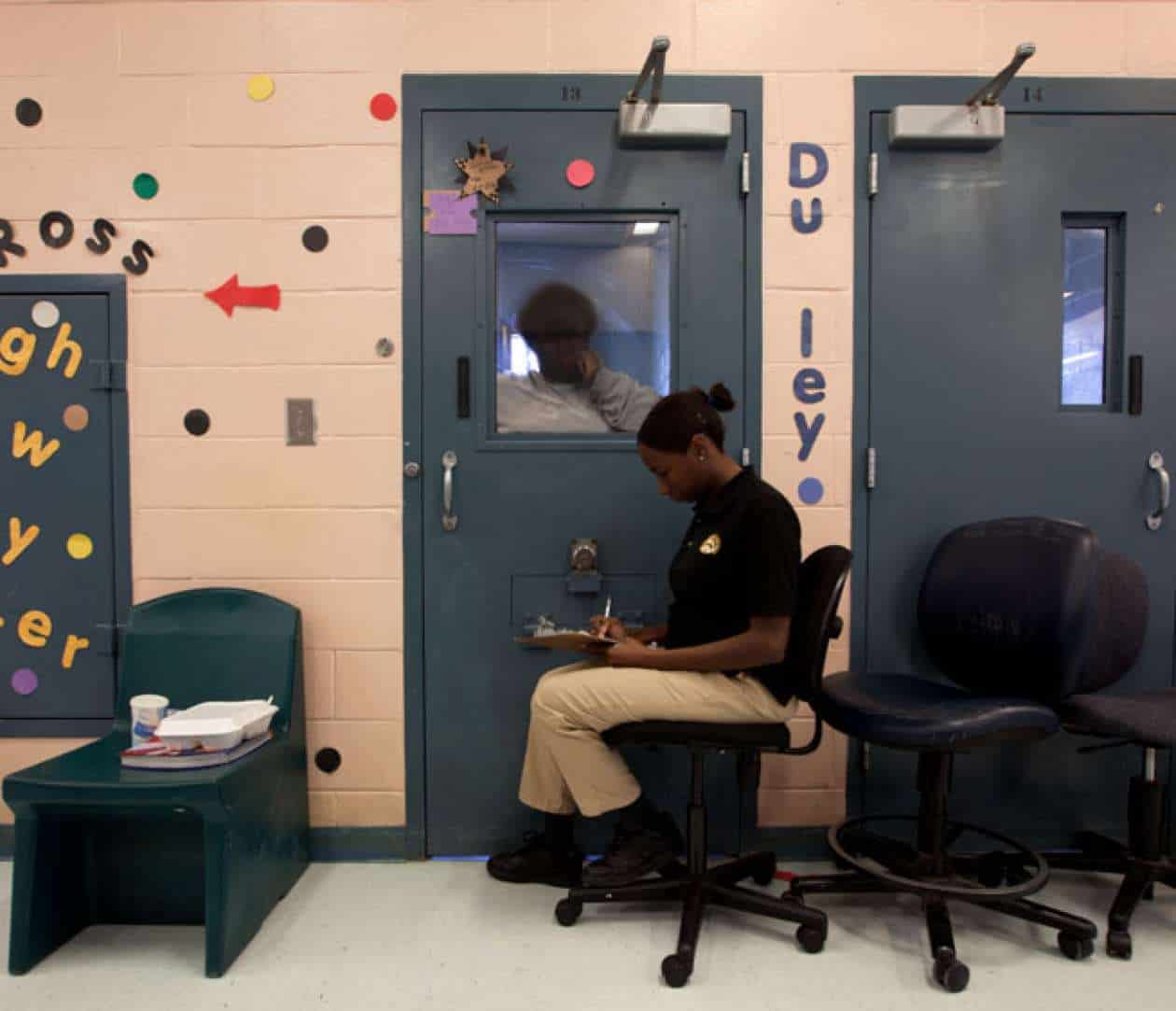
Juvenile Justice

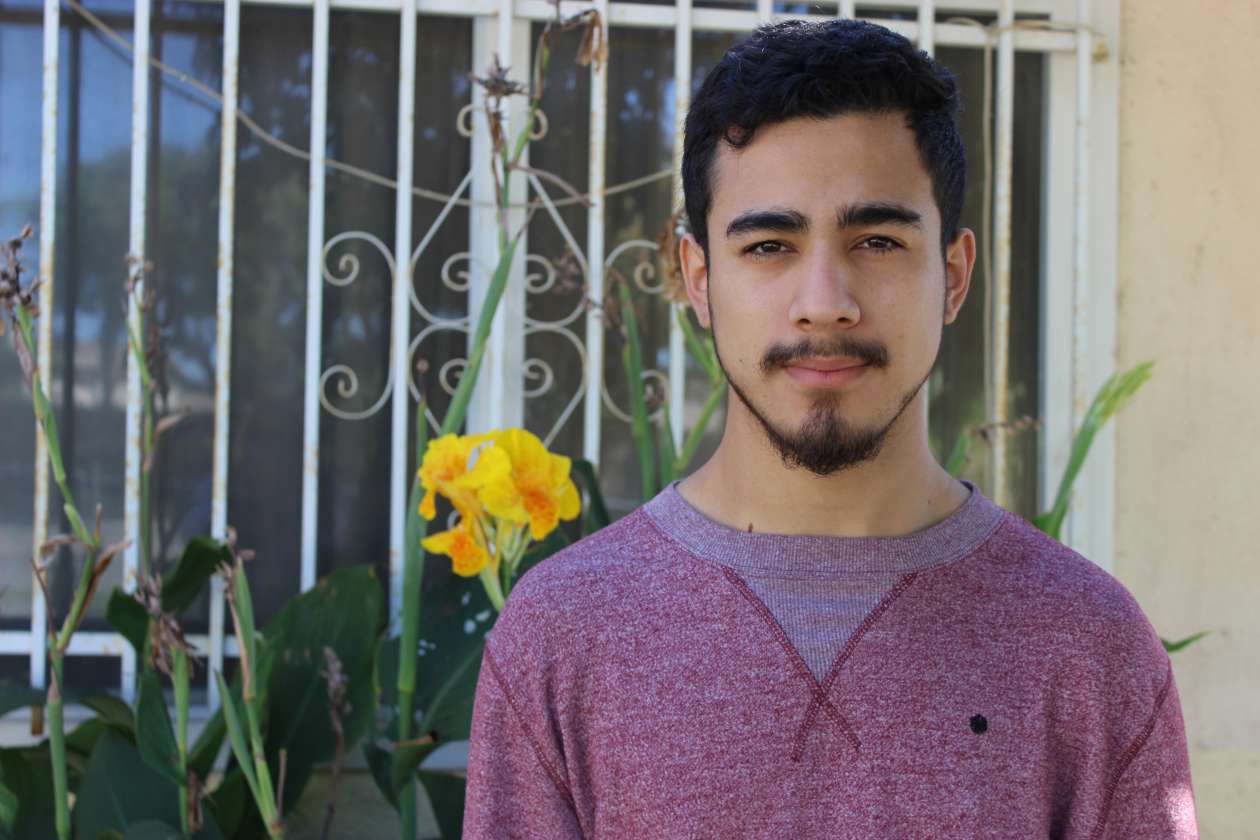
Pedro Rios, a Republican running for the California state assembly, didn’t become a legal resident until he was a teenager. Courtesy of pedrorios.org

GOP candidate was undocumented child, received amnesty

By Susan Ferriss

Pedro Rios was nine years old when he arrived to the United States, and now he’s a Republican candidate for California’s state legislature.

“I’m an immigrant, like many, who has worked to succeed and I’m living the American Dream,” the farmer, now 39, says in a Facebook post advertising his run at the 32nd Assembly District in the Bakersfield area. 

But what Rios consistently avoided saying — until late October — was that he started out as a young illegal immigrant who was smuggled as a child over the border from Mexico.

Rios didn’t become a legal resident until he was a teenager and was able to take advantage of an amnesty in the 1986 immigration reform passed by Congress and signed by President Reagan. He became a U.S. citizen in 1996.

As Bakersfield area press reports have indicated, the disclosure has proved awkward for Rios — who opposes the DREAM Act for undocumented youths to earn legal status — as well as for Rios’ local Republican champions.  

Not least among Rios’ champions is Rep. Kevin McCarthy, the staunch conservative from Bakersfield who is the House of Representatives’ majority whip.

McCarthy is at the top of the list of Rios’ endorsements in this region, where Democrats have gained strength among an increasing Latino population.

Juvenile Justice

Justice Department alleges 'school to prison pipeline' in Mississippi

By Susan Ferriss

Arguing that African-American and disabled students’ rights are being systematically violated, the U.S. Department of Justice filed an unusual lawsuit Wednesday against the state of Mississippi, Lauderdale County and the city of Meridian.

The suit alleges that the state, county and city “help to operate a school-to-prison pipeline in which the rights of children in Meridian are repeatedly and routinely violated,” said a Department of Justice press release.  “As a result, children in Meridian have been systematically incarcerated for allegedly committing minor offenses, including school disciplinary infractions, and are punished disproportionately without due process of law.”

The department alleges that some disabled students’ behavior intervention plans prescribe “juvenile detention center” to deal with school discipline problems,  and that students have been handcuffed and arrested at school and placed in detention for days at a time – 80 miles away -- without sufficient legal representation or a timely hearing.

The department also alleges that students who have been arrested can end up incarcerated for parole violations involving minor school infractions, including  wearing the wrong color socks, having a shirt untucked, using vulgar language or being tardy.

Juvenile Justice

Elisa Xitco, 6, the daughter of U.S. citizen Chris Xitco, stands behind the iron gate protecting her home in Rosarito, Mexico, where she lives with her Mexican mother. Her mother has been barred from entering the U.S. at least until 2018  due to legislation that imposes harsh punishments on illegal immigrants who apply for legal status based on marriage to a U.S. citizen or some other tie. Susan Ferriss

Separated by law: Families torn apart by 1996 immigration measure

By Susan Ferriss and Amy Isackson

In the days since President Obama’s re-election victory, Republican leaders have been aggressively and publicly rethinking their party’s uncompromising stance on reforming current immigration law. Suddenly, prominent new voices — Florida Sen. Marco Rubio among them — are calling for a different approach, arguing that the GOP’s awkward relationship with the growing Latino electorate depends on addressing this issue. There’s a lot on the table.

The big question for the GOP is whether to sign on to a bipartisan agreement allowing some of the millions of undocumented people in the country to earn legal status. But the president and Congress could also face pressure to look at penalties now enshrined in immigration law the product of  1996 legislation  – that impose harsh punishments on illegal immigrants who apply for legal status based on marriage to a U.S. citizen or some other tie.

Immigration activists blame these penalties for keeping hundreds of thousands of illegal immigrants in hiding.  Because of mandatory penalties, citizens or legal immigrants who have who tried to legalize their undocumented spouses have seen them banned from the U.S. for 10 years, 20 years, even life, as the Center for Public Integrity recently reported, below:

In a nation built by immigrants, they thought they could pursue their American Dream — with loved ones at their side. Instead, they're living an American nightmare that's tearing families apart and forcing Americans into exile. 

Juvenile Justice

Toddler Alana communicates with father, Issac Hernandez, who has been barred from the U.S. for life. Her mother, Amanda Seyer, has since moved the family from Missouri to Mexico to be with her husband. Courtesy of family

A dizzying series of legal twists and turns

By Susan Ferriss and Amy Isackson

Given the white-hot politics of immigration, it’s perhaps not surprising that President Obama instantly drew fire with a proposal in January to help undocumented spouses of American citizens obtain legal status — without being ousted from the U.S. for years as punishment.

Rep. Lamar Smith, R-Texas — the chairman of the House of Representatives Judiciary Committee — accused Obama of “bending long established rules” and pursuing a “backdoor amnesty.”

“Who is the President batting for — illegal immigrants or the American people?” Smith said in a statement.

Smith is no casual observer. He is the key author of the Illegal Immigration Reform and Immigrant Responsibility Act of 1996, which established penalties mandating years of exile for illegal immigrants before they can return to the United States and legalize — even if they are married to an American citizen. Marriage is one of the primary ways a person obtains legal status within the largely family-based U.S. immigration system.

Read More

Juvenile Justice

Feds will oversee Oakland's efforts to curb suspensions

By Susan Ferriss

The U.S. Department of Education announced Friday that it has reached a major agreement with school officials in Oakland, Calif. that allows federal monitoring of the district’s efforts to curb out-of-school suspensions of its African American students.

“This is not about blame,” said Russlynn Ali, the department’s assistant secretary for civil rights. In a Friday conference call with reporters, Ali said the purpose of her office’s drive to reform school discipline “to keep students in class, and to ensure they keep learning.”

A May report by the Urban Strategies Council, an Oakland community-organizing and research group, drilled down on Oakland’s record of suspensions. Researchers found that African American boys were only 17 percent of the Oakland Unified School District’s population but 42 percent of all suspensions. Black males were suspended at six times the rate of white boys across the district in the 2010-2011 school year.

The Urban Strategies Council also found that among black male students suspended multiple times, 44 percent were removed from school solely for the infraction of “defiance of authority.” The district in 2010-2011 lost tens of thousands of dollars in “daily attendance” money from government sources because students were out on suspension.

Juvenile Justice

Florida to close controversial juvenile detention center

By Susan Ferriss

The state of Florida  plans to close a large privately-run juvenile offender home that a group of public defenders alleged was rife with problems. State officials say the decision to close the Thompson Academy as of Jan. 4, 2013, is not related to the public defenders’ longstanding allegations of poor supervision and treatment of wards. Instead, officials say, the 154-bed facility’s large size doesn’t match the type of rehabilitation the state is pursuing.

Thompson Academy, a low-security facility in Broward County, is run by Youth Services International, a private company that holds $81.8 million in Florida government contracts to operate seven juvenile offender facilities and programs. The company runs juvenile programs in other states as well, and describes itself as “the premier provider in the youth care industry.”        

C.J. Drake, a spokesman for the Florida Department of Juvenile Justice, told the Center for Public Integrity Thursday that the state is “moving to smaller residential programs” and Thompson Academy doesn’t fit that profile.  “Controversy in the past has nothing to do with the decision,” Drake said.

In June, as the Center for Public Integrity reported, Broward County public defenders filed an unusual petition — for a writ of habeas corpus — asking a Florida state court for an order to remove and stop sending juvenile offenders to Thompson.

Gordon Weekes, Broward County chief assistant public defenders, said at the time that wards appeared to have suffered abuses, including intimation, physical harm and the use of food as “currency” to reward certain behavior.

Juvenile Justice

Minerva Dickson Robert Stolarik

Perps or pupils? Safety policy creates friction in New York City schools

By Daryl Khan

When Minerva Dickson first saw her high school she thought it looked like a prison. After her first week, she says, she realized how right her initial impressions were.

Every day when she arrived at the Thomas Jefferson Campus in Brownsville, Brooklyn, she waited in a line that snaked out onto Pennsylvania Avenue. She would shuffle up two steps passing beneath words from Abraham Lincoln inscribed on the neo-classical pediment: “Let Reverence for the Laws Become the Political Religion of the Nation.”

Next, she reached into her pocket for her identification card and slid it through a machine. When it recognized her, it blurted an approving beep and a green light would flash. When it didn’t, the machine made an abrasive buzzing noise and lit up red.

Clear of the reader, she headed to the metal detectors. There, at least a half dozen school safety agents waited. School safety agents, who answer to the New York City Police Department, wear a police uniform and a shield. A pair of handcuffs dangles from their belts.

Under their gaze, Dickson would remove her jewelry, hairpins, and shoes. She would place her purse and her backpack on the conveyor belt and wait for an agent to nod her through. Another would run a security wand around her diminutive frame while she stood arms out, legs spread.

Juvenile Justice

A problem of nationwide proportions

By Maggie Lee

Meridian is not alone under the Justice Department magnifying glass. In a somewhat similar case in Tennessee,  DOJ says the Juvenile Court of Memphis and Shelby County has failed both to inform children of the charges against them and to make sure they understand what their legal rights are ahead of questioning. Like Meridian, the juvenile court is also accused of failing to hold timely hearings.

Worries about a school-to-prison pipeline have grown in recent years, but there are different ways to define the issue, said Jim Freeman, senior attorney at Advancement Project, a nonprofit legal action group that fights racial injustice.

“How I like to define it,” Freeman said, “is the use of policies and practices that increase the likelihood that young people become incarcerated.”

That includes at-school arrests for minor behavioral incidents, as well as what he calls more indirect actions, like suspensions, expulsions or references to juvenile court or alternative schools.

Such practices have grown in the last 10 to 15 years, he said. “It really started out mostly in very low income communities of color, the schools in those districts. It’s expanded pretty dramatically beyond that.”

In a high-profile Delaware case in 2009, a six-year-old was almost suspended for 45 days for having his Cub Scout knife at school. The school board intervened to cut that to three to five days.

The combination of zero-tolerance school rules, themselves fueled by safety fears, and the kind of high-stakes testing required by the federal government “create some of these dynamics,” Freeman contended.

Mississippi was under the high-stakes testing regime of the federal No Child Left Behind law until it won a waiver in July 2012.

Juvenile Justice

Ella Townsend of Meridian, Miss., is worried that if her son Lionel, 13, gets in trouble at school again, he could be sent to prison and do time with dangerous adults. Maggie Lee/Juvenile Justice Information Exchange

Mississippi town struggles with 'school to prison pipeline' charges

By Maggie Lee

MERIDIAN, Miss. — Lionel Townsend will turn 14 in September. And a few months after that he will be able to return to school, ending a year of exile.

Lionel admits he got into fights multiple times at Magnolia Middle School. When he was charged with vandalizing a school bus security camera, he was booted from school. He fought again in a community day program. The county Youth Court eventually put him on probation and ordered him to stay at home with an ankle monitor.

Nevertheless, the U.S. Justice Department’s Civil Rights Division is alleging the juvenile justice system here is so faulty that it amounts to a “school-to-prison pipeline.”

“If you do wrong, you got to pay,” insisted Lionel’s mother, Ella Townsend, speaking in the living room of the home she shares with her mother, Lionel and four of the boy’s siblings. Lionel listens quietly, a skinny boy, who grins when attention is turned to him, or he’s teased about the sparkly blue earring studded in his ear. “But “that was harsh punishment,” she said, “I feel like they were sort of out of order.”

Townsend says her son’s ankle monitor was so sensitive it went off if he went in the back yard. The young man is rid of it now, but not before he gouged off the speaker, causing what Townsend said the court assessed as $1,500 in damage.

She worries if Lionel makes another mistake, he will end up in prison with adults, where he will learn little more than how to be a criminal.

The Justice Department says it has probable cause to believe the city of Meridian and Lauderdale County routinely and  repeatedly incarcerate children for school disciplinary infractions, as outlined in an Aug. 10 open letter that was issued at the conclusion of an eight-month investigation. The department’s letter is addressed to the city and county, the county's two Youth Court judges, as well as the state Division of Youth Services, but not the Meridian school system.

Juvenile Justice

Meg Whitman speaking in 2011. Tony Gutierrez/AP

Romney balancing act on undocumented youth getting harder

By Susan Ferriss

Undocumented youths 15 to 30 years old certainly can’t vote. But they are a large group — estimated at 800,000 to 1.7 million — that Republican presidential candidate Mitt Romney doesn’t think he can write off completely.

Why? Conventional wisdom has it that Romney, to win, needs to peel off Latino votes from President Obama in key swing states such as Nevada, New Mexico and Colorado. Some Latino voters were once undocumented themselves, or know someone who was or is. They also tend to support the decade-old federal DREAM Act proposal — or something like it that would give youths a chance to earn full legal immigrant status, which isn’t possible within the current immigration system.

Over the weekend, former GOP Florida Gov. Jeb Bush warned his party that it had to get with the nation’s changing demographics and heed the Latino vote — or get left behind. 

As Romney’s campaign prepares for the sprint to the finish, the GOP standard-bearer might consider the 2010 California gubernatorial campaign of Meg Whitman, a Romney supporter. In a blitz of Spanish-language TV and radio ads, Whitman simultaneously tried to woo Latino moms and dads by praising Latino schoolchildren as “the future,” while attacking illegal immigrants as a burden and opposing legalization for youths or adults. 

That didn’t work.

Pages

Writers and editors

Susan Ferriss

Reporter The Center for Public Integrity

Susan Ferriss has investigated a range of issues, from environmental destruction and real-estate fraud to police corruption and internati... More about Susan Ferriss