Juvenile Justice

Kathy Willens/AP

Police, suspensions in schools need reform, new report urges

By Susan Ferriss

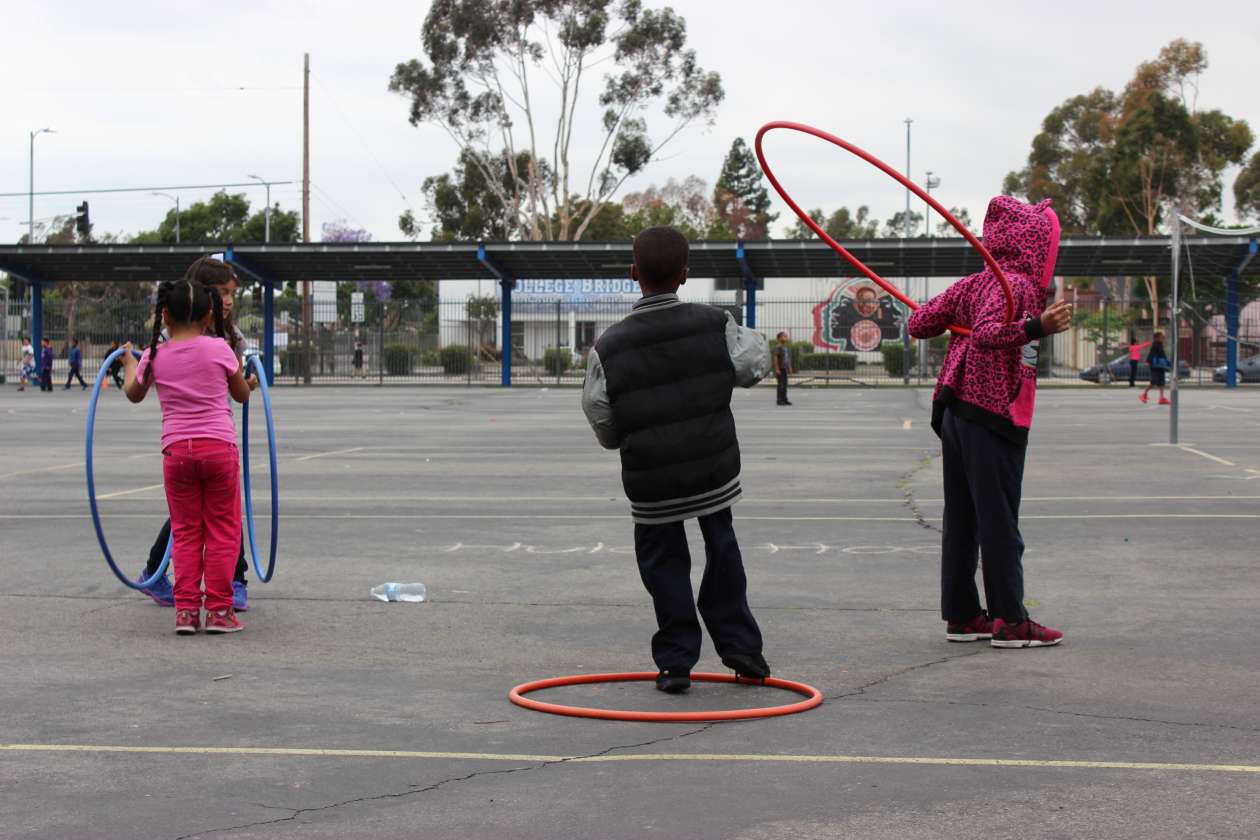
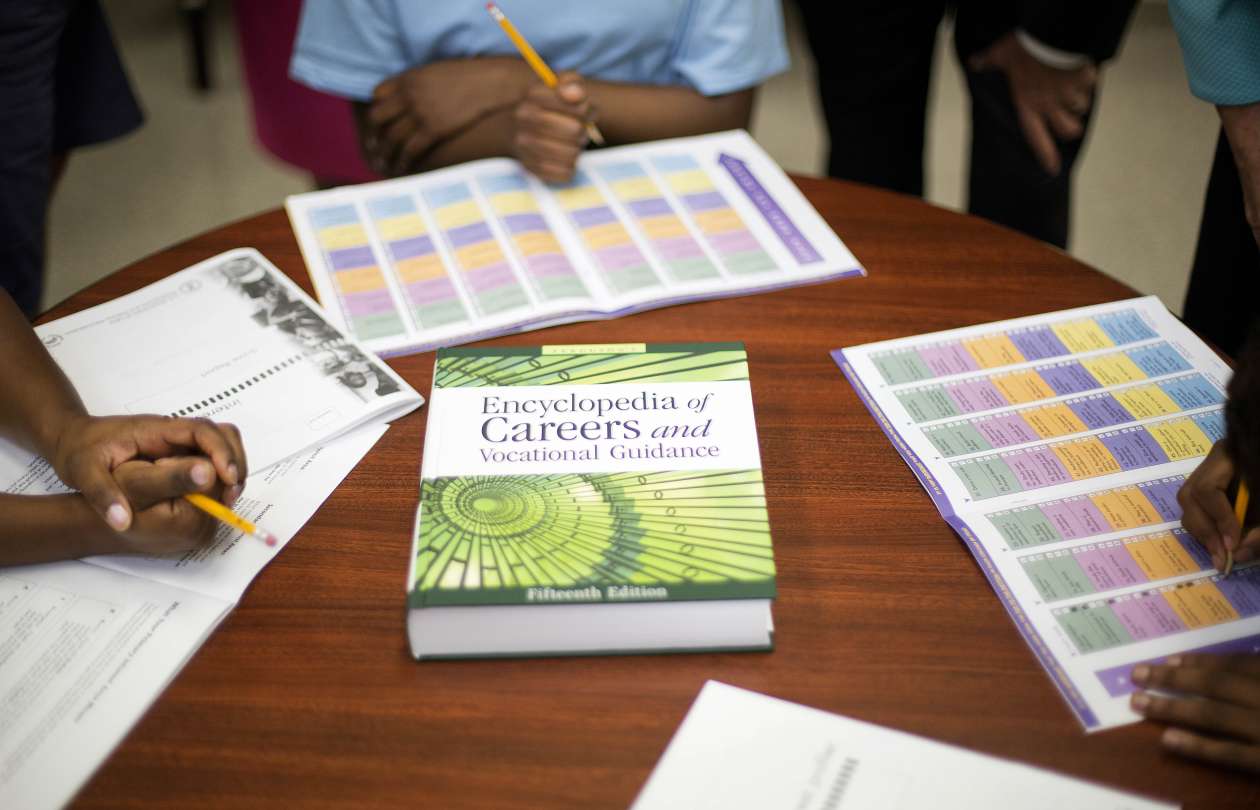
When it comes to student discipline, suspending kids and a heavy police presence in schools are policies that are doing more harm than good, according to a new report on three especially troubled California districts.  

The report released Thursday by University of California scholars and Human Impact Partners is an exhaustive profile of students in South Los Angeles, Oakland and the agribusiness hub of Salinas in Central California. All these communities have high levels of family poverty, high rates of student suspension and high dropout rates. Oakland-based Human Impact Partners reviews data and conducts on-the-ground interviews to assess the effects that public policies have on equity and health in communities.

The report was funded by the California Endowment. The Center for Public Integrity also receives some support from the Endowment.

The Los Angeles school district has already adopted what’s called “positive behavioral support” as an alternative to out-of-school suspension. But researchers found that some L.A. schools are still failing to use the method. As a result, students are still being suspended and losing hundreds of days of school time. The report delves into the high rate of suspensions for “willful defiance,” and the serious discipline challenges the schools face.

The researchers also touch on Los Angeles’ school police, the largest school police force in the nation. They recommend that district police officers, sheriff’s deputies and city police “dedicate a meaningful amount of their professional development over the next three years” to learning about positive behavioral support as “an alternative intervention.” 

Juvenile Justice

Public radio, Center report on L.A. school court citations' controversy

By Susan Ferriss

A father talks about his young son’s arrest at school and subsequent court citation, and Los Angeles’ school police chief responds to a growing controversy in a new report aired by Southern California Public Radio.

The report by KPCC radio was produced in collaboration with the Center for Public Integrity. It features an interactive map showing Los Angeles Unified School District middle schools where court citations were heavily concentrated last year. The map is based on a Center analysis of records recording school police officers’ citations for students to appear in lower-level juvenile court.

Students in lower-income, mostly black and Latino neighborhoods were far more likely to be given tickets for disturbing the peace, arriving late to school or being truant and other infractions. The Center’s companion report contains additional details on the accelerating dispute over student-police interaction at schools, and federal education officials’ decision to scrutinize discipline patterns and police citations in the Los Angeles district.

Juvenile Justice

Students protest in Los Angeles against school police citations issued heavily at middle schools, low-income schools.  Vanessa Romo/KPCC.org

Los Angeles school police citations draw federal scrutiny

By Susan Ferriss

Alexander Johnson arrived at Barack Obama Global Preparatory Academy to pick up his 12-year-old after school on May 19, 2011. When his son, A.J. didn’t appear, Johnson went inside the Los Angeles middle school. What he found was devastating.

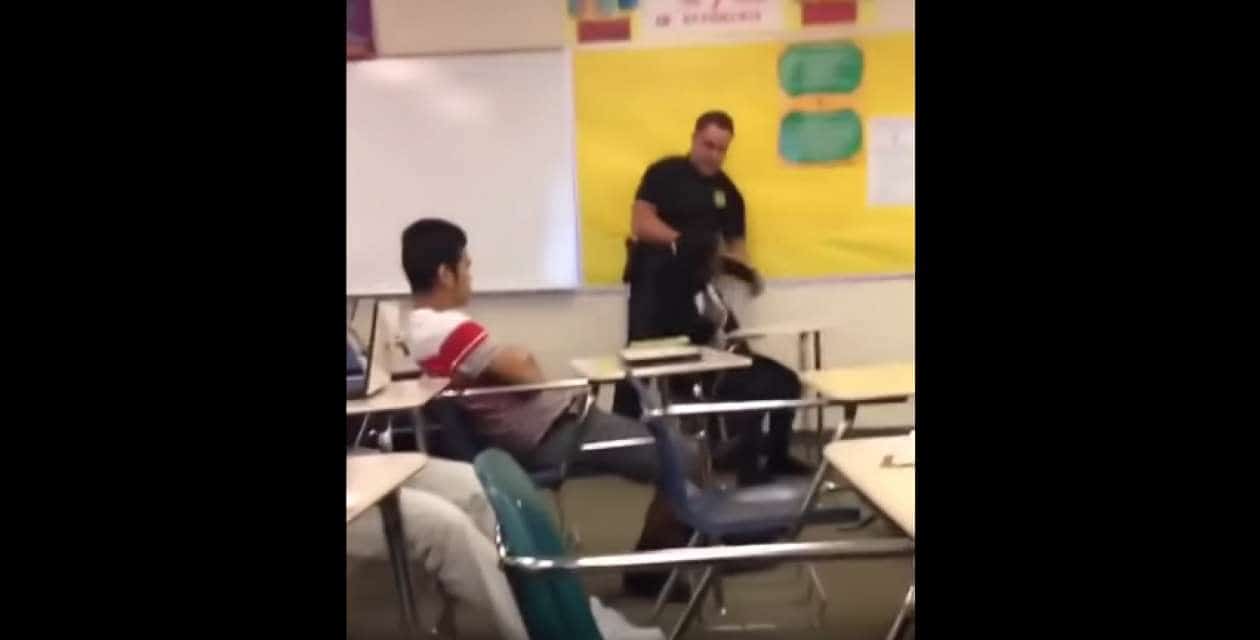
A.J. and a friend had gotten into a physical altercation over a basketball game, and school staff had summoned not parents, but police officers. Neither boy was injured, and the school ended up suspending his son for only one day, Johnson said. But officers wrote up a court citation and decided, on the spot, to also handcuff and arrest A.J. as the alleged aggressor — after what Johnson believes was only a cursory look into what had happened.

Despite Johnson’s pleas for another solution to what the citation said was a “mutual fight,” officers drove A.J. to a station, booked him, fingerprinted him and took a mug shot before releasing him. The family hired a lawyer, and school staff later apologized. But Johnson and his wife still can’t comprehend why school officials got police involved. And while school police say they have a duty to fight crime, the Johnsons can’t help but think that officers arrested their son because of snap judgments about African-American kids in South Central Los Angeles.

“He’s got good grades and he’s never been in trouble,” Johnson said he kept telling police. “Tell it to the judge,” he said police replied. 

Broader concerns

What happened to the Johnsons’ son is the type of incident — in Los Angeles and elsewhere — that has the Obama Administration’s Department of Education and a growing number of juvenile-court judges deeply concerned.

Juvenile Justice

Calif. state senator wants 'roundtable' on school expulsions

The school expulsion capital of California, Kern County, continues to debate whether changes are needed to reduce the number of students that are removed.  

In a May 7 opinion piece in the local Bakersfield Californian newspaper, California State Sen. Michael Rubio called for “an expulsion roundtable” to be held Friday at the Bakersfield City School District offices. Rubio’s piece touches on revelations in a Center for Public Integrity report published last December that included an analysis of California state discipline data for the 2010-2011 school year.

“According to the Center for Public Integrity,” Rubio, who wrote, “most expulsions in Kern County were actually discretionary to school district officials, such as for defiance of authority or using obscenity or vulgarity — not for "zero tolerance" violations, such as bringing a gun to school or selling controlled substances on campus.”

“Students who break a ‘zero tolerance’ rule should never be tolerated, but when relatively small Kern County is expelling more kids than huge Los Angeles County, our expulsion process should be closely examined,” said Rubio, who represents part of Kern. The county is in California’s Central Valley, and is an agricultural and oil-production center.

Juvenile Justice

Education Secretary Arne Duncan speaking Jan. 31, 2011, at Morehouse College in Atlanta. John Bazemore/AP

Education Department issues guidelines for restraining, isolating disruptive students

By Susan Ferriss

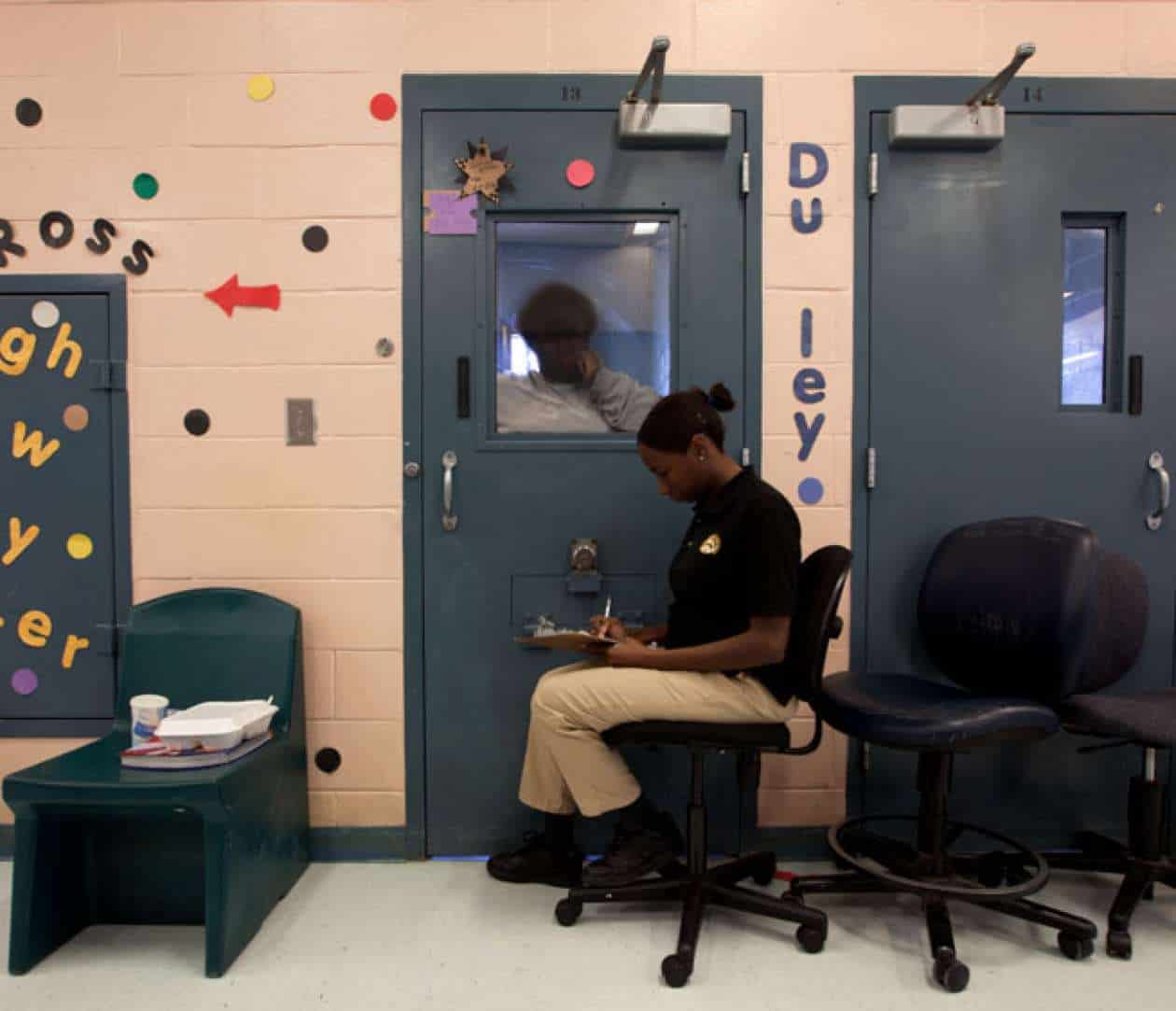
In response to simmering concerns over reported abuses, the U.S. Department of Education issued multiple guidelines Tuesday for how schools can avoid going overboard in restraining or isolating disruptive students.  

“As education leaders, our first responsibility must be to make sure that schools foster learning in a safe environment for all of our children and teachers,” U.S. Secretary of Education Arne Duncan said in a statement accompanying the release of “Restraint and Seclusion: Resource Document.”

“I believe this document is an important step toward this goal. I also want to salute leaders in Congress for their vigilance on this issue,” Duncan said.

Duncan said 15 principles described in the document “come down to common sense.” He called on districts and schools to consider incorporating them into written policies that make standards clear to staff and parents.

The department’s guidelines state that restraint or seclusion should never be used as punishment, and should never be used at all unless a child’s behavior poses behavior poses “imminent danger” of serious physical harm to the child or others. The principles also warn that such policies should apply to all students, not just disabled children, and that parents and staff should be informed of policies. In addition, parents should be immediately told when a child has been subject to restraint or seclusion.

Congress has wrestled over whether to adopt national standards for secluding students in rooms alone, or restraining students, which can be defined as staff holding down children or restraining them with straps or other devices. 

Juvenile Justice

Los Angeles students protest school police citations that hit blacks, Latinos

By Susan Ferriss

Los Angeles public-school students rallied Thursday against the large volume of court citations they have been issued for seemingly minor infractions, including tardiness, having a marker or “tool” for graffiti and for acting disruptive.  

The citations, issued by the Los Angeles Unified School District Police Department, have been the subject of recent stories by the Center for Public Integrity. Television station KTLA in Los Angeles covered the rally, posting on its website that: “The Center for Public Integrity took a closer look at exactly how school policing is being done, and their findings are raising some major concerns.” KTLA describes some of the Center’s findings from an analysis of three years’ worth of citations recently released by the school district police.

More than 40 percent of 33,500 court summonses issued to students between 10 and 18 went to students 14 and younger.  African American students, 10 percent of enrollment, were 15 percent of those cited last year and 20 percent in 2010. The district’s school police force, with 340 sworn officers and staff, is the largest in the nation.

Juvenile Justice

LA school police chief voices reasons for ticketing young kids, radio station reports

By Susan Ferriss

In a new report by KPCC public radio and the Center for Public Integrity, Los Angeles’ school police chief voices his thoughts on why officers who patrol the region’s schools issue a large volume of tickets to middle-school students.

“They typically are the age group that we find violates certain things that we enforce more often than some of the kids who are in high school, whether it is possession of (marijuana and cigarette) paraphernalia, vandalism, fighting,” Chief Steven Zipperman told Southern California-based KPCC. “They can be a variety of different things.”

The Center recently obtained and analyzed 2009-2011 data for all low-level citations issued by Los Angeles Unified School District Police Department officers. The department of 340 officers and staff is the nation’s largest school police force.

The Center’s analysis found that more than 33,500 citations were issued in three years, with more than 40 percent going to children 14 years and younger. One of the more frequent reasons for citing a student was an allegation of disturbing the peace, which can range from fisticuffs to disruptive or threatening language. These citations often includes fines, and require students to appear in court, during school hours, along with at least one parent or guardian. 

In written responses attributed to Zipperman, the school district told the Center that with citations “hopefully the contact (with police) is positive and the student learns from whatever mistake was made.”

Juvenile Justice

Los Angeles School District Police officers guard the outside of Miramonte Elementary school during a protest earlier this year, unrelated to students' citations. Damian Dovarganes/AP

School discipline debate reignited by new Los Angeles data

By Susan Ferriss

As a national debate heats up over appropriate student discipline, new data from Los Angeles reveal that school police there issued more than 33,500 court summonses to youths between 10 and 18 in three years — with more than 40 percent of those tickets going to children 14 and younger.

The data obtained by the Center for Public Integrity show that officers of the nation’s largest school police force issued the equivalent of 28 tickets every day to students during the 2011 calendar year. The Los Angeles Unified School District totals almost 680,000 pupils; the district’s police force has 340 sworn officers and support staff.  

Students ticketed in 2009 through 2011 were disproportionately Latino or African American. Last year, black students represented about 10 percent of the Los Angeles Unified School District but 15 percent of those ticketed. In 2010, black students were 20 percent of those cited.

Latinos, about 73 percent of the district enrollment, represented 77 percent of those cited last year. White students, nine percent of enrollment, were about 3 percent of those ticketed.

This sheer volume of citations, the racial and ethnic statistics and the number of younger children cited have all contributed to a brewing controversy over the role of police in public schools in Los Angeles. 

Among those who have expressed concern is Judge Michael Nash, who presides over Los Angeles’ juvenile courts, and has actively supported reforms to reduce police citations for incidents he believes should be handled in schools or through counseling or meetings with parents outside court.

“How much time do our courts have to deal with these kids? I don’t think this has been effective, and it has dealt with them in a superficial way,” Nash said.

Juvenile Justice

Public radio's 'To the Point' spotlights Stand Your Ground laws

By iWatch News

Please check out a provocative conversation about “Stand Your Ground”  laws on the national radio talk show “To the Point” with Warren Olney. The Center for Public Integrity’s Susan Ferriss talked about how the National Rifle Association has framed this self-defense concept and promoted it in various states since 2005.

The NRA has also made significant donations to state politicians pushing “Stand Your Ground” measures. The “To the Point” chat also included gun-rights and gun-control advocates and attorneys explaining the concept’s ramifications. Florida’s law, the first the NRA promoted, is under scrutiny now following the February shooting death of unarmed Florida teenager Trayvon Martin by George Zimmerman, who is claiming self-defense.

Juvenile Justice

California moves closer to reforming school discipline

By Susan Ferriss

Persuaded that school discipline policies are far too harsh, California lawmakers are moving closer to enacting reforms aimed at stemming a rising tide of suspensions and expulsions in the nation’s largest state.

“I have seen too many children removed from school under the mandatory suspension and expulsion regime, when an application of common sense and an alternative punishment or appropriate interventions could have kept them on track and corrected their behavior,” Tim McKinley, a former FBI agent-turned-lawyer in Bakersfield, Calif., said Wednesday during testimony before California Assembly members.

McKinley, who investigated criminal gangs at the bureau, was testifying before the state Assembly Education Committee. Speaking in favor of a proposal to reform zero-tolerance policies in California schools, McKinley recounted the case of an 11-year-old boy he defended whose fight against expulsion for sexual battery was featured in a Center for Public Integrity report last December.

On Wednesday, members of the Education Committee passed several bills designed to push school counseling as an alternative to removing students, who, mounting research shows, fall behind academically and end up more at risk for committing serious delinquent acts. The proposals will now continue their path through the state legislative process.

Pages

Writers and editors

Susan Ferriss

Reporter The Center for Public Integrity

Susan Ferriss has investigated a range of issues, from environmental destruction and real-estate fraud to police corruption and internati... More about Susan Ferriss