Juvenile Justice

Education Secretary Arne Duncan   Jacquelyn Martin/AP

New federal statistics reveal harsh discipline for minority students

By Susan Ferriss

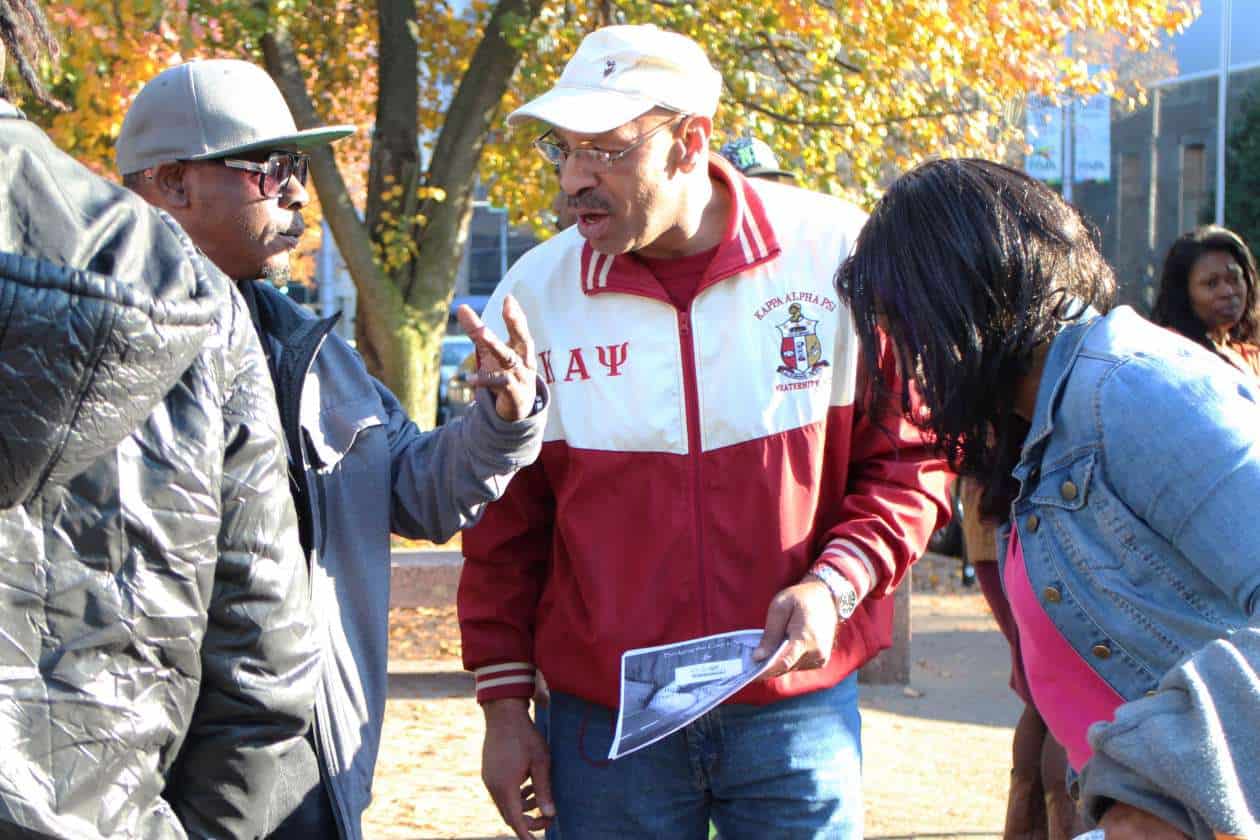
Secretary of Education Arnie Duncan unveiled a vast collection of school data Tuesday, calling attention to alarmingly high discipline rates for minority students in comparison to their white counterparts. The trend lines applied to suspensions and expulsions, as well as referrals to law enforcement agencies.   

Black and Latino students together represented 42 percent of the population in the data, but were more than 70 percent of those arrested or referred to law enforcement during the 2009-2010 academic year, according to the department’s analysis of statistics from more than 72,000 schools that were submitted to the U.S. Department of Education.

The grouping of statistics, last gathered nationally in 2006, is called the Civil Rights Data Collection and it is managed by the department’s Office for Civil Rights. The data is the most recent and largest pool of such information in the federal collection’s history, coming from schools serving 85 percent of all American students. 

“The sad fact is that minority students across America face much harsher discipline than non-minorities, even within the same school,” Duncan said at an event at Howard University in Washington, D.C.

Black students were only 18 percent of the sample of data collected. But they represented 42 percent of students referred to law enforcement; 35 percent of students suspended once; 46 percent of students suspended more than once; and 39 percent of students expelled during the 2009-2010 school year.

Juvenile Justice

Florida student's deportation threat a window into kids' difficult lives

By Susan Ferriss

The valedictorian of a Florida high school faces a deportation order this month, and a prominent congresswoman has assumed a key role in imploring federal authorities to allow the young woman to stay.

This same congresswoman, Rep. Ileana Ros-Lehtinen, has also endorsed Mitt Romney for the GOP presidential nomination. But Romney has vowed he would veto, should it ever be approved, the long stalled DREAM Act proposal to allow students like the Florida valedictorian to earn legal status by attending college or serving in the military.

That’s the way it goes in the contradictory world of immigration and politics, which is buffeting more kids as parents are deported or forced into shadows and children who’ve grown up here — undocumented — become adults in crisis.

It’s not unusual for one politician endorsing another to disagree on some matters. But Ros-Lehtinen, who is Cuban-American and counts immigrants among her base, has been an ardent champion of the DREAM Act for many years, as well as an aggressive backer of comprehensive immigration reform.

Last Friday, her office issued a statement pointing to student Daniela Pelaez’s case  as proof of “an urgent need” for Congress to approve the DREAM Act, “so that many young people can form part of our armed forces or attend college and contribute to our generous and great nation.”

Juvenile Justice

L.A. kids' daytime curfew story on NPR's 'Morning Edition'

By Susan Ferriss

National Public Radio’s “Morning Edition” has aired a version of the Center for Public Integrity look into aggressive ticketing of students in Los Angeles for violating a daytime curfew. The piece on Los Angeles’ changes to this anti-truancy law was co-reported by KQED radio’s Krissy Clark.

A web package also appears on NPR’s website.  In early February, NPR ran an interesting piece delving into what one school attendance agent in Detroit, Mich., found during his rounds to scout out why kids were not appearing at school. Gentle but also firm with parents — who could face prosecution — the school agent found a mother of newborn twins living temporarily in a hotel room who said she couldn’t get her other kids on the bus.  

He also found a mother who said her children didn’t have proper clothing and needed glasses, and he gave her some vouchers to get both. Another mother shouts at the agent and complains about the school calling whenever her son misses a day.  

In another part of the country, television news outlets have examined how police officers in Kern County, Calif., make rounds to catch truant students.

In one KGET report, officers are gruff, confronting parents and yelling at kids to get dressed and get to school. In a piece by KBAK,  officers are less aggressive, but tension erupts between a father and a daughter when an officer arrives at a family’s home.  Officers warn students that their parents can be fined and kids can be incarcerated.

Juvenile Justice

A group of students and parents pray for victims of a school shooting on the square in Chardon, Ohio. Mark Duncan/AP

Teen suspect in Ohio school shooting had violence in his early life

By Susan Ferriss

The suspect in Monday’s horrific Ohio school shooting has been variously described as a quiet loner who was bullied to a boy who actually seemed quite normal to classmates.

So far, much of what’s out there is speculation. But there is one solid piece of original reporting from the Cleveland Plain Dealer that’s worth reading. “It appears that T.J. Lane had violence in his life from the beginning,” begins the report, which offers a glimpse into some of this teenager's life.

The Plain Deader story continues: “Geauga County court records show the father of the teen who authorities say shot five students at Chardon High School on Monday had been arrested many times for violent crimes against women in his life, including Lane's mother. More than once, police or courts warned him to stay away from the boy and his mother.”

It’s no surprise that the U.S. Department of Health and Human Services warns that children who witness domestic violence can suffer severe behavioral, social and learning problems.

A 2009 department bulletin spells this out: “Children's risk levels and reactions to domestic violence exist on a continuum where some children demonstrate enormous resiliency while others show signs of significant maladaptive adjustment.”

The bulletin’s content isn’t armchair psychiatry, and doesn’t pretend to have all the answers for what’s the best approach to help children who have witnessed domestic violence. Nor does it leave you with the impression that all kids who suffer during their childhoods are doomed to become violent themselves.

Juvenile Justice

New York: Police data shows excessive student arrests — especially for minorities, rights groups say

By Susan Ferriss

New York City police data released this month shows that officers arrested about five students per day last fall, and ticketed about nine. That’s excessive, and a sign that too many students, especially ethnic minority males, are getting pulled into the criminal justice system, civil rights groups are saying.

A disproportionate number of the 279 students arrested between Oct. 1 and Dec. 31 were black or Latino, and “disorderly conduct” accounted for 63 percent of the 532 court summons officers issued during this period, according to an analysis of the data by the New York office of the American Civil Liberties Union.

About 20 percent of students arrested were between 11 and 14 years old.

Police in New York are required under a new city law to release this type of data. The requirement stems from concerns that law enforcement has become too involved in school discipline in New York’s public school system, which serves 1.1 million students. This is the first quarterly release of data from a period when school was fully in session.

In response to the findings, New York ACLU Executive Director Donna Lieberman called on authorities to commission an independent audit of the incidents “to assess whether these situations would be better handled by educators. And to find out what the impact has been on children who misbehaved and, as a result, were sent into the criminal justice system.”

Juvenile Justice

Los Angeles ends big fines, limits police enforcement of truancy law

By Susan Ferriss

The Los Angeles City Council voted Wednesday to amend the city’s daytime-curfew ordinance and drop large monetary fines for truant students, in response to recent tensions over aggressive police enforcement of student attendance policies.

Juvenile Justice

Public radio and iWatch News report on daytime curfew in Los Angeles

By Susan Ferriss

In collaboration with the Center for Public Integrity's iWatch News, KQED Public Radio’s California Report has taken a look at the debate over a daytime curfew law before the Los Angeles City Council today, Wednesday, Feb. 22. 

Our reports include interviews with participants in a movement opposing curfew enforcement that has resulted in mostly low-income and black and Latino students receiving $250-plus tickets in Los Angeles.  Ironically, kids who were ticketed for arriving just minutes late to school — sometimes because their city buses were late — have had to miss more school to answer to accusations in court.  

Santa Monica-based KCRW public radio host Warren Olney also took an interest in the daytime curfew along with KQED, which is based in San Francisco. Olney interviewed me about the daytime curfew controversy on Feb. 14 on his “Which Way, L.A.?” show.  

Los Angeles City Council members are considering adopting proposed reforms that would limit when and how police can ticket kids, and drastically lower — if not eliminate — monetary fines in favor of mandatory counseling.

Juvenile Justice

Chicago: Charter schools collect almost $400,000 in discipline "fees"

By Susan Ferriss

Would you pay $5 as a penalty for your kid neglecting to have shoelaces tied at school?

Chicago is buzzing over a controversial practice aimed at forcing inner-city school kids to follow rules. The Noble Network of Charter Schools, which has received high praise from Mayor Rahm Emanuel, is charging its mostly low-income students five bucks for violating certain rules, which reportedly include bringing “flaming hot” potato chips to school, chewing gum and falling asleep in class.

A group of parents whose kids attend Noble’s 10 Chicago charter high schools rose up this month to publicly object to the practice, which they are denouncing as both overkill and a cynical way for the company to collect extra money, according to reports in the Chicago Tribune and other media outlets.

Some parents also allege the practice is used to push out kids the schools would rather not have. The Tribune has a chart showing the charter’s graduation rates but also its high rate of non-returning students.

At news conferences, parents and a group called Parents United for Responsible Education said they obtained documents showing that Noble has collected almost $400,000 in fines from families since the 2008-2009 academic year. Noble calls the charges “fees,” not fines. Last year, the charter company raked in almost $190,000 in fines for infractions and $140 fees for summer behavior classes some repeat offenders are required to take.

Juvenile Justice

Florida alleged teen hate crime: Try them as adults?

By Susan Ferriss

Try accused kids as adults?

That’s what some are calling for in response to news that three black Florida teens have been charged with beating up an autistic white classmate at a bus stop.

While two of the accused assailants in Brevard County allegedly slapped, kicked and called the 13-year-old autistic boy a “cracker,” another filmed the attack and cheered,  according to police, the autistic boy’s mother and others quoted in a report by Orlando’s WESH.com.  Photos and names of the accused attackers are posted on some media websites and were broadcast, while other outlets chose not to disclose them.   

The Florida Today website says the three have been charged with aggravated stalking with a hate crime enhancement.  One of the accused is identified as 15 and two are 16. The teens were reportedly attending an alternative school where students facing expulsion or other problems are sent.

Comments on the Florida Today website show some readers took pleasure in the fact that African American teens were charged with a hate crime. And some of the comments demonstrate how public sentiment has helped push nearly every state in the nation into making it easier to try minors as adults

In Florida, the state attorney will decide whether that’s what these three teens will face after they initially go to juvenile court.

Juvenile Justice

Los Angeles to vote Feb. 22 on ending $250 truancy fines

By Susan Ferriss

In a policy debate watched nationally, the city of Los Angeles came closer Monday to getting rid of most — but not all — controversial monetary fines for students who are tardy or truant from school.

For several years, students in Los Angeles have complained about hefty $250-plus fines for being tardy, and about police officers who staked out schools to catch students sometimes only minutes late. The ticketing also requires students to go to court, with parents, during school hours, so they miss more class time and parents miss work.

On Monday, the Los Angeles City Council’s Public Safety Committee voted to set limits on how police enforce the city’s 1995 daytime curfew law and to stop imposing the $250 fines, which, once fees and court costs are added on, can rise to $400 or more for one violation.  

The curfew amendments — if they get full city council approval on Feb. 22 — would replace the $250 fines with graduated penalties emphasizing counseling. Students ticketed once or twice would be required to participate in an attendance-improvement plan or in counseling or community service. If ticketed a third time, the ordinance would call for a possible monetary fine whose amount is still being negotiated, said Michael de la Rocha, legislative deputy to Los Angeles City Council member Tony Cardenas, who sponsored the amendments.

Cardenas wanted to end all fines, and would prefer capping a third-strike fine at $20, which in reality would end up costing students more, given extra fees that get tacked on, de la Rocha said.

Pages

Writers and editors

Susan Ferriss

Reporter The Center for Public Integrity

Susan Ferriss has investigated a range of issues, from environmental destruction and real-estate fraud to police corruption and internati... More about Susan Ferriss