
Up in Arms

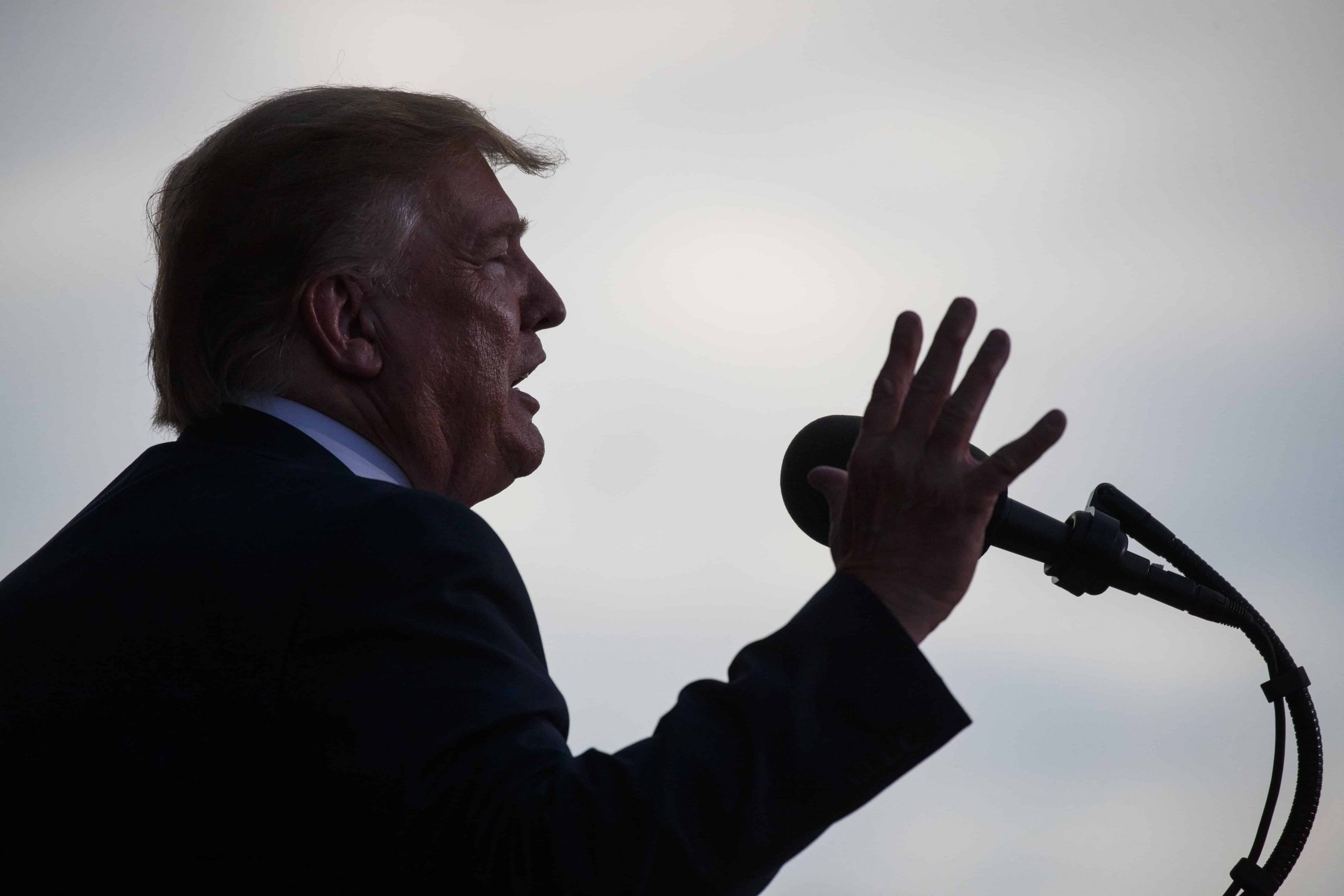
Defense Secretary Chuck Hagel speaks at the National Defense University at Fort McNair in Washington, Wednesday.  Manuel Balce Ceneta/AP

Hagel warns Pentagon officials that change is coming

By R. Jeffrey Smith

If anyone thought Chuck Hagel wants to be a caretaker defense secretary, he worked hard to disabuse them of the idea in an April 3 speech to a roomful of generals and other senior officers at Washington’s National Defense University, an elite school chartered by the Joint Chiefs of Staff.

Hagel, a former Senator and longtime Washington politician, knows that the first tasks of any policymaker seeking major change are to broadcast intent and build a constituency — and he clearly sought to begin that process in his first major address since being confirmed in March by the smallest margin of any defense secretary.

“The world today is combustible and complex,” Hagel said, before making clear that everything done by his two predecessors — Robert Gates and Leon Panetta — is now up for grabs, due to the austere fiscal climate and Hagel’s own stated desire to refocus his department more carefully on future military threats.

Yes, both men organized cutbacks in planned spending, Hagel said. “However, we will have to do more.” Hagel said he is now seeking change “that involves not just tweaking or chipping away at existing structures and practices but where necessary fashioning entirely new ones that are better suited to 21st century realities and challenges.”

His premier targets, he said, will be the three areas responsible for the greatest spending growth in recent years: acquisitions, personnel costs, and overhead.

National Security

B-2 bomber AP/US Air Force

The high cost of rattling North Korea’s cage

By Douglas Birch

The U.S. delivered a very expensive message this week in dispatching a couple of its $3 billion, B-2 stealth bombers from Missouri to drop dummy bombs during training exercises in South Korea.

As David Axe explains in the story below, by some estimates the planes cost $135,000 per hour to fly — nearly double that of any other military aircraft. And their hefty price tag in today’s dollars makes them too expensive to put at serious risk in all but the direst circumstances.

So how much did it cost to drive home the Obama administration’s not-so-subtle point at a time when Secretary of Defense Chuck Hagel says the Pentagon faces a $41 billion shortfall because of the sequester?

The planes, capable of carrying nuclear weapons, fly at “high-subsonic” speeds, about that of a civilian airliner. If both flew the roughly 6,500 miles from Whiteman Air Force Base in Missouri to Seoul, South Korea, the trip could have taken as little as about 10 hours. That would make the price somewhere in the neighborhood of $5.4 million.

That’s a rough guess, but the military isn’t saying. When pressed by reporters Thursday, neither Hagel nor Chairman of the Joint Chiefs of Staff Gen. Martin Dempsey could provide a figure.

Meanwhile, $6 billion in U.S. hardware was zooming over the South Korean countryside.

The flights came after North Korea’s recent nuclear and missile tests led to U.N. sanctions, which provoked a barrage of threats against the United States. The increasingly bellicose pronouncements have set nerves on edge in the U.S., Japan and neighboring South Korea.

“I think their very provocative actions and belligerent tone, it has ratcheted up the danger, and we have to understand that reality,” Secretary of Defense Chuck Hagel told reporters Thursday.

National Security

Crews repackage waste at Los Alamos National Laboratory. Energy.gov/Flickr

DOE inspector general recommends consolidating national labs

By Douglas Birch

Department of Energy Inspector General Gregory H. Friedman has told Congress that the agency should launch a program patterned on the military’s BRAC base closure program to streamline, downsize or shut some of the Energy agency's 16 national laboratories.

The agency’s chief internal watchdog is pushing to overhaul some of its nuclear and energy research labs and programs, saying that it is “highly questionable” whether a business-as-usual approach can continue in a time of budget cuts.

In an appearance before the House Science Committee’s subcommittee on oversight March 14, Friedman also called on the DOE to focus its sponsored research programs on those that could yield maximum short-term benefits. And he said the agency should concentrate its $6 billion annual environmental cleanup program on a few high-risk, high-priority sites rather than spread the effort out over dozens of sites in multiple states.

“The operative question going forward from our perspective may well be, what can the department afford in this environment?” Friedman asked the oversight committee.

Friedman did not make any specific recommendations on closures.

National Security

This bridge over the Tigris River was supposed to be repaired in two months for $5 million, but it wound up taking more than three years and costing more than $100 million, according to the SIGIR. Inspector General's report

Waste, fraud and abuse commonplace in Iraq reconstruction effort

By R. Jeffrey Smith

After U.S. and allied warplanes destroyed a key bridge carrying 15 oil and gas pipelines in northern Iraq during the 2003 conflict there, officials in Washington and Baghdad made its postwar reconstruction a top priority. But instead of spending two months to rebuild the span over the Tigris River at an estimated cost of $5 million, they decided for security reasons to bury the pipelines beneath it, at an estimated cost more than five times greater.

What ultimately happened there tells the story — in a microcosm — of a substantial chunk of the massive nine-year U.S. effort to reconstruct Iraq, the second-largest such endeavor in history (only  the U.S. investment in Afghanistan has been larger).

Studies conducted before the digging of the new pipelines started showed that the soil was too sandy, but neither the Army Corps of Engineers overseeing the effort nor the main contractor at the site, Kellogg Brown and Root (KBR), heeded the warning.  As a result, “tens of millions of dollars [were] wasted on churning sand” without making any headway, as Special Inspector General for Iraq Reconstruction Stuart W. Bowen Jr., described it in his recently published final report on the U.S. occupation.

By the time the digging effort was halted, and the old bridge and piping repaired — more than three years later — the bill had reached more than $100 million. “Because of the nature of the original contract, the government was unable to recover any of the money wasted on this project,” Bowen said.  More than $1.5 billion in oil revenues may have been lost as a result of the delays. KBR did not respond to a request for comment.

Up in Arms

F-35 JSF.mil

Pentagon criticizes F-35 contractors but hands over the dough

By Douglas Birch and R. Jeffrey Smith

Update, March 7, 11:09pm:  Early returns are in from the first major flight tests of the new F-35 jet fighter, and they are not pretty. The radar malfunctioned, the fancy helmet visor didn’t work properly, and the radio and navigation systems were hard to operate. It was difficult to get the test planes ready for flight and keep them aloft — with just four hours of flying time between critical failures, on average.

And did we mention that it was, well, hard for the pilots to see out of the cockpit?

These shortcomings are  listed in a 48-page, Feb. 15 Pentagon report obtained by the Project on Government Oversight, a nonprofit group in Washington, and published online this week. Signed by J. Michael Gilmore, the Pentagon’s chief testing officer, the report amounted to a detailed and damning “I told you so” by his office.

Gilmore had warned last July, in an earlier report leaked to outsiders, that the F-35 was not close to being ready for its “operational” flight tests. He said the plane’s many shortcomings at such an early stage of its development — it is just a third of the way along, he said — posed excessive risks for the pilots, and he expressed skepticism that the Air Force would learn much of anything useful.

The Air Force decided to start testing anyway, and sent four test pilots aloft in a total of 148 flights between September and November on nine different planes, all from a base on the Florida panhandle. The effort fell far short of a normal flight test series, Gilmore’s report noted, with the planes limited to “very basic aircraft handling, such as simple turns, climbs, and ascents,” and barred from flying at night, near lightning, or in clouds, close formation or with simulated engine stalls.

Up in Arms

 F-22 Raptors fly above Andersen Air Force Base, Guam. The Associated Press

Defense officials call Air Force F-22 probe sloppy and inadequate

By Douglas Birch

When Air Force Capt. Jeff Haney’s F-22 fighter crashed in Nov. 2010, while he was gasping for oxygen in the cockpit, the Air Force surprisingly blamed it on him – not the plane.

In a controversial Accident Investigation Board report released a year after the accident, Air Force officials cited three “human factors” as causing the crash: Haney’s “channelized attention” to restoring air flow to his oxygen mask; his failure to keep an eye on his instruments and surroundings; and his “unrecognized spatial disorientation” while plummeting to earth.

The Air Force’s critics, as well as Haney’s family, immediately alleged that the service had sacrificed the reputation of one of its pilots to hide a defect in the $412 million advanced fighter jets so it could preserve political and financial support for them. The Air Force denied it. But now the critics suddenly have some new ammunition.

In a report released Feb. 6, the Department of Defense’s Deputy Inspector General Randolph R. Stone accused the Air Force of conducting a sloppy, inadequate probe of Haney’s deadly crash in the wintry Alaska wilderness.

Stone wrote that the Air Force’s conclusions were “not supported by the facts” presented and didn’t exhaust all investigative leads. He said the three human factors cited by the board were “separate, distinct and conflicting,” and concluded that the Air Force did not explain how they all could have worked together to cause the crash.

The report’s errors and omissions called into question the Air Force board’s conclusions, Stone and his colleagues said. The Air Force, in its response, conceded its account of the accident “could have been more clearly written,” but insisted that findings were supported by clear and convincing evidence and that the board had exhausted all available investigative leads.

Homeland Security

Nick Ut/The Associated Press

Current gun debate may not help beleaguered ATF

By Alan Berlow

On Feb. 28 the Bureau of Alcohol, Tobacco, Firearms and Explosives quietly marked the 20th anniversary of its tragic raid on the Branch Davidian compound near Waco, Texas — an operation in which four agents were killed, along with six members of the Davidians. Some things have changed since then for ATF, but other things have not. A Treasury Department post-mortem on Waco criticized the agency for leadership problems at headquarters, and those leadership problems persist today, in part because the agency has not had a full-time director since 2006. President Obama recently nominated acting director B. Todd Jones to permanently head ATF, but that nomination —like others before it—is running into flak from skeptical Senate Republicans. Meanwhile, Congressional appropriators are reportedly renewing a variety of restrictions on the bureau's operations. As the Center reported last month, ATF remains an agency effectively handcuffed from performing its missions:


The massacre of 20 schoolchildren and six adults at the Sandy Hook Elementary School in Newtown, Conn., has placed gun violence squarely at the front of the national agenda. Long-skeptical legislators have expressed a new openness to at least consider laws that might keep guns out of the hands of criminals and the mentally ill. Polls show increased support for some new restraints on guns. And just a month after the massacre, President Obama signed nearly two dozen executive actions and proposed a package of legislative initiatives that together represent the most comprehensive effort in decades to reduce what he called “the broader epidemic of gun violence in this country.”

National Security

The Dec. 4, 1989 file photo shows U.S. Navy launching a Trident II, D-5 missile from the submerged submarine USS Tennessee in the Atlantic Ocean off the coast of Florida. AP

Obama administration embraces major new nuclear weapons cut

By R. Jeffrey Smith

Senior Obama administration officials have agreed that the number of nuclear warheads the U.S. military deploys could be cut by at least a third without harming national security, according to sources involved in the deliberations.

They said the officials’ consensus agreement, not yet announced, opens the door to billions of dollars in military savings that might ease the federal deficit and improve prospects for a new arms deal with Russia before the president leaves office. But it is likely to draw fire from conservatives, if previous debate on the issue is any guide.

The results of the internal review are reflected in a draft of a classified decision directive prepared for Obama’s signature that guides how U.S. nuclear weapons should be targeted in the future against potential foes, according to four sources with direct knowledge of it. The sources, who requested anonymity because they were not authorized to talk to a reporter about the review, described the president as fully on board, but said he has not signed the document.

The document directs the first detailed Pentagon revisions in U.S. targeting since 2009, when the military’s nuclear war planners last took account of a substantial shrinkage — roughly by half from 2000 to 2008 — in the total number of nuclear weapons in the U.S. arsenal. It makes clear that an even smaller nuclear force can still meet all defense requirements.

Although the document offers various options for Obama, his top advisers reached their consensus position last year, after a review that included the State Department, the Defense Department, the National Security Council, the intelligence community, the U.S. Strategic Command, the Joint Chiefs of Staff and the office of Vice President Joseph Biden, according to the sources.

Up in Arms

Romanian special police officers patrol the area where a U.S. Air Force C130 is parked on the Mihail Kogalniceanu airfield, near the Black Sea port of Constanta, Romania, in this Feb. 21, 2003 file photo. AP

Secret US detention program had many foreign collaborators

By Douglas Birch

At least 54 countries aided the CIA in its sweeping post-9/11 program of secret detentions, renditions and interrogations of more than 136 terror suspects, according to a human rights group report released Tuesday that amounts to the most comprehensive look at the shadowy program to date.

 In addition to demonstrating the sheer size of the secret program, the report details the failure of most of the countries involved to hold anyone accountable.

Ranking U.S. officials “bear responsibility for authorizing” violating the rights of those caught up in the CIA’s effort post-9/11 campaign, the Open Society Justice Initiative report says. But the group says the foreign governments who worked with the U.S. are also culpable, because they played a bigger role than previously realized.

Without their help the effort could never have been carried out, said the report, which draws on a host of public sources – including investigations by human rights groups -- and previous studies.

It  describes extremely rough treatment of detainees, including beatings, sleep-deprivation, water-boardings and the jailing of suspects in coffin-like cells. Moroccan authorities promised to treat British resident Binyam Mohamed humanely after CIA officers delivered him to them for interrogation. But the report says his questioners sliced his genitals, poured hot liquid on his penis, broke his bones and threatened him with rape, electrocution and death.

The author of the Open Society report, Amrit Singh, is a former staff attorney with the American Civil Liberties Union, where she helped pursue a lawsuit against the Defense Department that resulted in the disclosure of thousands of documents about the abuse of prisoners held by the U.S. abroad.

Pages

Writers and editors

R. Jeffrey Smith

Managing Editor, National Security The Center for Public Integrity

Smith worked for 25 years in a series of key reporting and editorial roles at The Washington Post, including ... More about R. Jeffrey Smith

Douglas Birch

The Center for Public Integrity

Veteran foreign correspondent Douglas Birch has reported from more than 20 countries, covered four wars, a dozen elections, the deat... More about Douglas Birch