

This report is part of a project on drinking water contamination in the United States produced by the Carnegie-Knight News21 program.
VICTORVILLE, CA – Once a fighter jet training base critical to the Cold War, little remains of the former George Air Force Base but rows of dilapidated houses, a dismantled military hospital and dangerous chemicals from pesticides, jet fuels and other hazardous wastes that have poisoned the water for decades.
“Now when I see the base today, areas of it look like a war zone,” said Frank Vera, an Air Force veteran stationed on the base in the early 1970s. “I don’t think people know what to do with some of these areas because they are so contaminated.”
George is among at least 400 active and closed military installations nationwide where the use of toxic chemicals has contaminated or is suspected of contaminating water on bases and nearby communities with chemicals ranging from cleaning solvents and paints to explosives and firefighting foam, according to a News21 investigation.
At 149 current and former U.S. military bases, the contamination is so severe that they have been designated Superfund sites by the U.S. Environmental Protection Agency, meaning they are among the most hazardous areas in the country requiring cleanup.
One of those installations, Hill Air Force Base just north of Salt Lake City, is both one of the state’s largest employers, with 21,000 employees, and a Superfund site. Since 1987, the EPA has been monitoring the base, where more than 60 chemicals were found in soil and groundwater. According to EPA records, an “unsafe level of contamination” still exists on some areas of the base.
“Even though the DOD has made significant strides in identifying and investigating the level of contamination at domestic base sites, the pace of actual cleanup has been quite slow,” according to a research study from the Berkeley School of Law. “As the Governmental Accountability Office (GAO) recently found, ‘most of the time and money has been spent studying the problem.’”
According to a 2017 GAO report, the Department of Defense already has spent $11.5 billion on evaluations and environmental cleanup of closed bases, and it estimates $3.4 billion more will be needed.
In March, the DOD said it would be testing the water at 395 active and closed bases across the country to determine whether perfluorinated compounds are contaminating the drinking water on bases and in communities around them.
Originally developed by corporate giants 3M and DuPont for use in consumer products like Teflon, Scotchgard and stain-proof clothing, these chemicals, known as per- and polyfluorinated alkyl substances (PFAS), were used by the DOD since the 1970s in firefighting foam to extinguish jet fuel fires.
In 2012, the EPA added PFAS to its list of unregulated contaminants that may be hazardous to human health, though records indicate the Pentagon knew of the hazards decades earlier. In 1981, the Air Force Aerospace Medical Research Laboratory conducted studies that found that exposure to earlier variations of PFAS were harmful in female rats and caused behavioral changes in offspring.
The Air Force started replacing the original firefighting foam with a “new, environmentally responsible firefighting foam” in August 2016.
Because the chemicals don’t break down easily, communities still are finding them in their drinking water. For example, in May, residents in Airway Heights, Washington, were instructed not to drink their tap water after elevated levels of PFAS were found in drinking water wells on and around the active Fairchild Air Force Base.
“I think it’s crazy that pretty much the whole time I’ve lived out here, approximately 12 years, I’ve been drinking bad water,” said Martha Grall, an Airway Heights resident. “Because they didn’t feel like sharing that information years ago, I have no faith in believing anything they have to say now when they try and tell us it’s safe now.”
Though the Air Force started treating the water, Grall said, “As far as trusting the tap water, I don’t think I ever will.”
Fairchild is one of more than 30 bases where PFAS contamination was discovered this year. In 2015, the DOD reported to the GAO that “the cost of cleaning up perfluorinated compounds will likely be significant.” The Air Force had budgeted $100 million over a five-year period for the investigation and remediation of the chemical. However, the Air Force has already spent more than $150 million as of June 2017.
As of August, the DOD had yet to complete testing for PFAS at more than 200 bases.
“There are lots of places where this is a problem,” said Congressman Dan Kildee, a Democrat from Michigan. “And there are lots of places where it’s a problem, and the people don’t even know it yet.”
“The biggest concern right now is that the Air Force hasn’t had any sense of urgency,” he said. They ought to be leading the effort to solve this problem. To find people who might have been affected, and to provide whatever relief is appropriate.”
But U.S. Navy Commander Patrick Evans, a Pentagon spokesman, told News21 in a statement, “We take this matter very seriously and pledge an unshakable commitment to protecting human health and the environment.”
Decades after base closures, PFAS threaten communities
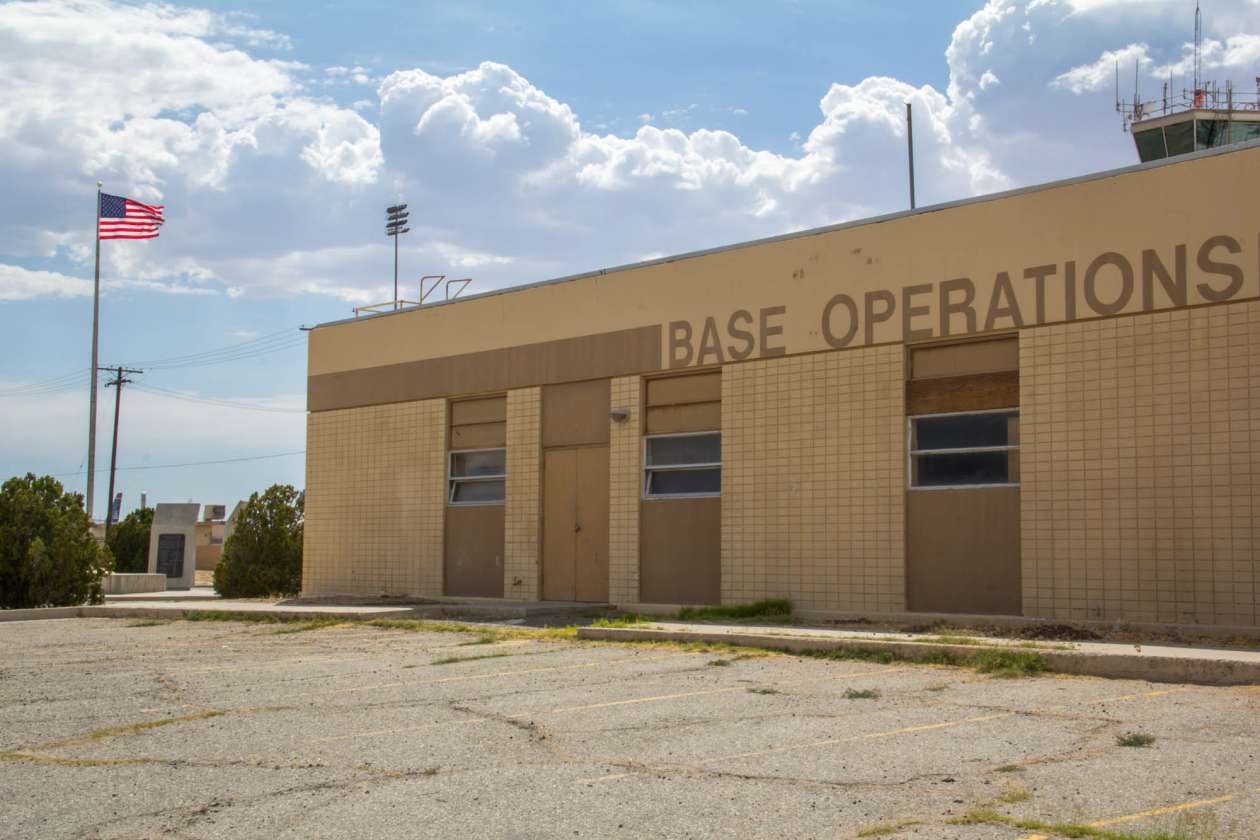
The former George Air Force base sits on the edge of the Mojave Desert in California. Many parts of it are abandoned. The operations building and movie theater are boarded up. Tumbleweeds, mounds of concrete and building materials fill the dugout of an old baseball field. But while almost any sign of military life is gone, the water contamination is not.

“The Air Force is promising to clean it up,” said Vera, the veteran who served at the base. “But in the end, they are just walking away from the contaminated bases and the people are stuck with this nightmare.”
In 1990, the base was added to the EPA’s Superfund list. Jet fuel, benzene, trichloroethylene (TCE), pesticides and radioactive wastes have contaminated groundwater, EPA records show.
George was closed in 1992 as part of the Base Realignment and Closure, or BRAC. Within one year, the DOD began transferring land over to local communities to be redeveloped. But 25 years later, the water still is contaminated.
“You don’t see George as far along as some of the other military bases,” said Bill Muir, the senior engineering geologist for the Lahontan Regional Water Quality Control Board, responsible for protecting water in the region.
In 2015, PFAS chemicals also were found by the Air Force in the groundwater at the base, a potential threat to the businesses that have been built on the base, as well as surrounding communities.
“We’re not aware that the perfluorinated compounds have impacted any of the drinking water wells downgradient of the base,” Muir said. “There is potential, and that’s why the Air Force will be sampling in the future, and we’ll encourage that.”
Vera, 64, worked in the gun shop, where he said he used chlorinated solvents to clean weapons. “I would come out of there drenched in TCE,” he said. “They would empty the wash tank periodically and just dump it down the drain.”
“The Air Force and the government in general, betrayed not only me, but everyone who stayed at these Superfund sites because they absolutely knew that they were contaminated,” said Vera. “They knew the harm it would possibly cause us.”
“I drank gallons and gallons of water because it was the desert,” he said. “A lot of times, it was dark and had a real chemical taste. It tasted like JP-4, jet fuel.”
In 2008, Vera created a website, Georgeafb.info, which started out as an “information repository” to keep his records and documents. Lisa McCrea, a former military wife, learned about the tainted water from his website.
“Lots of us didn’t know a thing about the contamination,” said McCrea, 49. “We owe so much to Frank for his tireless years of work on this, trying to bring this to light (and) letting everybody know because there’s still families out there that have no clue.”
McCrea lived on the base with her family for four years. She recalled the unsettling memory of pesticides being sprayed on her home, leaving yellow stains on the walls and on their clothes. In July, she made the trip from Ohio to California to revisit the base.
“It’s hard to believe that we used to live here day in and day out without any protection,” said McCrea, standing in front of her former house. “And it’s even more upsetting that they (Air Force) let us live here without doing anything about it.”
Terri Crooks, 59, is an Air Force veteran who was stationed on the base in the mid-’80s where she worked as an administrative clerk. She later was diagnosed with breast cancer and gynecological issues.
From Vera’s website, Crooks learned that her conditions could be related to exposure to pesticides and submitted a claim to the Department of Veterans Affairs in 2015. The VA awarded her 70 percent disability, acknowledging that her health conditions could be connected to her military service at the base.
Crooks was exposed to the chemical nearly 40 years ago, but Muir said a pesticide plume is among George’s biggest contamination problems even now.
“The Air Force needs to work to aggressively treat these zones of contamination,” Muir said. Instead, it proposed using Monitored Natural Attenuation, a remediation strategy that allows nature to break down the chemicals over time.
Phil Mook, a senior representative for the Air Force Civil Engineer Center, which is overseeing cleanup at George, said the Air Force has spent the last 30 years removing contamination.
“We’ve done a lot of work,” Mook said. “We still have work to do. In about 30 years, we’ll have much smaller TCE, fuels and petroleum. Estimated, another 70 years after that, we have the last little tail of it.”
But according to the Lahontan Water Board, that treatment at George could take up to 500 years for the pesticide and solvent contamination to reach safe levels, and up to 40,000 years for areas of fuel contamination in the groundwater.
The MNA method is used at more than half of the military locations classified as Superfund sites, according to EPA data.
“We can’t accept monitored natural attenuation,” Muir said. “We need active remediation. We want a more aggressive approach than watching it.”
“We have been forgotten,” McCrea told News21. “The base closed, everyone scattered to the wind, and I guess they figured, problem solved,” she continued. “To this day, there has been no word from the United States Air Force about the contamination at George Air Force Base.”
Base cleanups cost taxpayers millions
At the Wurtsmith Air Force Base in northern Michigan, the water contamination has persisted for nearly half a century. At the height of the Cold War, the base was home to B-52s and nuclear bombs. Now, little is left but empty airfields and crumbling buildings.

Wurtsmith was closed in 1993 and was proposed as a Superfund site in 1994. With an estimated cleanup cost of $72 million, the DOD expects Wurtsmith to be one of the most expensive cleanups of any former base, according to a 2017 GAO report.
Leaking storage tanks and waste disposal practices at the base contaminated the groundwater with benzene, trichloroethylene, lead and other hazardous chemicals for decades. PFAS discovered in 2012 also polluted groundwater, not only on the base but in surrounding communities.
“It’s clear that what was thought to be a relatively confined problem is bigger than what we thought it was,” said Kildee, the Michigan congressman whose district includes Wurtsmith. “And it’s clearly affected the drinking water.”
Nearly 400 drinking water wells on and near the base have tested positive for the PFAS, and the contamination is migrating toward Lake Huron as well as local lakes used for fishing and recreation.
“Right now, the Air Force said it’s going to be at least another 30 years to treat this,” said Aaron Weed, township supervisor for Oscoda, Michigan. “But we’ve already been dealing with contamination for over 30 years.”
The town relies on water recreation to support its economy. “We have visitors who don’t want to come up here and visit because they think all the water is contaminated,” said Weed. “It is safe to swim in the water. Just drinking the contaminated water is a problem.”
Van Etten Lake runs through the center of Oscoda and has tested positive for PFAS.
“Tourism and our economy are affected by this,” said Robert Tasior, a resident in Oscoda Township.
He also is part of the Wurtsmith Restoration Advisory Board, which includes EPA representatives, Air Force officials and other residents who are working together on a cleanup plan. He says the Air Force needs to “step up.”
“It happened under their watch. And where I come from, if it happened under your watch, you’re responsible for it,” he said. “If it means putting shovels in the ground to get rid of this stuff, then that’s what they need to do.”
Weed, the township supervisor, said the Air Force only is treating groundwater under the base and has been unresponsive to concerns about PFAS migrating toward the lake.
“I want people to have clean water,” Weed said. “I don’t want them to be sick from the natural environment we really have here. I believe that this slow response from the Air Force in treating this contamination is a poisoning of the American people.”
While residents worry about the current PFAS contamination, veterans like Rick Thompto, 58, are concerned about the long legacy of contamination at the base. Thompto worked as a security police officer on the base from 1978 to 1982. One night, while on a routine security check of the base, he discovered leaking barrels of cleaning solvents.
“We noticed that the door was open to this building … it was always locked,” Thompto said. “We stepped in there and were hit with a strange odor. I looked and it was all rolling down and going in the drain.”
Thompto now has a persistent brain tumor he and his wife contend is the result of drinking toxic water during his nearly five years at Wurtsmith. In 2007, he was awarded 100 percent disability from the VA.
It took Thompto and his wife seven years and several appeals before the VA acknowledged that his brain tumor was related to contaminated water. A recent brain scan shows Thompto could completely lose his brain function at any time.
“This isn’t going to happen gradually,” said his wife, Tressa. “It could happen tonight. It could happen a few months from now.”
“He shouldn’t have gotten sick,” she continued. “If the government did their job the right way and cared about their people, he wouldn’t have gotten sick in the first place.”
A public health assessment from the Michigan Department of Health and Human Services in 2000 concluded that the TCE contamination Wurtsmith’s drinking water had been present as early as the 1950s.
“To watch your loved one slowly die in front of you is difficult,” said Tressa Thompto. “It took us seven years of fighting, and even after winning, you’re still fighting.”
A community works to bounce back
Pease Air Force Base in Portsmouth, New Hampshire, bears little resemblance to the abandoned landscapes at other closed bases. Before the base closed in the spring of 1991, the state of New Hampshire had already created a redevelopment plan to replace the former base with a business park.
Despite being classified as an Superfund site in 1990 and “one of the most contaminated Superfund sites in New England” due to TCE, jet fuel and other contaminants in the groundwater, Pease bounced back after nearly a decade of cleanup.

Today, the base is gone, replaced with brick buildings housing restaurants, pharmaceutical companies and day care centers.
“The Air Force has said that this is probably the most successful redevelopment of an Air Force base that they have in the country,” said Andrea Amico, co-founder of a community action group Testing for Pease.
“It’s beautiful. It’s tree lined. It’s a very nice place,” said Amico. “At lunch time, it’s filled with people running and biking and walking, it’s a beautiful place to be. So you don’t come on to this thinking, ‘Oh, my God, this place is an environmental disaster.’”
Amico didn’t know about the history of the Pease International Tradeport property when she moved to Portsmouth. Starting in 2011, she dropped her infant daughter off every day at a day care center nestled between lush trees and her husband’s office building on the tradeport without worry.
But in 2014, Amico learned from a newspaper article that water serving the tradeport was highly contaminated and unsafe to drink. Her daughter and husband had been drinking the water every day for three years.
Pease was the first military base to discover PFAS in the local drinking water. Three drinking water wells serving the entire tradeport tested positive for PFAS, and one in particular tested at levels more than 12.5 times above the EPA provisional health advisory.
“When you do something that impacts children, you better watch out for their moms,” she said.
Amico and two other mothers created an advocacy group after learning that their children had been drinking contaminated water at a daycare on the tradeport. Amico, Michelle Dalton and Alayna Davis created Testing for Pease and lobbied for two years to get blood testing for the community funded by New Hampshire Health and Human Services.
She remembered the day she received the results for her two children. “It was like a kick in the face,” she recalled. “Even knowing they were going to be high, to actually see it on paper was a really big blow.”
Amico’s daughter, now 6, had the highest PFAS level of anyone in the family. “I know it’s going to be in her blood for a long time,” Amico said. “And there’s not a lot of data to support what it may or may not do to her.”
Much of the research about PFAS has been left to community.
“It’s a Catch-22 because we’re at the forefront of all the bases,” said Dalton. “We’re kind of in uncharted territory.”
Amico says that so far, the Air Force has been responsive, but only after receiving significant pressure from community members, the EPA and New Hampshire state representatives.
“It doesn’t feel as if they’ve done anything on their own good will here, which is frustrating to me,” she said.
Portsmouth resident Lindsey Carmichael is a member of Pease’s Community Assistance Panel, a group of citizens who work with federal agencies to look at health effects on the community. She became involved after learning that the water at her son’s day care was contaminated.
Although her son’s blood levels did not show a heightened level of PFAS, she is still concerned for the long-term health effects on her son and those who drank the water at the tradeport.
“One of the main things that we’re hoping for is that the DOD, Air Force, who was the polluter who has taken full responsibility for the contamination, would also pay for a health study to help us understand what in fact the implications are of the exposure,” Carmichael said.
However, as of May 2017, the Air Force has denied community requests to conduct a health study on the residents affected by the contamination at Pease.
“All of us are guinea pigs and we bear the burden of proving a product or chemical’s safety – or lack thereof – and the consequences are what we’re seeing here,” Carmichael said.