National Security

Three peace activists, (from left) Michael R. Walli, Sister Megan Rice and Greg Boertje-Obed, were charged with trespassing for breaching the exterior security at America's premier vault for nuclear weapons-grade uranium in around thirty minutes. Courtesy of Megan Rice

How an 82-year-old exposed security lapses at nuclear facilities

By R. Jeffrey Smith

The hammering on the wall of America’s premier storage vault for nuclear-weapons grade uranium in pitch-darkness six weeks ago was loud enough to be heard by security guards. But they assumed incorrectly that workmen were making an after-hours repair, and blithely ignored it.

Minutes earlier, a perimeter camera had caught an image of intruders — not workmen — breaching an eight-foot high security fence around the sensitive facility outside Knoxville, Tenn. But the guard operating the camera had missed it. A different camera stationed over another fence — also breached by the intruders — was out of service, a defect the protective force had ignored for 6 months.

In theory, the pounding might have been the work of a squad of terrorists preparing to plant a powerful explosive in the wall of the Highly Enriched Uranium Materials Facility (HEUMF), a half-billion dollar vault that stores the makings of more than 10,000 nuclear bombs. Instead, it was a group of three peace activists, including an 82-year old nun, armed only with flashlights, binoculars, bolt cutters, bread, flowers, a Bible, and several hammers.

The casual and relatively swift penetration of the site’s defenses on July 28 by the activists has provoked their felony indictment on federal charges. But it has also provoked new troubles for nuclear weapons contractors that have until recently had large influence in Washington, and for the National Nuclear Security Administration, the increasingly embattled steward of America’s dwindling but still fearsome arsenal of nuclear weaponry.

Up in Arms

An Afghani walks amidst rows of Humvees donated by the United States to the Afghan National Army in 2007. Musadeq Sadeq/AP

IG: Afghan fuel records go missing

By Aaron Mehta

What happened to almost $475 million worth of oil destined for the Afghan National Army – that’s what the Special Investigator General for Afghanistan Reconstruction (SIGAR) would like to know. 

Unfortunately, the inspectors may never find out.  According to the report released Monday, more than four years of financial records that the Department of Defense was supposed to keep to track this spending are either missing or so poorly kept that even gathering basic information, such as the location and size of fuel sites, was not possible.

The report concludes that the Department of Defense agency in charge of tracking the oil “does not have accurate or supportable information on how much U.S. funds are needed for [Army] fuel, where and how the fuel is actually used, or how much fuel has been lost or stolen.” 

Inspectors found that records from October 2006 to March 2011 were shredded improperly, a violation of DOD policies that made it impossible for auditors to track what happened to the hundreds of millions of dollars’ worth of oil.  DOD also “could not provide more than half” of the documents requested from March 2011 onward.

“The destruction of records and the unexplained failure to provide other records violate DOD and Department of the Army policies,” wrote SIGAR head John Sopko in a letter to Secretary of Defense Leon Panetta and others that accompanied the report. Sopko, an experienced watchdog appointed in May, noted that he has opened an investigation into the destruction of the older records.

Up in Arms

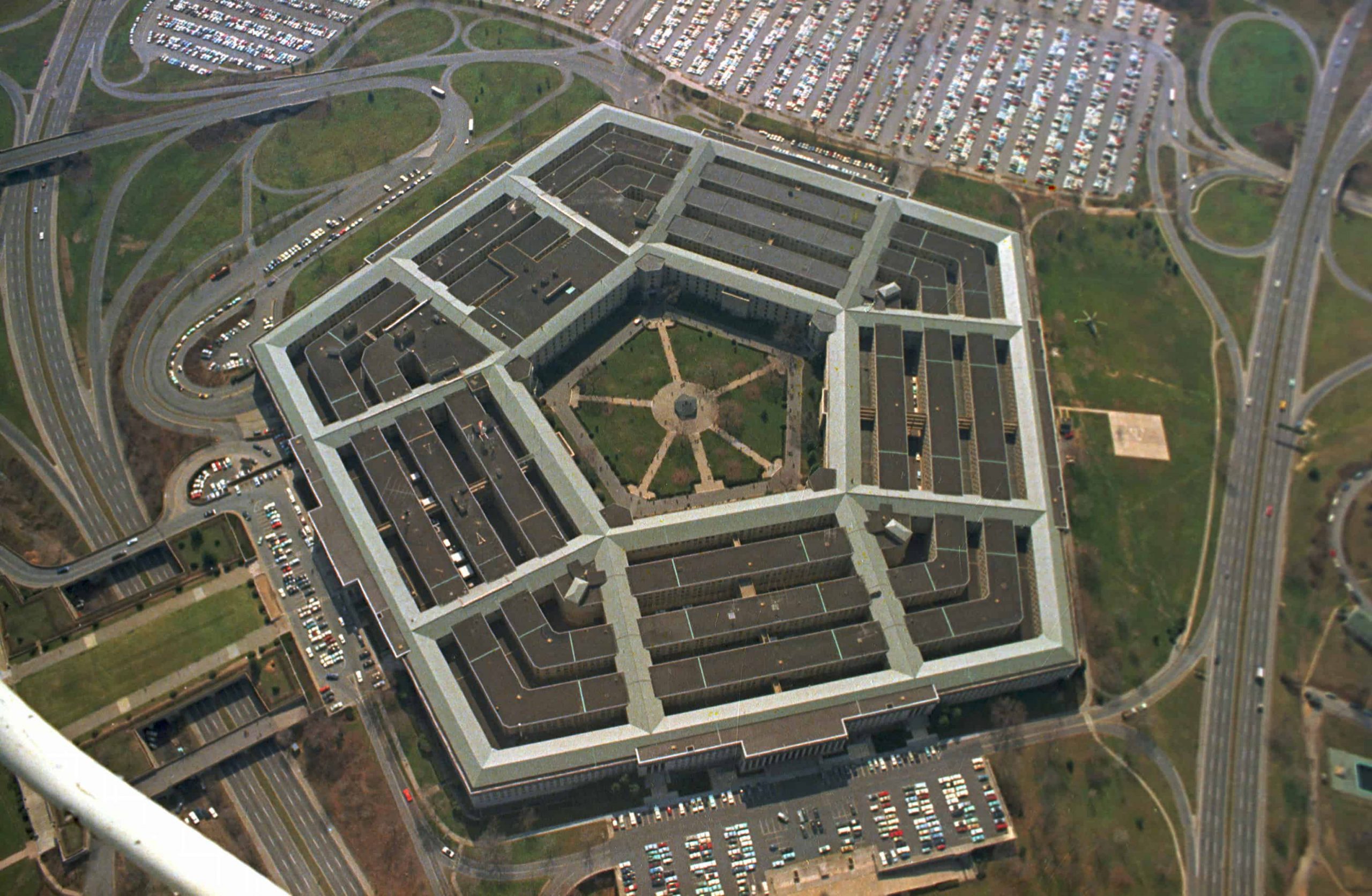
The Pentagon US Air Force

Amidst cuts, Army outfits chauffeurs

By Aaron Mehta

Facing the end of an era of untrammeled growth in defense spending, officials at the Pentagon have spent most of 2012 telling anyone who will listen how potential budget cuts will put national security in jeopardy. While funds for big ticket military items are under new pressure, however, there’s one thing the Pentagon still has pocket change for: its well-groomed chauffeurs.

On Friday, the Army formally solicited new bids to make the grey uniforms used by chauffeurs.  The request was first uncovered by our friend Mark Thompson, who closely tracks such bids for his entertaining Battleland blog at TIME.

The bid makes clear that even though the Pentagon has plenty to worry about these days — the threat of war with Iran, the chaos in Syria, and the continued conflict in Afghanistan, to name a few — someone there still has time to worry about the fine details of how the drivers of top generals and assistant secdefs are to be dressed.

In the solicitation, the fabrics of the uniforms are spelled out with precision:  coats and trousers must be 55 percent polyester and 45 percent wool, while shirts should be 65 percent polyester and 35 percent cotton. The cotton tie must be burgundy. Anticipating a rough winter, the solicitation included an order for 68 black V-neck sweaters. 

Up in Arms

President Barack Obama, Defense Secretary Leon Panetta, and various senior Defense Department and military officials announce the Defense Strategic Review in January. Haraz N. Ghanbari/AP

Is the Democratic platform in synch with the public on national defense?

By Aaron Mehta and R. Jeffrey Smith

The Democratic party platform released this week suggests that national security officials in a second Obama administration will attempt to leave outdated military projects behind, try to bolster the country’s international leadership, and try to control nuclear weapons materials — policies that match some but not all of the preferences expressed by members of both political parties in a May survey organized by the Center for Public Integrity.

The platform, released Tuesday, leaves plenty of wiggle room for the administration, eschewing hard numbers or strategic decisions in favor of generalities — a practice typical in platforms released at convention time that are heavy on rhetoric but light on specifics.

The 2012 platform is even more general than the Democrats’ 2008 version, which contained highly specific pledges of new aid to Afghanistan ($1 billion) and Israel ($30 billion) and called for increasing “the Army by 65,000 troops and the Marines by 27,000 troops.” Instead of looking forward, the focus of this year’s document is on what the Obama administration has already accomplished. 

But it still provides a starting point to consider how Obama and his team might handle national security issues if he wins a second term. (Our look at the GOP’s platform was published Aug. 30.) While the platform does not specifically call for defense cuts, it mirrors the strategic plan laid out by Secretary of Defense Leon Panetta, who called in January for moving away from heavy land forces and restructuring how the military spends its funds, while leaving the future defense budget mostly level.

Up in Arms

 Mitt Romney speaks at the American Legion National Convention, Wednesday, Aug. 29, 2012, in Indianapolis. Evan Vucci/AP

GOP platform at odds with public on defense spending

By Aaron Mehta

In May, the Center for Public Integrity and the Stimson Center unveiled the results of a major poll on defense spending. Our poll found wide consensus among the public and across party lines that the defense budget could use some trimming — around three-quarters of those polled thought there should be cuts for air power, ground forces, and naval forces, and over eighty percent said there is “a lot of waste” in the defense budget. In fact, respondents preferred far deeper cuts than those suggested by either the Obama administration or the Republicans.

During the conventions, we decided to take a look at what the party platforms say, and how that measures up to public opinion. First up: the GOP and presidential nominee Mitt Romney.

Romney has made it clear that he intends to expand defense spending if elected in November, having already called for spending a minimum of four percent of the GDP on national defense.

But Tuesday afternoon, as Romney was being officially nominated at the Republican National Convention, his party unveiled the official GOP platform for 2012. Included in the party platform was a thirteen-page section on “American Exceptionalism,” laying out the Republican view of defense and the future of the military.

While the document is light on specifics and heavy on rhetoric, there are some clues for what would be the Romney administration’s national security priorities. And in some very expensive cases, they don’t match up with public sentiment.

Up in Arms

Four Saudi Arabian F-15 jets fly over Riyadh in 2009. The middle eastern country agreed to more than $33 billion in arms purchases from the United States in 2011. Hassan Ammar/AP

U.S. sets record arms sales in 2011

By Aaron Mehta

2011 was a very good year for U.S. arms sales, with more than triple the business from the year before. 

According to a new report to Congress, worldwide sales of U.S. weapons last year added up to $66.3 billion. That accounts for more than three-quarters of 2011 arms sales worldwide, which is “the highest single year agreements total in the history of the U.S. arms export program.”

The report was prepared by the Congressional Research Service (CRS) as part of their annual study of arms sales.

In 2010, the U.S. authorized $21.4 billion in sales, which led CRS to describe the jump as “extraordinary.” In terms of overall sales, Russia was distant second to the United States, having moved $4.8 billion. The previous record was in 2009, when the U.S. did almost $31 billion in sales.

Since the start of 2008, 81.4 percent of U.S. arms sales agreements have gone to the Middle East while 16.04 percent have gone to Asian countries.

In the report, CRS notes that sales to developing nations were a major driver in lifting 2011 U.S. sales, jumping from $14.3 billion in 2010 to $56.3 billion in 2011. CRS points to Saudi Arabia and the United Arab Emirates as countries that bolstered their arms purchasing in 2011, which CRS says could be linked to concerns over Iran. Saudi Arabia purchased more than $33 billion in arms from the U.S., including 84 new F-15 jets and upgrades for 70 older models.

The Saudis were not alone in purchasing weaponry in the region. The United Arab Emirates purchased 16 Chinook helicopters for just under $1 billion total; Oman shelled out $1.6 billion for 18 F-16 fighters. Egypt added land forces, spending $1 billion on M1 Abrams tanks, a sale that the Pentagon has used to argue for freezing domestic production of the Army’s signature land vehicle.

Up in Arms

An officer with the Transportation Security Administration screens passangers at  Los Angeles International Airport. Since the start of 2004, over 2,500 Homeland Security employees have been convicted of crimes. Ann Johansson/AP

Drugs, guns and child porn at Homeland Security

By Aaron Mehta

The Department of Homeland Security is the first line of defense against threats to Americans, entrusted with guarding the borders, protecting the skies and cracking down on potential terrorist attacks.

But instead of protecting America’s citizens, hundreds of DHS agents have been busy smuggling drugs, guns and illegal immigrants, obtaining child porn, and raking in thousands in bribes and theft. 

Those are just a sampling of the crimes DHS agents committed, according to the “Summary of Significant Investigations” released by Homeland Security’s Inspector General this month.

It was a busy 2011 for the IG’s office, which investigated 1,389 allegations that resulted in 318 arrests and 260 convictions. Fines and recovered funds saved more than $45 million in taxpayer funds, according to agency estimates.

DHS is a massive government agency, with “over 225,000” employees, so it may not be surprising that there would be some individuals breaking the rules. But the seriousness of the crimes — including cases where American security was directly compromised by the very agents who are supposed to secure the borders and airports — is eye opening.

“A corrupt DHS employee may accept a bribe for allowing what appear to be simply undocumented aliens into the U.S. while unwittingly helping terrorists enter the country,” warned Charles Edwards, the acting inspector general (IG) at DHS, in Congressional testimony August 1. “Likewise, what seems to be drug contraband could be weapons of mass destruction, such as chemical or biological weapons or bomb-making materials.”

Among the more incendiary crimes profiled in the report:

Up in Arms

Anti-tax lobbyist Grover Norquist, seen here in 2010, has called for cuts in military spending.  Cliff Owen/AP

Dissent among Republicans over defense spending

By Aaron Mehta

Grover Norquist, an influential Republican lobbyist in Washington, is advising his party's lawmakers to cut the defense budget deeply to avoid a major federal tax hike. 

His remarks on Monday were another sign of splintering views in Republican ranks about spending on national defense that presently consumes about half of the discretionary federal budget — with Republican presidential candidate Mitt Romney going in one direction and some Republican lawmakers and lobbyists headed in a different direction. 

Norquist, a long-time anti-tax crusader in Washington, said in a talk at the Center for The National Interest that Republicans should not be pushing for increased spending on defense when the national deficit has ballooned. Instead, he said, lawmakers should embrace the need to balance the budget and cut wasteful projects, which he said could be done without negatively impacting national security.

“You need to decide what your real defense needs are,” said Norquist. “That doesn’t mean chairmen of certain committees get to build bases in their states. That’s not a defense need ... [but] a political desire.” The debate so far, he said, has been marked by a lack of “serious conversation” on the Hill. However, he predicted that many of the Republicans unwilling to cut defense spending would either retire or be replaced in the November elections. 

Norquist, expressing views typical among more isolationist Republicans, decried foreign interventions such as Iraq and Afghanistan. “Bush decided to be the mayor of Baghdad rather than the president of the United States,” he said. “He decided to occupy Iraq and Afghanistan rather than reform Fannie Mae and Freddie Mac. That had tremendous consequences.”

Up in Arms

A United Launch Alliance Atlas V rocket blasts off from Space Launch Complex-41 with a national security payload for the National Reconnaissance Office on June 20, 2012.  United Launch Alliance

Lawmakers complain about monopoly space launch deal

By Zach Toombs

For six years, the Air Force has relied mostly on a single, high-cost rocket manufacturer to loft its reconnaissance, communications, and GPS satellites into space and it is about to double down. In the fall of 2013, it plans to give the company a new $19 billion contract for all of the Air Force launches scheduled through 2017.

Some members of Congress are upset by the pricetag, however, and key lawmakers — acting with the support of an array of upstart rocket firms — are starting to push back against the Air Force’s plan to reward its contractor with a five-year lock on all launches.

The latest salvo comes from House Intelligence Committee Chairman Mike Rogers, R-Mich., and ranking member C.A. Dutch Ruppersberger, D-Md., who complained in an Aug. 2 letter that the Pentagon’s largest launch project “lacks domestic competition and is unable to compete internationally due to high costs.” The Air Force satellite project is known as the Evolved Expendable Vehicle Launch (EELV) program.

The firm that the Air Force favors is United Launch Alliance, a joint project formed in 2006 by the Pentagon’s top two contractors, Lockheed Martin and Boeing. The Air Force plans to award the $19 billion deal between June and October 2013.

Up in Arms

Senators John McCain (R-Arizona) and Carl Levin (D-Michigan). Alex Brandon/AP

Senators suggest new penalties in Chinese helicopter probe

By R. Jeffrey Smith and Zach Toombs

Two senior members of the Senate Armed Services Committee called on Monday for the Defense Department to consider suspending or blocking its ties to a major weapons contractor that admitted illegally helping China develop a new attack helicopter.

Sen. Carl Levin (D-Mich.), the committee chairman, and Sen. John McCain (Ariz.), its senior Republican member, asserted in an Aug. 6 letter to Defense Secretary Leon Panetta and Secretary of State Hillary Clinton that a series of export violations by the Canadian branch of helicopter engine manufacturer Pratt and Whitney and its parent company United Technologies “may have caused significant harm to our national security.”

Although Pratt, United Technologies and another firm agreed to pay a total of $75 million in fines when they publicly admitting wrongdoing in June, Levin and McCain complained that “no individual manager or employee has been held personally accountable.” The senators said that although the State Department has restricted some licensing privileges for Pratt’s Canadian branch, “we believe that the Defense Department should itself evaluate this case for the appropriateness of contract suspension or debarment.”

In its settlement with the Justice Department and the State Department, Pratt and United Technologies acknowledged that Pratt knowingly sent critical software to China for use with a military attack helicopter, the Z10, because it hoped to win a lucrative contract for a civilian version. “We find the crime to which P&WC [Pratt & Whitney Canada] pleaded guilty enormously troubling,” the two senators said.

Pages

Writers and editors

R. Jeffrey Smith

Managing Editor, National Security The Center for Public Integrity

Smith worked for 25 years in a series of key reporting and editorial roles at The Washington Post, including ... More about R. Jeffrey Smith

Douglas Birch

The Center for Public Integrity

Veteran foreign correspondent Douglas Birch has reported from more than 20 countries, covered four wars, a dozen elections, the deat... More about Douglas Birch