
How important is nonprofit journalism?

Donate by May 7 and your gift to The Center for Public Integrity will be matched dollar-for-dollar up to $15,000.

Super Congress

Senate Minority Leader Mitch McConnell picked Sen. Jon Kyl, R-Ariz., for the bipartisan debt "super committee." Matt York/AP

Kyl will oppose "job-killing" tax hikes in Super Congress talks

By Amy Biegelsen, Jeremy Borden and Aaron Mehta

Republican Jon Kyl, second-in-command in the Senate minority, is not running for re-election and so has the freedom to stand on principle without angering Arizona voters in the Super Congress debate.

Kyl was involved in the summer bipartisan debt talks led by Vice President Joseph Biden until he pulled out in late June. Kyl and his Republican colleagues were seeking $2.5 trillion in budget cuts. The debt ceiling legislation that ultimately passed includes $1 trillion in cuts and leaves the Super Congress to identify $1.5 trillion more.

On the question of whether the committee will look to tax revenue as part of its work, Kyl is likely to be opposed.“Job-killing tax increases are the wrong medicine for our struggling economy,” he has said.

Kyl, 69, is in his third term in the Senate and serves on the Judicial and Finance committees. Before coming to the Senate, he served four terms in the House of Representatives.

The National Journal declared him to be the most conservative Senator in 2008. He has taken a hard line on taxes, abortion, and immigration, once supporting a measure that would deny citizenship to the children born in this country to parents who were undocumented immigrants. In April, he caused a media storm when he said on the Senate floor that abortions represent “well over 90 percent of what Planned Parenthood does.” When the figure was revealed as inaccurate, his office’s response that the senator’s comment "was not intended to be a factual statement” only fed the media blitz.

In November 2010, he announced that he would oppose ratification of the New START arms control treaty with Russia.

Super Congress

House Speaker John Boehner picked Rep. Jeb Hensarling, R-Texas, for the bipartisan debt "super committee." Susan Walsh/AP

Hensarling will take hard line into Super Congress debates

By John Aloysius Farrell and Josh Israel

Rep. Jeb Hensarling’s appointment as the co-chair of the Joint Select Committee on Deficit Reduction will give the Texas Republican his first big opportunity to apply the leadership skills he has demonstrated among House Republicans in the relentless glare and demands of a high-stakes national forum.

Hensarling, 54, is a favorite of conservatives in the House, where he chairs the House Republican Conference; formerly led the Republican Study Committee (the House Republican policy group); and has compiled an almost flawless conservative voting record on social and economic issues.

In the fall of 2008 Hensarling helped lead the unsuccessful opposition in the House to the Bush administration’s $700 billion financial bailout bill, which was pushed through Congress at a time when the international financial system was tottering and threatening the nation with another Great Depression.

Hensarling brushed away warnings that the nation’s top financial institutions were too big to fail. He stuck to conservative principle, and asked why Wall Street banks should be protected from the rigors, risks and penalties of capitalism. The bailout was the “slippery slope to socialism,” he said.

More recently, Hensarling served on the Simpson-Bowles deficit commission, and voted against its final proposal—a bipartisan mix of spending cuts and tax reforms and hikes—because, he said, it called for higher taxes without guaranteed cuts in spending, especially Medicare spending.

Super Congress

  House Speaker John Boehner picked Rep. Fred Upton, R-Mich., for the bipartisan debt "super committee."   Charles Dharapak/AP

Fred Upton must balance devastated Michigan with cost-cutting

By Jeremy Borden and Aaron Mehta

Fred Upton, grandson of the Whirlpool founder, has long been viewed as a moderate, voting with House Republicans most of the time but breaking ranks on such issues as the 2007 Iraq War troop surge, which he opposed. He also voted for the taxpayer bailout of his home state’s auto manufacturers.

However, Upton has become more reliably conservative since he took over as chairman of the Energy and Commerce Committee, which covers a wide range of issues: health care, energy, consumer safety, telecommunications and trade. He has been a frequent critic of the Environmental Protection Agency and has looked to strip the agency of its ability to regulate greenhouse gases.

Upton sharpened his rhetoric in making his case for the chairmanship— penning an op-ed in The Washington Times and doing an interview with Politico in which he railed against the “poisonous regulations” of the Obama administration. Upton also opposed a comprehensive climate and energy bill.

During the debt crisis, Upton lined up behind the Republican “Cut, Cap and Balance” framework, voting to cut the deficit while calling on Congress to pass an amendment to the Constitution that would require a balanced budget. He said in an interview with a Michigan radio station that he would like to lower tax rates but would look to close many tax loopholes as part of an overhaul of the tax code.

But Upton was also gravely worried about what not raising the U.S. debt ceiling would mean for his state’s devastated economy.

Super Congress

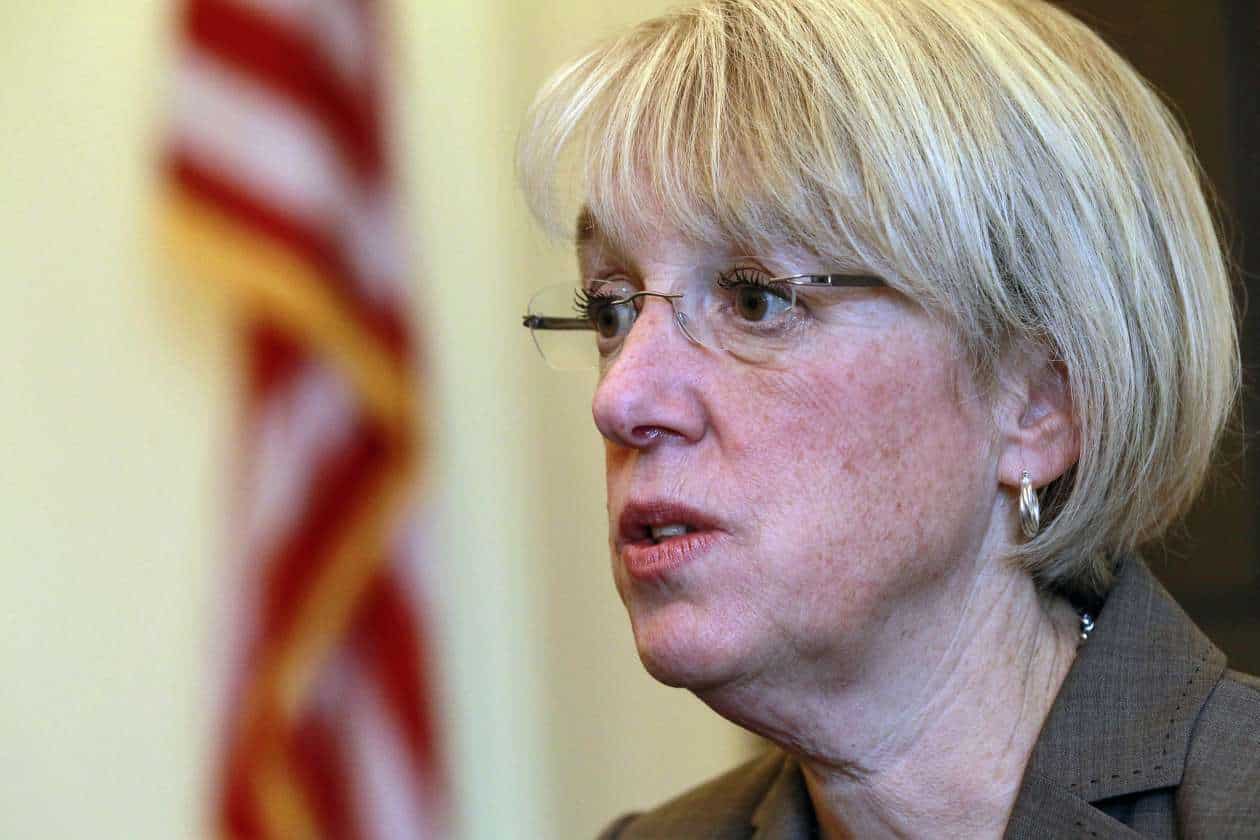
Senator Patty Murray of Washington  Alex Brandon/AP

Super Congress co-chair Patty Murray champions liberal causes, big business

By David Heath and Josh Israel

In selecting Patty Murray as one of the Democrats for the Super Congress, Senate Majority Leader Harry Reid picked someone he can count on.

Murray, a fourth-term senator from Washington, is a passionate advocate for veterans, seniors and working families, so she’s almost certain to try to limit or block cuts to Medicare or Social Security.

But she is also loyal to Reid and her party. In supporting the debt-ceiling compromise, Murray framed her support as protecting ordinary working people back in Washington.

On the floor of the Senate, she read a letter from a distressed Bellingham, Wash., constituent who said, “Social Security is my lifeline. It stands between me and homelessness.”

Murray said that though the compromise wasn’t perfect, it kept people like her constituent from suffering.

While her task now will be to find major spending cuts, Murray has a reputation as a big spender who excels at bringing federal dollars back home. And while she clings to her image as a mom in tennis shoes, Murray has also been a relentless advocate for powerful corporate interests, especially Microsoft and Boeing.

Murray has risen through the ranks of Senate Democrats by being dutiful. She took on the challenging task this year of being the party’s chief fundraiser as chair of the Democratic Senatorial Campaign Committee. That puts her in the role of asking for money from political interests who have a huge stake in any deficit reduction plan.

The chairman of the Republican National Committee, Reince Priebus, criticized Murray’s appointment, saying it is “absolute proof that Democrats are not serious about deficit reduction… The Select Committee is no place for someone whose top priority is fundraising and politics.”

Super Congress

Pablo Martinez/The Associated Press

Dave Camp, Ways and Means chair, would cut "out of control" spending

By Amy Biegelsen, Josh Israel and Peter H. Stone

Dave Camp of Michigan, chairman of the tax-writing House Ways and Means Committee, holds conservative views on fiscal issues that have won him broad backing in the business community.

During the summer debate over raising the debt ceiling, Camp introduced a measure that would increase the debt limit with no cuts or revenues attached, and then announced he had no intention of voting for the bill. He said he offered it because he hoped its failure would demonstrate that the House GOP would not support any debt ceiling solution that did not include significant budget cuts.

Camp has championed his party’s tax-cutting ideology and anti-big government line on key issues such as the huge Medicare and Social Security entitlement programs. During the 111th Congress, Camp voted with his party 93.6 percent of the time, and the American Conservative Union gives him a lifetime rating of 89 percent.

“Rather than returning to the same failed Washington spending policies,” he said, the country “must …start with spending less, advancing our pending trade agreements and transforming our broken tax code.”

Camp, 58, has been an ardent advocate of extending the entire range of Bush-era tax cuts, which he voted for twice. Although he has occasionally credited President Obama for bipartisanship, Camp criticized the $787 billion economic stimulus package, faulting it as too costly and “not the right kind of tax relief to create jobs.”

Super Congress

Sen. John Kerry of Massachusetts  J. Scott Applewhite/AP

John Kerry, Dem appointee to Super Congress, has record of working across the aisle

By John Aloysius Farrell and Aaron Mehta

In a quarter century in the Senate, Sen. John F. Kerry of Massachusetts has made the transformation from a brash young iconoclast to respected senior statesman. He brings the liberal bona fides of a former Democratic presidential candidate to the Super Congress deliberations and a less-heralded but successful record at enlisting and working with Republican colleagues on thorny issues.

On several occasions in his career, Kerry has shown the willingness to stray from Democratic Party orthodoxy—on affirmative action, education and notably, given this newest assignment, on a balanced budget amendment, welfare reform and tax issues affecting business, research and capital gains. He serves on the Finance Committee, has chaired small business and commerce panels in the Senate, and has a thorough knowledge of the international economy from his role as chairman of the Senate Foreign Relations Committee.

But Kerry’s progressive Massachusetts constituency, and his personal sensitivity to criticism, has sometimes led him to retreat from his more provocative positions, and fed criticism that he tries too hard to be all things to all people. That critique cost him dearly when he ran for president in 2004, and was famously captured when he explained an evolving position on the Iraq war by saying, “I actually did vote for the $87 billion before I voted against it.”

Inside the Senate club, the tall military veteran with aristocratic ancestry and a billionaire wife has shown a knack for cutting deals with his Republican colleagues, even conservatives like former Republican Sens. Jesse Helms of North Carolina and Bob Smith of New Hampshire. Kerry’s most famous collaboration is his long-running friendship with GOP Sen. John McCain of Arizona, a fellow Vietnam veteran. Together, they helped heal many of the wounds left by that war, and provided former President Bill Clinton the political cover to establish diplomatic relations with Vietnam.

Pages