Primary Source

Corporate logo for Rockstar, Inc., maker of Rockstar Energy Drink. RockstarEnergy.com

Rockstar Energy Drink targets beverage laws

By Dave Levinthal

Party like a rockstar? Try lobby like a rockstar.

Rockstar, Inc., maker of the eponymous beverage, has hired a well-connected team of Podesta Group lobbyists — nine in all — to press federal lawmakers on "legislation and oversight regarding energy drinks," a new filing with the U.S. Senate indicates.

This is the first foray into federal lobbying for the Las Vegas-based company, which offers a caffeine- and additive-filled product line with brands such as "Rockstar Juiced" and "Rockstar Punched."

And it comes as the Food and Drug Administration is investigating the safety of energy drinks. Lawmakers, including Sens. Richard Blumenthal, D-Conn., and Dick Durbin, D-Ill., have also expressed concern about the beverages.
Primary Source

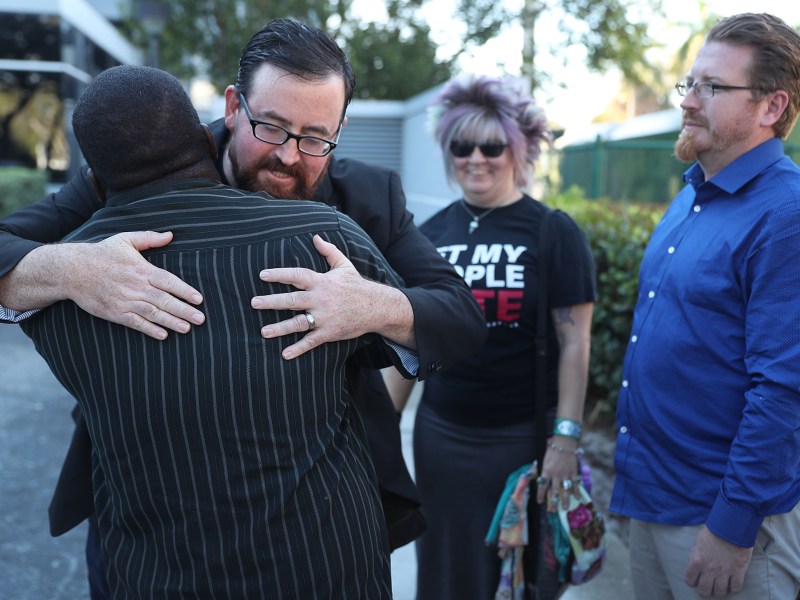
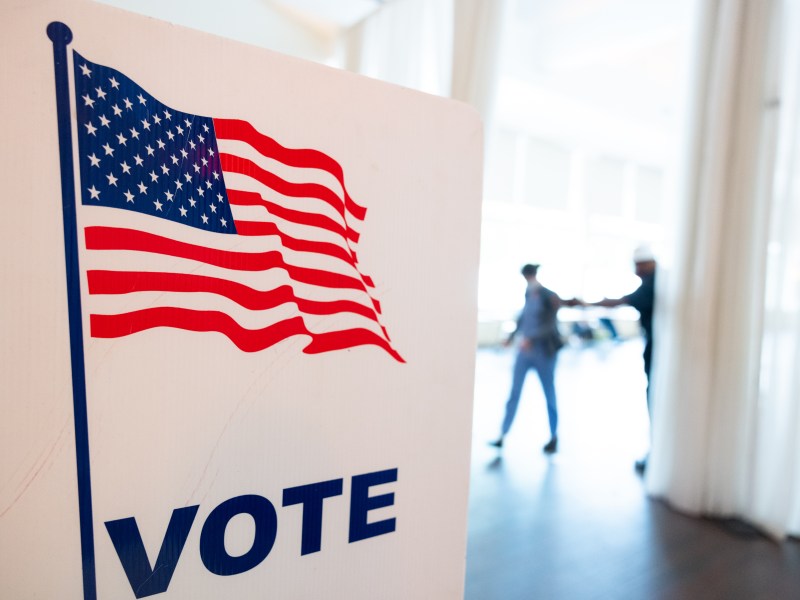
Marcus, left, and Daniel German-Dominguez stand outside the Supreme Court in Washington on Tuesday, March 26, 2013, before the court's hearing on California's voter approved ban on same-sex marriage. Pablo Martinez Monsivais/AP

Gay rights lobby courts lawmakers with cash

By Michael Beckel

As the U.S. Supreme Court hears oral arguments this week in two cases concerning gay rights, advocacy powerhouse Human Rights Campaign has been rallying its base by word — and by dollar.

"This is our moment," Human Rights Campaign President Chad Griffin wrote Sunday in an email to supporters. "Tuesday is the culmination of years of work. The millions like you who have pitched in, spoken out and recruited friends to our cause have helped bring us to this point, but we're not at the end of this journey yet."

According to the Center for Responsive Politics, the Human Rights Campaign spent $1.37 million on federal lobbying last year — more than any other group focused on LGBT issues.

The Washington, D.C.-based Human Rights Campaign, which is the largest advocacy group focused on the rights of lesbians, gays, bisexuals and transgender people, also operates a political action committee.

In February, its PAC doled out a combined $7,000 to five members of Congress, according to records filed last week with the Federal Election Commission.

Sen. Mark Begich, D-Alaska; Rep. Bill Foster, D-Ill.; Rep. Raul Ruiz, D-Calif.; and Dirigo PAC, the leadership PAC of Sen. Susan Collins, R-Maine, each received $1,000, records indicate.

Primary Source

Rand Paul speaks to supporters at a public meeting in Meredith, N.H. Gage Skidmore

Pro-Rand Paul PAC to amplify conservative message

By Dave Levinthal

Count at least two reasons why the newly formed "Stand With Rand PAC" is notable.

First, it's a hybrid PAC — a relatively rare, but increasingly popular vehicle that combines the advantages of a traditional political action committee and a super PAC. Under one roof, a hybrid PAC may raise limited amounts of money in one account to donate directly to politicians and unlimited amounts in another to advocate for politicians (or against their opponents) through independent advertisements.

Secondly, the committee, the name for which salutes Sen. Rand Paul, R-Ky., form via the "MyPAC" ready-made hybrid PAC service offered by DB Capitol Strategies — a campaign law and consulting firm that in 2011 prompted the creation of hybrid PACs in federal court case Carey v. Federal Election Commission.

DB Capitol Strategies is charging clients $695 through its MyPAC service to form hybrid PACs, which includes $100 deposited in each of a hybrid PAC's two accounts for immediate use. It heavily promoted its service this month at the Conservative Political Action Conference at National Harbor, Md., in part enticing Chantilly,Va.-based accountant Bill Willenbrock to sign up and operate the Stand With Rand PAC.

Primary Source

Sen. Jon Tester, a Montana Democrat, is sponsoring a bill that would delay the Fed's proposed 12 cent cap on debit card processing fees.   Charles Dharapak/The Associated Press

Tester offers e-filing amendment to budget bill

By Michael Beckel

Sen. Jon Tester, D-Mont., has this evening introduced an amendment to the Senate budget bill that would require senators to electronically file campaign finance reports, the Center for Public Integrity has learned.

The move comes a month after Tester re-introduced legislation toward the same goal.

Senate campaign committees are the only federal political committees not required to file their financial disclosure reports electronically with the Federal Election Commission. As a result, it can take weeks, if not months, to get detailed information about who is bankrolling senators and Senate hopefuls.

"This is one other way to tackle this problem, trying to get senators and Senate candidates to file online," Tester spokeswoman Andrea Helling told the Center for Public Integrity. "We are pushing for a vote but whether or not we get one is to be determined."

Tester's e-filing amendment is one of more than 600 amendments have been filed as part of the budget bill's "vote-o-rama," though few will ultimately receive an up-or-down vote on the Senate floor.

With numerous amendments of all sorts being offered, it’s difficult to know at this juncture which ones will receive consideration, said Matt McAlvanah, communications director for Sen. Patty Murray, D-Wash., chairman of the Senate Budget Committee.

“In general, she’s been supportive of transparency,” McAlvanah said of Murray.

Representatives for Senate Majority Leader Harry Reid, D-Nev., and Senate Minority Leader Mitch McConnell, R-Ky., could not be immediately reached for comment.

Primary Source

An ExxonMobil refinery in Bayton, Texas. AP file photo

Oil industry trade group takes to D.C. airwaves

By Michael Beckel

A recently released advertisement from the American Petroleum Institute says "new energy taxes" are "not a good idea," "short-sighted" and "definitely going to kill some jobs."

The trade group has spent $76,700 touting this message on the Washington, D.C., Fox affiliate during the past two weeks, according to records filed by the station with the Federal Communications Commission.

That sum has purchased 61 television spots, the documents indicate — all during morning, evening or late-night news programs.

The two advertisements on Fox News Sunday alone set the American Petroleum Institute back $10,000 a piece.

The ads hit as lawmakers on Capitol Hill have been debating fiscal measures, including the tax incentives given to the oil and gas industry. This week, the U.S. Senate and U.S. House of Representatives both passed a short-term budget deal, but budgetary fights remain in Congress' future.

Primary Source

Hennepin County Commissioner Randy Johnson. Hennepin County

Former FEC lawyer, a Republican, touts transparency

By Michael Beckel

He may not be nicknamed the "Big Unit" or able to throw a baseball 100 mph, but Randy Johnson is pitching campaign finance disclosure in ways few Republicans do.

“I don’t see anything inconsistent with full, prompt disclosure and being a Republican,” Johnson, who served as the assistant general counsel at the Federal Election Commission for a year in the 1970s, told the Center for Public Integrity.

“I don’t feel out of place,” added Johnson, now a commissioner in Hennepin County, Minn. “The people who are opposing fuller, more open disclosure are the ones who ought to be feeling out of place.”

First elected in 1978 and re-elected 10 times since, Johnson holds the distinction of being the longest-serving commissioner in the Minnesota county since it was founded in 1852.

In Washington, D.C., Republican lawmakers, led by Senate Minority Leader Mitch McConnell, R-Ky., have repeatedly blocked Democratic-sponsored legislation that would add new reporting requirements for those that fund political ads. McConnell has argued that the plan is a tactic to intimidate Democrats’ political opponents.

And the FEC, where Johnson used to work, often deadlocks on the most contentious campaign finance issues before it, with Republican commissioners typically allied against expanding disclosure requirements. The six-member commission — five today because of a vacancy — is structured to be evenly divided between Republican and Democratic appointees.

Primary Source

President Barack Obama speaks about the "Community College to Career Fund" and his 2013 budget in Annandale, VA. Susan Walsh/AP

Obama nonprofit not disclosing all donor data

By Dave Levinthal

President Barack Obama's new nonprofit advocacy group wants to know what its donors do professionally and for whom they work.

But don't expect to ever see the information.

Organizing for Action, launched by former Obama campaign officials earlier this year, confirms it will not publicly release donors' employer and occupation data despite collecting it through its online donation form.

"Our voluntary disclosure will be posted on our website with the exact dollar donation, name and city and state of the donor," Organizing for Action spokeswoman Katie Hogan told the Center for Public Integrity.

As a practical matter, a lack of employer and occupation information makes it more difficult for the public to determine the corporate, union or special interest ties donors may have.

It also complicates confirming their identities, particularly when they have common names. A similar issue arose when Obama's inauguration committee released the names of its donors, but no other identifying information.  

For contributions by standard mail, Organizing for Action asks donors include their "full name, address, phone number and email address" with their checks, according to the group's website. 

Primary Source

AP

Tea party-aligned S. Carolina candidate bankrolled by Kentucky natural gas exec

By Michael Beckel

Natural gas executive James Willard Kinzer of Kentucky is one of more than 100 small business owners listed online as supporting Curtis Bostic, the former Charleston County councilmember who appears to have advanced to a runoff against former Gov. Mark Sanford following Tuesday's 16-way GOP primary in South Carolina's 1st Congressional District.

But he's much more than that.

Not only did Kinzer donate the legal maximum to Bostic's underdog campaign, he pumped $30,000 into a pro-Bostic super PAC called the "Coastal Conservative Fund." The group is likely named as such since the 1st Congressional District stretches along the Palmetto State's coast.

Records filed with the Federal Election Commission show that Kinzer personally gave the super PAC $10,000 on February 13, the day after Quality Natural Gas, LLC, a Kinzer family owned company, contributed $20,000. The two donations account for the entirety of the money the super PAC has reported raising.

The Kinzer clan, furthermore, accounted for more than half of the money that Bostic raised from individuals ahead of Election Day, according to a Center for Public Integrity analysis of FEC records. 

Six members of the family, including its elderly patriarch, each donated $7,500 to Bostic on February 11 — a combined total of $45,000. Bostic reported raising just shy of $90,000 ahead of Election Day, on top of the $150,000 he loaned his campaign. 

Primary Source

Purdue University

Purdue University to slash government lobbying

By Dave Levinthal

Purdue University — among the strongest lobbying forces in higher education — will soon slash its government affairs efforts in Washington, D.C., two federal lobbyists familiar with the decision tell the Center for Public Integrity.

The decision, confirmed to the Center by a Purdue official, will involve terminating its contract with a large outside lobbying firm and shrinking the budget of its office in Capitol Hill.

The school's D.C.-based in-house lobbyist, Director of Federal Relations Lisa Arafune Pickett, is also leaving the university.

"Yes, we are downsizing our effort," said Chris Sigurdson, the university's assistant vice president of external relations. "We're looking to save money, and we're looking for ways to keep Purdue more affordable." 

Sigurdson said he did not know precisely how much money the university would save by shrinking its lobbying efforts, but he described the cuts as "considerable" and "in progress."

FaegreBD Consulting, which along with its predecessor firms have lobbied for Purdue since the 1990s, will no longer represent the university, Sigurdson said.

Purdue has yet to file a formal lobbying termination report with the U.S. House and U.S. Senate, congressional records indicate. A  representative from FaefreBD Consulting could not be reached for comment. 

Deborah Hohlt, a D.C.-based lobbyist whose recent clients have included Indiana's state government and Indiana University Health, Inc., will lobby on Purdue's behalf on a contractual basis, Sigurdson said.

Primary Source

Jimmy Emerson/Flickr

Shaun McCutcheon hopes donation in S. Carolina election will be first of many nationwide

By Michael Beckel and Dave Levinthal

Shaun McCutcheon, the Alabama Republican who is the lead plaintiff in a case to overturn the government’s existing biennial limit on campaign contributions, has thrown his financial support behind Larry Grooms, a conservative state senator vying for the GOP nomination in South Carolina 1st Congressional District’s special election.

McCutcheon donated $1,776 to Grooms on Friday, according to documents recently filed with the Federal Election Commission. It’s McCutcheon’s first federal-level donation of the 2013-14 election cycle — the South Carolina primary is today — and if he has his way, it’ll be the first of a multitude.

McCutcheon’s legal challenge to the existing biennial aggregate contribution limit is slated to be heard before the U.S. Supreme Court later this year. And as far as he’s concerned, removing the cap is “a free speech issue,” McCutcheon told the Center for Public Integrity last week while attending the Conservative Political Action Conference in National Harbor, Md.

“I just want to donate to more candidates,” he said, adding rhetorically: “Why am I not free to spend money however I want?”

McCutcheon argued that removing the biennial limit would benefit non-incumbent candidates because they’d have a greater chance of scoring a donation from donors who have the means — if not today the legal right — to spread their cash far and wide.

The change would also bring individuals’ federal-level donation rights in line with those of political action committees, which do not have to abide by an overall donation limit.

Pages