Primary Source

Alabama players celebrate after the BCS National Championship college football game against Notre Dame Monday, Jan. 7, 2013, in Miami. Alabama won 42-14.

Wilfredo Lee/AP

University of Alabama plays politics as well as football

By Michael Beckel

Until the "snowquester" winter storm hit Washington, D.C., President Barack Obama was scheduled to honor the University of Alabama's championship football team at the White House today.

While Crimson Tide athletes were planning on making a special trip to the nation's capital for the event, the University of Alabama also maintains a full-time presence in Washington.

In fact, the University of Alabama spent $370,000 on lobbying in 2012, according to congressional records, and it hired five lobbyists from the elite firm Van Scoyoc Associates, which is one of the nation's top lobby shops in terms of revenue, according to the Center for Responsive Politics.

Who are the Crimson Tide's lobbyists? H. Stewart Van Scoyoc, the firm's president and chief executive officer, as well as Michael Adcock, Madeline Barter, Ray Cole and Alice Dodd.

Records indicate that they actively lobbied the U.S. House of Representatives and the U.S. Senate in 2012 on the University of Alabama's behalf.

Among their lobbying targets: Sequestration-related legislation, several appropriations bills, the Gulf of Mexico oil spill recovery, legislation and regulations related to organ transplant issues, funding for Department of Defense medical research programs and the implementation of the Patient Protection and Affordable Care Act, also known as ObamaCare.

The soon-to-be-defunct Bowl Championship Series itself also maintained a lobbying force in Washington in 2012.

Primary Source

hegemonx/Flickr

Data transparency advocates register lobbyist

By Dave Levinthal

An upstart data transparency group run by a former congressional counsel has registered its first lobbyist, new U.S. Senate filings show.

Hudson Hollister, a Republican who until last year served as counsel to the U.S. House's Committee on Oversight and Government Reform, will lobby on behalf of the Data Transparency Coalition, which wants the federal government to institute "greater efficiency and better transparency by deploying consistent data standards."

Hollister is also founder and executive director of the nonprofit coalition.

The Data Transparency Coalition, whose members include firms such as Teredata, SAP, Adaptive and Level One Technologies, will in part push for passage of a revamped version of the Digital Accountability and Transparency Act, which died during the last congressional session.  

The group's other lobbying priorities include pressing government agencies to adopt standard data formats so that data is more easily searchable, sortable and downloadable, Hollister said.

It will likewise advocate to make federal court documents, typically available for a charge through the government's PACER system, free to the public, he said.

"There's nobody else in the tech industry really advocating for this, and this is not going to happen if Congress doesn't hear from the tech industry," Hollister said.

Primary Source

Rep. Joe Pitts, R-Pa., holds a bust of Abraham Lincoln in his Capitol Hill Office.

Dennis Cook/AP

Joe Pitts takes genteel route to political riches

By Dave Levinthal

Hunting animals at outdoorsy fundraisers earns politicians big bucks these days, as duckgeesequaildoveturkeypheasantalligator and antelope have all died in the name of helping re-elect both Democrats and Republicans. 

But ahead of what's almost certain in 2014 to be the most expensive congressional election in U.S. history, Rep. Joe Pitts, for one, is taking a decidedly more genteel approach to amassing cash.

For a $5,000 host-level donation, or $2,000 if you represent a political action committee, the conservative Pennsylvania Republican will bathe your palatte in vino while wooing your inner O'Keeffe.

"We provide pinot and everything you will need to paint!" an event invitation obtained by the Center for Public Integrity reads, noting in a rainbow of colors that the April 15 fundraiser is entitled "Sip & Paint."

It continues: "Then sit and watch as Congressman Pitts guides you step by step to create your very own masterpiece!"

Without question, Pitts is deft with a brush and chisel.

Primary Source

American Airlines and USAirways jets park at gate at the Philadelphia International Airport, Thursday, Feb. 14, 2013, in Philadelphia.

Matt Rourke/AP

US Airways strengthens lobbying force

By Dave Levinthal

US Airways — in the midst of merger proceedings with American Airlines — is blostering its already robust lobbying force with a pair of new government relations firms, documents filed with the U.S. Senate this weekend indicate.

Joseph Gibson of The Gibson Group will handle one lobbying account, while Scott Reed of Chesapeake Enterprises will lead the other, according to US Airways' filings. Both contracts went into effect in mid-February, just days after the airlines announced the merger proposal.

Gibson, for his part, brings extensive government experience to bear, having most notably served as chief minority counsel to the House Judiciary Committee, deputy assistant attorney general for the Department of Justice's Office of Legislative Affairs and chief of staff for Rep. Lamar Smith, R-Texas. His lobbying responsibilities include "issues relating to the proposed merger of US Airways and American Airlines," the filing states.

Primary Source

Michigan Gov. Rick Snyder prepares to deliver his State of the State address to a joint session of the House and Senate in Lansing.

Carlos Osorio/AP

Detroit faces ‘emergency’ takeover despite voter disapproval

By Paul Abowd

Michigan Gov. Rick Snyder announced Friday that he will likely appoint an emergency financial manager in an effort to solve Detroit’s decades-long financial woes.

A state-appointed review board declared “financial emergency” in Detroit on Feb. 19, paving the way for Snyder’s announcement.

The move comes only four months after Michigan voters repealed Public Act 4, known as Snyder’s “emergency manager” law, which had given the governor vast powers over city government.

When voters repealed Public Act 4 in November, it appeared that Detroit would avoid a financial manager. The Center for Public Integrity chronicled the roots of the law and its effects on residents in Flint, Pontiac, Benton Harbor, the Detroit Public Schools and elsewhere.

But Snyder’s Republican administration fought back following the referendum.

The governor’s attorney general first released a legal opinion stating that an earlier emergency manager law passed in 1990 would replace the repealed law, preserving many of the same powers for the state government.

Then Snyder signed a replacement law, Public Act 436, in December’s lame duck legislative session. That new law, which also preserves many of the powers of Snyder’s 2011 law, is set to take effect March 28.

Primary Source

Democrat Elizabeth Colbert Busch, sister of comedian Stephen Colbert.

Bruce Smith/AP

Colbert Busch brings fundraising show to D.C.

By Dave Levinthal

Congressional candidate Elizabeth Colbert Busch — she of the same parentage as comedian Stephen Colbert — is trekking to Capitol Hill next week for a campaign fundraiser featuring top Democrats, according to a invitation obtained by the Center for Public Integrity.

Assistant Democratic Leader Jim Clyburn, D-S.C., will host the event from 4:30 p.m. to 6 p.m. on Monday, for which the minimum individual donation is $250. Political action committees are asked to give either $2,500 or $5,000, earning them status as either a "sponsor" or a "host" of the event.

Colbert Busch has already received a boost from her famous super PAC-loving sibling, who's stumped for her in recent days as she persues the Democratic nomination in South Carolina's 1st Congressional District special election. The primary is March 19.

Primary Source

Pope Benedict XVI arrives for his weekly general audience at the Paul VI Hall at the Vatican, Wednesday Feb. 13, 2013. 

Alessandra Tarantino/AP

Super PAC caters to Catholics

By Michael Beckel

Catholics have no pope. But American Catholics still have their own super PAC.

While the powerful U.S. Conference of Catholic Bishops serves as the main public policy arm of the Catholic hierachy, a lay-led group of believers launched the CatholicVote.org Candidate Fund in March 2011. It is affiliated with CatholicVote.org, a Chicago-based nonprofit formerly known as Fidelis.

The super PAC raised $476,000 during the 2012 election cycle, according to federal campaign finance records.

It made about $293,000 worth of independent expenditures, mostly on ads and materials that either supported Republican Mitt Romney's failed presidential run or criticized President Barack Obama.

It also spent modest sums aiding the unsuccessful U.S. Senate candidates Richard Mourdock of Indiana, Connie Mack of Florida and Tom Smith of Pennsylvania. All are Republicans.

The bullk of the money the super PAC raised — $200,000 — came from Michigan businessman John C. Kennedy, the founder, president and chief executive officer of two companies based in Kentwood, Mich., Autocam and Autocam Medical.

Last year, Kennedy sued the U.S. government over the Patient Protection and Affordable Care Act, a.k.a. ObamaCare, because he believed the law would violate his religious beliefs by requiring that the health insurance he offered his employees cover abortions, sterilization and birth control.

Primary Source

Image by Ray Bodden


Lone Star lobbyist launches hybrid super PAC

By Michael Beckel

A well-connected Texas lobbyist is the nation's newest hybrid super PAC treasurer.

Randy Cubriel, an attorney who practices law in both North Carolina and Texas, where he is also a registered lobbyist, has formed "Texans for a Conservative Majority," according to new documents posted by the Federal Election Commission.

Because the Austin, Texas-based committee registered as a hybrid super PAC, it may raise donations of unlimited size to fund political advertisements — like a super PAC — and also maintain a separate, segregated account for raising limited contributions that may, in turn, be donated directly to politicians.

Records indicate that Cubriel's lobbying clients currently include Texas Port Recycling LP, which is "home to the largest shredder in Southeast Texas," according to the company's website, and Charlotte-based Nucor Corp., a Fortune 300 company and the country's largest steel producer.

Despite his committee's right-leaning name, Cubriel is bipartisan when it comes to political giving, according to state and federal campaign finance records.

Primary Source

New York City

John Minchillo/AP

NYC public advocate: State, local governments must lead efforts to regulate dark money

By Michael Beckel

Local jurisdictions should take the lead in regulating politically active nonprofit organizations, according to a new report slated for publication today by New York City Public Advocate Bill de Blasio and the Coalition for Accountability in Political Spending.

"State and municipal governments should not wait for the IRS to enact reforms," asserts the report, an advance copy of which the Center for Public Integrity obtained.

"Regulations are needed immediately to close loopholes in the law which allow 501(c)(4) organizations to spend on elections without disclosing their donors and spending in the same manner as independent expenditure groups and political action committees," it continues.

The 29-page document assesses the increased political activity of so-called "social welfare" nonprofits in New York's congressional elections since the 2010 U.S. Supreme Court's Citizens United decision, which in part granted nonprofit corporations the ability to expressly advocate for the election or defeat of federal elections.

According to the report, 32 nonprofits registered with the Internal Revenue Service under Sec. 501(c)(4) of the U.S. tax code were active throughout the Empire State in 2012. Collectively, they participated in New York's U.S. Senate race and 20 U.S. House races.

Four years earlier, only six such nonprofits together reported political spending in three House races.

Not only did the number of politically active nonprofits climb, but their expenditures also increased, with the groups spending nearly $7.2 million in 2012, up from less than $430,000 in 2008.

Primary Source


Jose Luis Magana/AP

Report: Campaign law changes hasten power imbalance between rich, poor

By Dave Levinthal

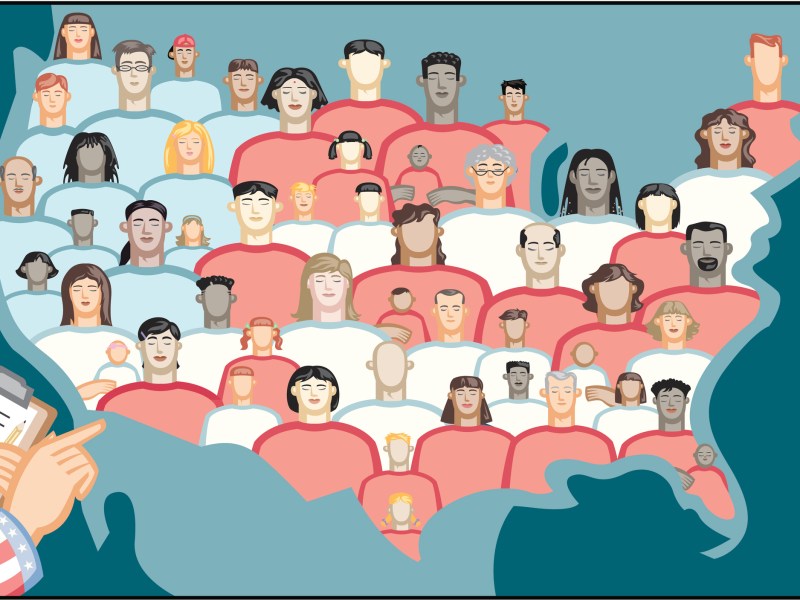
The U.S. political system is increasingly gamed against Americans of modest means — a situation exacerbated in recent years by major changes in the nation's campaign laws.

That's the overriding takeaway from a new report slated for release today by Demos, a left-leaning nonprofit public policy group "working for an America where we all have an equal say in our democracy and an equal chance in our economy."

The 39-page report, entitled "Stacked Deck," paints a picture of corporate powerhouses and wealthy businesspeople dominating political discourse and exacting disproportionate influence over policy incomes.

The Center for Public Integrity obtained a copy of the report prior to its publication.

Blacks and Latinos — statistically, the poorest Americans when compared to other races and ethnic classes — are particularly marginalized when it comes to political clout, the report states.

Low-wage workers, for example, make up about one-fifth of the nation's population but have very few paid lobbyists in Washington, D.C. While labor unions spend tens of millions of dollars each year lobbying the federal government, unions "are mainly concerned with advocating
on behalf of their members who are paid well above the minimum wage," the report states.
"As private interests have come to wield more influence over public policy, with ever larger sums of money shaping elections and the policymaking process, our political system has become less responsive to those looking for a fair shot to improve their lives and move upward," the study asserts. "Recent developments have aggravated this long emerging trend."

Pages